Chinese State Media: "THAAD Relocation to Middle East Raises Security Concerns in South Korea"
Global Times Shares Expert Analysis on THAAD Relocation
"THAAD Deployed in the Middle East Shows Limitations on the Battlefield"
"Questions Raised Over Relocation of Key Allied Defense Assets"
Amid reports that the United States is relocating part of the THAAD (Terminal High Altitude Area Defense) system deployed in South Korea to the Middle East, Chinese state-run media has pointed out that this move "reveals the limitations of THAAD’s effectiveness on the battlefield."

On the 10th, reports emerged that the U.S. Department of Defense is relocating some of the Terminal High Altitude Area Defense (THAAD) systems deployed in Korea to the Middle East. Meanwhile, on the 5th, dismantling work on launchers was underway at the U.S. military THAAD base in Seongju County, Gyeongsangbuk-do. Photo by Yonhap News Agency
View original imageOn March 12, the Chinese state-run Global Times referenced a Washington Post report stating that the U.S. Department of Defense is transferring part of the THAAD system deployed in South Korea to the Middle East to strengthen defenses in the region, where tensions have risen due to military clashes with Iran.
The Global Times, citing the analysis of Chinese military expert Song Zhongping, argued, "The reason for redeploying some equipment from South Korea is that the THAAD system, especially the radar system, deployed in the Middle East has suffered significant losses after being attacked." He explained, "THAAD not only intercepts ballistic missiles but also serves an early warning function," adding, "Moving this system from South Korea to the Middle East is aimed at enhancing early warning capabilities in the region."
He further stated, "This demonstrates the limited operational effectiveness of THAAD deployed in the Middle East," and added, "If this weapon cannot even adequately protect U.S. military bases in the Middle East, it will be difficult for allies to rely on the U.S. defense network."
The Global Times also claimed, "This measure has sparked security concerns within South Korea," stating that "the fact that the U.S. can relocate key allied defense assets to other regions as needed has raised questions about the credibility of U.S. security commitments."

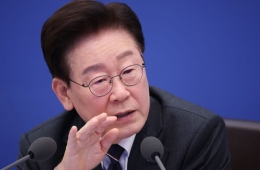
President Lee Jae-myung stated at the Cabinet meeting on the 10th, "While we express opposition to the withdrawal of some air defense weapons by the US Forces Korea due to military necessity, it is an undeniable reality that we cannot fully enforce our opinion." Yonhap News
View original imagePreviously, President Lee Jaemyung stated at the Cabinet meeting on March 10, "Although we oppose the removal of some air defense weapons by the U.S. Forces Korea due to military necessity, the undeniable reality is that we cannot fully enforce our opinion."
However, President Lee also remarked, "If asked whether this has severely impaired our deterrence strategy against North Korea, I can say 'absolutely not.' There is no need for any concern." He added, "While North Korea has the unique factor of nuclear weapons, it is clear that in terms of conventional combat and military capabilities, the Republic of Korea is overwhelmingly superior. We must thoroughly develop our independent defense capabilities to take responsibility for national defense."
Meanwhile, the Chinese government reaffirmed its opposition to the deployment of THAAD. Chinese Foreign Ministry spokesperson Guo Jiakun stated the previous day, in response to questions regarding the relocation of THAAD to the Middle East, "We are closely following the related reports and China's position of opposing the deployment of THAAD in South Korea remains unchanged."
Hot Picks Today
![[Exclusive] "Forecasts of Over 10 Billion, but Only 100 Million Earned"... 95% Followed This Pattern: Why Are KOSDAQ Special Exception IPOs Inflated? [KOSDAQ Inflated IPOs]①](https://cwcontent.asiae.co.kr/asiaresize/93/2026100609060151026_1791245160.jpg) [Exclusive] "Forecasts of Over 10 Billion, but Only 100 Million Earned"... 95% Followed This Pattern: Why Are KOSDAQ Special Exception IPOs Inflated? [KOSDAQ Inflated IPOs]①
[Exclusive] "Forecasts of Over 10 Billion, but Only 100 Million Earned"... 95% Followed This Pattern: Why Are KOSDAQ Special Exception IPOs Inflated? [KOSDAQ Inflated IPOs]①
- Financial Sector Hacking Prompts Financial Authorities to Postpone Second Phase of Network Separation Regulation Easing Selection
- "My Debt Is 73 Million Won"... Sharing Every Repayment Led to an Unexpected Turn
- "Drinking This in the Morning Is Like Drinking Alcohol"..."Doctors Warn: Never Consume It"
- Is 'KOGUMA' Coming Too?... "Japan in Serious Trouble" - Archipelago on High Alert Ahead of Holidays
China strongly objected when South Korea decided in 2016 to deploy THAAD with the U.S. Forces Korea as a response to North Korea's nuclear threat, arguing it posed a threat to its own security. Subsequently, China imposed restrictions on Korea-China exchanges, commonly referred to as the 'Hanhanryeong', which led to a years-long strain in bilateral relations.
© The Asia Business Daily. All rights reserved. Unauthorized AI training and use prohibited.