Transition from "Relief" to "Compensation" for Humidifier Disinfectant Victims... Six Environmental and Climate Bills Passed by National Assembly
A legislative amendment aimed at strengthening the state's responsibility for victims of humidifier disinfectant and shifting the existing "relief" system to a "compensation system" has passed the National Assembly. Additionally, a new "Climate Citizens’ Assembly," which allows the public to directly deliberate on climate crisis response policies and make proposals to the government, will be established.
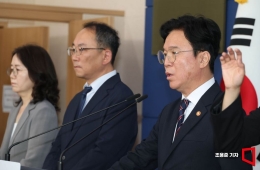
On March 12, the Ministry of Climate, Energy and Environment announced that six environmental and climate-related legislative amendments, including the complete revision of the Special Act on Relief for Victims of Humidifier Disinfectant and amendments to the Framework Act on Carbon Neutrality and Green Growth for Climate Crisis Response, were passed at a plenary session of the National Assembly.
The core of this legislative reform is to enhance state responsibility for victims of humidifier disinfectant and fundamentally overhaul the support system for victims. The comprehensively revised Act on Relief for Victims of Humidifier Disinfectant explicitly defines the harm caused by humidifier disinfectant as a "social disaster" and fully transitions the existing relief system to a compensation system.

In particular, liability for damages has been changed from being primarily borne by corporations to being jointly shared by both corporations and the state, thereby greatly strengthening state responsibility. Furthermore, the Relief Committee, previously under the Ministry of Climate, Energy and Environment, will be restructured as the "Compensation Review Committee" under the Office of the Prime Minister.
Support for victims will also be expanded. Through inter-ministerial collaboration led by the Office for Government Policy Coordination, comprehensive, lifelong support for victims will be enhanced. Initiatives include priority assignment to neighboring schools at the middle and high school levels, financial support for university students, and up to 12 days of medical leave per year for employees.
In climate policy, an institutional framework to broaden public participation has been established. With the amendment of the Framework Act on Carbon Neutrality, a new "Climate Citizens’ Assembly" will be established under the National Climate Response Committee. This body will consist of citizens representing various regions, genders, and age groups, who will deliberate on climate crisis response policies and serve to make policy proposals to the government.
In addition, the legal definition of climate crisis-vulnerable groups has been clarified. The scope of protection has been expanded to include groups that are relatively more vulnerable to and less resilient in the face of the climate crisis, such as the elderly, children, and low-income populations. The principle of protecting vulnerable groups has also been added to the basic principles of carbon neutrality to help reduce policy blind spots arising from the climate crisis.
An amendment to the Chemical Substances Control Act was also passed. The scope of regulation has been expanded not only to include the ingestion or sale of substances such as adhesives or butane gas for the purpose of intoxication, but also to cover posting or advertising of intoxicating effects online, thereby further strengthening efforts to block the illegal distribution of psychoactive substances.
The amendment to the Act on the Development of Water Management Technology and Promotion of the Water Industry has expanded the scope of support for overseas expansion from only small and medium-sized enterprises to all water industry companies. The range of support has also been broadened to include not only overseas market research and assistance with obtaining international certifications but also business discovery and order acquisition support.
The amendment to the Act on Survey, Planning, and Management of Water Resources focuses on strengthening the system for producing and managing hydrological data in order to respond to water-related disasters such as floods and droughts. As a result, a legal basis has been established for the budgetary support necessary to secure the legal status and stable operation of the Korea Institute of Water Resources Survey and Technology, which is the dedicated hydrological survey agency.
Additionally, the amendment to the Act on the Prevention of Light Pollution by Artificial Lighting adjusts the environmental impact assessment cycle for light pollution conducted by local governments from every three years to every five years, aligning it with the cycle for establishing city/provincial light pollution prevention plans. This aims to improve effectiveness by ensuring that recent changes in the light environment are reflected in planning.
Hot Picks Today
 Short-Form Dramas Keep Popping Up... No Wonder: "1,519 Churned Out a Day"—Half of China's AI Tokens Go to Dramas
- [Exclusive] 'Korea's Largest' Business Card App Remember Hit by Data Leak... PIPC Probes Possible Hacking
- WHO Chief on First Korea Visit Since Taking Office: "AI Benefits for All Humanity"
- "Why Is the Amount in My Account So Low?"... Why Pension Savings Subscribers Were Surprised
- "I wanted her to feel my passionate love"... Wife collapses after husband's overly tight hug, diagnosed with broken ribs
The Ministry of Climate stated, "We will promptly implement follow-up measures, including the revision of subordinate regulations, to ensure that the six laws passed by the National Assembly are carried out without disruption in the field."
© The Asia Business Daily. All rights reserved. Unauthorized AI training and use prohibited.