Insurance Stocks Hold Firm, but Outlook Remains Uncertain Amid Actuarial and Exchange Rate Risks
Insurance Stocks Remain Resilient Amid Market Correction
FSS Stresses "Actuarial Assumption Review"
Exchange Rate Risks Rise Amid Geopolitical Uncertainty
Recently, while global financial markets—including the stock market, exchange rates, and oil prices—have been experiencing volatility, insurance stocks have demonstrated defensive characteristics and remained relatively resilient. However, there are continuing assessments that uncertainty surrounding the insurance industry persists, particularly due to actuarial assumption reviews by regulatory authorities and exchange rate risks. This is because performance indicators such as the Contractual Service Margin (CSM) can vary significantly depending on changes to actuarial assumptions, and increased volatility in exchange rates can also put pressure on capital adequacy metrics.

According to the financial sector on March 13, insurance sector stock prices have remained relatively stable during the recent market correction phase. While the KOSPI index fell by approximately 11.5% from its all-time high on February 26 to the previous day, the KRX Insurance Index—which comprises major domestic life and non-life insurers—declined by only about 9.5%. The insurance industry is considered a sector that stands out when expectations for interest rate cuts recede, as it benefits from increased bond investment returns. Its business structure is primarily focused on the domestic market, making it less susceptible to inflationary effects such as rising raw material prices, which is why it is regarded as a representative defensive stock.
Nonetheless, the industry points out that there are still significant sources of uncertainty surrounding the insurance sector. In particular, since the beginning of this year, the Financial Supervisory Service has established an actuarial review team within its organization and announced plans to inspect insurance companies' actuarial assumption calculation systems, heightening caution regarding accounting-related variables.
The Financial Supervisory Service plans to focus on reviewing the calculation methods for actuarial assumptions—such as loss ratios and operating expenses, which are key factors in evaluating insurance liabilities—as well as cash flow models and internal control systems, through regular audits in the first half of this year. In this context, on March 11, Seo Youngil, Deputy Governor for Insurance at the FSS, stated at the insurance sector financial supervision briefing, "Financial soundness management to maintain the ability to pay insurance claims is fundamental to consumer protection," adding, "We will steadily implement measures such as introducing key actuarial assumption guidelines and actuarial assumption reports to enhance risk management systems." The following day, Park Jiseon, another Deputy Governor at the FSS, also emphasized at a meeting with 14 insurance companies regarding the Middle East situation, "It is necessary to thoroughly manage insurance product design from the earliest stages by strengthening actuarial assumption verification."
Actuarial assumptions are a key factor in determining the future profitability of insurance companies under the new International Financial Reporting Standards (IFRS17) regime. Because insurance products have long contract durations, even small changes to actuarial assumptions can result in significant performance fluctuations, such as adjustments to the CSM. For instance, if the assumed loss ratio is reduced by 1 percentage point, insurance profit can increase by 5%.
There have been cases in the past where regulatory authorities provided loss ratio guidelines for specific coverages, leading to large adjustments in CSM at some insurance companies. As a result, the industry is analyzing that this audit could also increase performance volatility for insurers. Kim Jaewoo, a researcher at Samsung Securities, said, "Uncertainty from changes in actuarial assumptions is expected to continue in the first half of the year." Kim Doha, a researcher at Hanwha Investment & Securities, also noted, "Deterioration in actuarial assumptions is the biggest factor preventing growth in insurers’ CSM balances," adding, "In the past, regulatory authorities have provided conservative guidelines for indemnity and non-lapse coverages."
Exchange Rate Volatility and Hedging Costs: Burdens for Insurers

Volatility in the won-dollar exchange rate—driven by changes in US tariff policies and geopolitical risks stemming from the Middle East—has also been cited as a factor placing a burden on insurers in terms of capital management. In recent years, insurance companies have steadily increased their foreign currency assets by expanding overseas investments, but since overseas insurance business results have been modest, foreign currency liabilities have not grown significantly. In this situation, if the exchange rate surges in a short period, it can create downward pressure on capital adequacy metrics such as the Korea Insurance Capital Standard (K-ICS).
Kim Seokwoo, Senior Researcher at NICE Investors Service, said, "Among life insurers, which have larger and higher percentages of overseas investments compared to non-life insurers, the impact of a rising exchange rate tends to be more pronounced," adding, "If high levels of exchange rate movement persist, the burden will intensify especially for companies that are more sensitive to exchange rate fluctuations."
Hot Picks Today
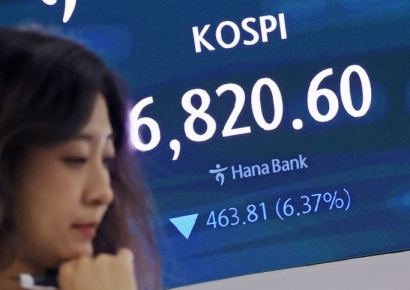 Securities Firms Reverse Course as KOSPI Falls Below 7,000... More Downgrade Reports Than Upgrades in July
- Turned on the Air Conditioner All Night and Woke Up with a Sore Throat... It's Not Just a Cold [Kok! Health]
- "Crisp and Stress-Relieving: K-Fruit Exports Hit KRW 130 Billion, Which New Star Is Rising in Japan?"
- "Spiders Crawling Across Faces While Sleeping"... Naju Apartment Complex Plagued by Spider Infestation
- Even Without Overdue Card Payments... Everyday Habits That Lower Office Workers' Credit Ratings
The cost of currency hedging incurred in the process of managing exchange rate risk is also a factor affecting profitability. Insurance companies conduct currency hedging to mitigate exchange rate risk from overseas investments, but the maturity of hedge contracts is often shorter than that of the assets, requiring continuous contract renewals. Regarding this, Kim noted, "If dollar liquidity tightens, the cost of renewing hedge contracts can surge, undermining the effective expected return on foreign currency assets."
© The Asia Business Daily. All rights reserved. Unauthorized AI training and use prohibited.




![[Breaking] Coupang Apologizes for Incheon Logistics Center Fire…“Will Fully Cooperate With Authorities’ Investigation”](https://cwcontent.asiae.co.kr/asiaresize/307/2026071820375349810_1784374673.jpg)