U.S. Launches Section 301 Probe... Yeo Hangoo: "Not Because of Coupang, Part of Tariff Restoration Process"
Filling the Gap with Provisional Section 122 Tariffs; Section 301 Measures Expected After July
"Not Targeting Korea... Maintaining the Agreed 15% Tariff Level in Korea-U.S. Talks"

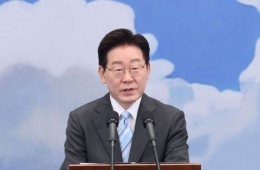
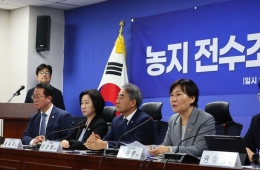
Yeo Hangoo, Director General for Trade Negotiations at the Ministry of Trade, Industry and Energy, is speaking at the Task Force meeting of the Special Management for Livelihood Prices held at the Government Complex Seoul on the 5th. The meeting discussed energy price trends and countermeasures in response to the Middle East situation. 2026.3.6 Photo by Jo Yongjun
View original imageAs the Office of the United States Trade Representative (USTR) has launched a Section 301 investigation citing manufacturing overcapacity, the South Korean government has drawn a clear line, stating that the recently raised issue concerning Coupang has no connection whatsoever with this investigation.
On March 12, Yeo Hangoo, Director General for Trade Negotiations at the Ministry of Trade, Industry and Energy, said in a virtual meeting with reporters, "This Section 301 investigation is focused on the issue of overcapacity in the manufacturing sector and is completely unrelated to the Coupang matter." He added, "The Coupang issue concerns the leakage of personal information by an individual company and is being investigated fairly by our government according to the law and proper procedures."
He continued, "Even during discussions with the USTR representative last week, I made it clear that the Coupang matter is not subject to the Section 301 investigation, and I strongly expressed our position that launching a Section 301 probe on the grounds of this issue would be inappropriate."
Previously, on March 11 (local time), the USTR announced in the Federal Register that it would initiate Section 301 investigations into the policies and practices related to structural overproduction in the manufacturing sector targeting 16 major trading partners, including South Korea, China, the European Union (EU), and Japan.
The purpose of this investigation is to determine whether manufacturing overcapacity in each country poses a burden to the U.S. industrial base or distorts the market. Interested parties can submit written comments from March 17 to April 15, and the USTR plans to hold public hearings starting on May 5.
Director General Yeo repeatedly emphasized that this measure is not aimed at any specific country. He explained, "The current Section 301 investigation is not targeting South Korea, but is rather intended to address the global, structural problem of manufacturing overcapacity. It is important to understand that this investigation targets 16 countries, including China, the EU, and Japan."
In particular, he highlighted that this investigation is part of the process of reorganizing the tariff system following the recent U.S. Supreme Court ruling on the International Emergency Economic Powers Act (IEEPA). Director General Yeo stated, "The basic objective of the U.S. government is to maintain the tariff levels that were agreed upon prior to the unconstitutional ruling. To this end, they are pursuing policies that utilize other legal means, such as Section 301 and Section 122, to restore previous tariff levels."
Currently, the U.S. is temporarily imposing a global 10% tariff on all countries under Section 122 of the Trade Act. Section 122 allows for emergency measures without prior investigation and can be applied for up to 150 days.
Director General Yeo explained, "Section 301 originally requires an investigative process, which takes time. To fill the gap, the U.S. has first imposed a global 10% tariff for five months by utilizing the temporary measure under Section 122." He added, "After mid-July, it is highly likely that the U.S. will proceed to restore the tariff levels that existed before the Supreme Court ruling through Section 301."
Director General Yeo also emphasized that the U.S. tariff policy toward South Korea will remain consistent with the existing Korea-U.S. tariff agreement. He said, "According to the results of the Korea-U.S. trade tariff agreement announced on November 13 last year, the tariff rate for most items—excluding those subject to Section 232 tariffs, such as automobiles and steel—is 15%. The U.S. government has repeatedly indicated its intention to maintain this agreement."
He went on to explain, "Given that the tariff agreements with other major countries, such as Japan and the EU, are similar, we will engage in consultations to ensure that our companies are not treated disadvantageously compared to competitors in other countries."
He also made it clear that Section 301 is a separate mechanism from Section 232 tariffs, which apply to steel or automobiles. Director General Yeo stated, "Section 232 tariffs are imposed on certain items for national security reasons, while Section 301 targets the policies or practices of trading partners. The two mechanisms are legally distinct and serve different purposes."
Regarding the possibility that the U.S. might pursue additional Section 301 investigations on grounds such as digital service regulations or the opening of the agricultural market as non-tariff barriers, Director General Yeo took a cautious stance. He said, "Currently, only two Section 301 investigations have been officially initiated: one related to manufacturing overcapacity and another concerning forced labor. It is too early to predict whether digital regulations or other areas will be included."
The government plans to actively respond to the investigation process. Director General Yeo stated, "We have already received an official request for consultation from the USTR. In cooperation with the industry, we will submit written comments and participate in public hearings as part of our active response."
He added, "Even during this investigation process, we will work closely with the U.S. to ensure that the balance of interests under the existing Korea-U.S. tariff agreement remains intact and that our companies are not treated less favorably compared to major competitors."
Director General Yeo said, "Since the U.S. Supreme Court ruling, the global trade environment has been changing rapidly. At times like this, it is important to faithfully implement the Korea-U.S. agreements and create a stable trade environment."
Regarding the Special Act on Investment in the U.S., which was set to pass the plenary session of the National Assembly that day, Director General Yeo emphasized, "Prompt enactment will be in the national interest, as it is a necessary procedure to implement Korea-U.S. agreements." He reiterated, "Since the U.S. Supreme Court ruling, the global trade environment has been changing rapidly. At times like this, faithfully implementing the Korea-U.S. agreements and ensuring a stable trade environment is crucial."
Hot Picks Today
![[Exclusive] "Nvidia Researchers to Work in Yangjae"... LG Electronics to Establish 'Joint Robotics Development Base'](https://cwcontent.asiae.co.kr/asiaresize/93/2026092110452736212_1789955126.jpg) [Exclusive] "Nvidia Researchers to Work in Yangjae"... LG Electronics to Establish 'Joint Robotics Development Base'
[Exclusive] "Nvidia Researchers to Work in Yangjae"... LG Electronics to Establish 'Joint Robotics Development Base'
- "Can't Afford a House Anyway"... Gen Z Cuts Dining and Salon Costs to Splurge on Airfare
- "I’ll Take This, Please"... Buying the Last Lottery Ticket Brings a Jackpot
- "Not Yet Out of Diapers, but Earning Over 100 Million Won"... 22 'Baby CEOs'
- "They Might Start Pitching Tents and Grilling Meat"... The 'Hammock Villain' Appears at Cheonggyecheon
Director General Yeo concluded, "Currently, not only the United States but also several countries are re-examining their tariff policies amid changing trade conditions. Our government will remain vigilant, continue close consultations with the U.S., and respond in a way that minimizes damage to our companies."
© The Asia Business Daily. All rights reserved. Unauthorized AI training and use prohibited.