Party and Government to Expedite Renewable Energy Legislation... Kim Seonghwan Says "Electricity Rate Pressure Still Manageable"
Operation of Energy Emergency Response Team and Measures to Ease Burden on Vulnerable Groups
Discussion on Resolving Transmission Network Conflicts and Fast-Tracking Incineration Facilities
On March 12, the Democratic Party of Korea and the government decided to implement measures aimed at easing the burden on vulnerable groups in response to the recent surge in energy prices caused by the Middle East situation. Both sides also agreed to accelerate the legislative process for renewable energy support bills to address this crisis.
Democratic Party lawmakers from the National Assembly Climate, Energy, Environment and Labor Committee, along with Kim Seonghwan, Minister of Climate, Energy and Environment, and other government officials, held a policy meeting at the National Assembly. After the meeting, Assemblyman Kim Jooyoung, a Democratic Party secretary of the committee, spoke with reporters and said, “In order to respond to the risks in domestic electricity supply arising from the recent surge in energy prices due to the Middle East situation and other unstable international circumstances, the party and government stressed the importance of providing comprehensive energy welfare support, so that there will be no inconvenience to the public regarding electricity supply and no additional burden on vulnerable groups.” The government stated that it will operate an emergency energy response task force and promote welfare measures to alleviate the burdens of vulnerable groups.

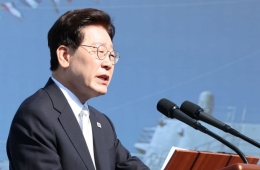
In his public remarks that day, Minister Kim explained the trends in energy price increases, saying, “At present, the increase is not at a level that would immediately impact electricity rates,” adding, “Korea Electric Power Corporation has enough internal capacity to absorb the costs for now.” However, to lower the burden of power generation through the use of natural gas and other sources, he said, “We will seek to bring nuclear power plants back online as soon as possible and increase their share, in order to reduce gas consumption and minimize energy market volatility.”
In particular, this crisis has prompted the party and government to push for legislation to reduce dependence on fossil fuels and to support renewable energy. Assemblyman Kim explained, “The bill will contain provisions allowing exceptions for small-scale renewable energy projects with high public interest and utility, so they can be prioritized.”
Regarding renewable energy, Minister Kim said, “The Lee Jaemyung administration’s goal is to raise the cumulative renewable energy capacity to 100 gigawatts (GW), and we will do our best to achieve this as quickly as possible.” He added, “Another challenge is to convert the current one-way power grid into a two-way grid, and to properly manage conflicts that may arise during the construction of high-voltage transmission lines.”
On the issue of transmission and distribution networks, which are obstacles in securing electricity supply, Assemblyman Kim relayed, “The government has announced it will strengthen compensation and support to resolve local conflicts related to transmission and distribution, and will directly communicate with local residents and stakeholders to gather their opinions.”
Hot Picks Today
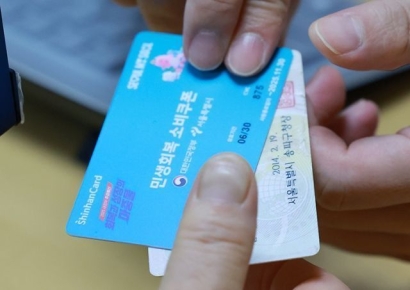 "No Age or Income Limits, Everyone Gets 100,000 Won... This City to Provide Subsidies to All Residents"
- Some Earn Over $200,000 a Year... US Women Choosing Trades Over Office Jobs
- "Don't Even Think About Going to the Office"... Why Is India Mandating 'Forced Remote Work'?
- "Falling Asleep Instantly in Bed"...Is a Nightly Pattern a Warning Sign for Your Health?
- "Boss, Please Reduce My Working Hours"... The Strange Phenomenon Following Wage Increases
Meanwhile, regarding regional conflicts over municipal solid waste management in the Seoul metropolitan area, the government also decided to play an active role and to implement a fast-track process that will shorten the period for establishing public incineration facilities by three years and six months.
© The Asia Business Daily. All rights reserved. Unauthorized AI training and use prohibited.