Why the World's Top Pharma, Eli Lilly, Joined Forces with Samsung Biologics
Open Innovation Hub Established in Songdo
Korea's Clinical Capabilities and New Drug Innovation Ecosystem Stand Out
Global pharmaceutical giants are unveiling large-scale investment plans as they take note of the growth potential of Korea’s bio industry. Following Roche, Eli Lilly has also officially announced its investment in Korea, positioning the country as a strategic hub for pharmaceutical and biotech innovation worldwide.
According to the industry on March 11, Samsung Biologics has partnered with Eli Lilly, the world’s largest pharmaceutical and biotech company by market capitalization, to establish a domestic base for the global open innovation program “Lilly Gateway Labs (LGL)” in Songdo International City, Incheon. This marks the second time Eli Lilly has established a base outside the United States, following China. It also represents the first instance in which a leading global pharmaceutical company’s advanced open innovation program is entering Korea in collaboration with a domestic company.

LGL is a program established by Eli Lilly in 2019 to discover and nurture promising biotech companies. Beyond simply providing office space and laboratory facilities, LGL supports the entire process essential for the growth of early-stage biotech firms, including R&D collaboration, mentoring, direct investment, and assistance in attracting external investment. Since its inception, companies residing at LGL have attracted a total of over 3 billion dollars (approximately 4.4121 trillion won) in investment, and more than 50 new drug development programs have been accelerated.
The new LGL hub will be housed within the “C-Lab Outside” open innovation center, which Samsung Biologics is currently constructing at Songdo’s 2nd Bio Campus. Both companies plan to jointly manage the entire process from selection to fostering of 30 resident companies here, aiming to activate the K-bio ecosystem. C-Lab Outside, which began in 2018 as an external startup incubation program by Samsung Electronics, will now expand its scope to the bio industry, serving as a robust bridge to help domestic biotech firms advance globally.
John Rim, CEO of Samsung Biologics, stated, “This collaboration will provide fertile ground for the growth of promising domestic biotech firms by leveraging the outstanding open innovation capabilities of global big pharma.” Julie Gilmore, Head of LGL, also commented, “This partnership marks a significant turning point that will accelerate the global expansion of LGL.”
Recent investments by big pharma in Korea are seen as evidence that Korean biotech firms have reached a world-class level in technology and clinical capabilities. In the past week alone, 1.4 trillion won in capital from global pharmaceutical companies has poured into the Korean bio market. The massive investments announced by Roche (710 billion won) and Eli Lilly (approximately 750 billion won), following the signing of memoranda of understanding (MOUs) with the Ministry of Health and Welfare, are seen not just as market expansion, but as a recognition of Korea as a “strategic hub” for global new drug development.
Global pharmaceutical companies have chosen Korea due to its world-leading clinical trial capabilities and overwhelming manufacturing competitiveness. For the past decade, Seoul has competed with Beijing, China, for the top spot in the number of clinical trials conducted among world cities. Songdo’s biopharmaceutical manufacturing capacity, led by Samsung Biologics, is the largest in the world. Additionally, Korea’s rapid digital transformation and advanced AI-powered drug development capabilities have led big pharma to see Korea as “the most efficient innovation laboratory.” As China continues to strengthen its global competitiveness in drug development, there is analysis that the United States has designated Korea as the optimal country to counterbalance and potentially replace China.
Hot Picks Today
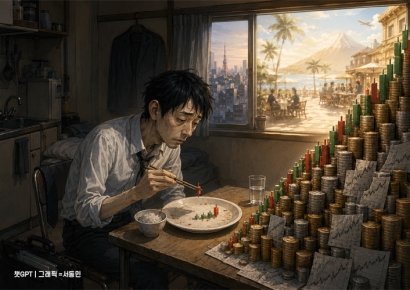 "Surviving on One Meal a Day to Invest 3.5 Million Won Monthly... 'FIRE' Craze Sparks 'NISA Poverty' in Japan"
- "Correction Over for Samsung and SK hynix" "670,000 for Samsung, 4.7 Million for SK hynix": Why Global IBs Remain Optimistic
- "Used for the Wedding" 300,000-Won Ring and Dress...Changing Wedding Trends
- Causing Trouble Without a Simple "Sorry"... The Reason Behind the 'Gen Z Stare' Revealed
- Nongshim Third-Generation Executive Sangyul Shin to Wed SKT Employee on the 13th
Seungkyu Lee, Vice President of the Korea Biotechnology Industry Organization, remarked, “Korea is one of the few countries in the global bio market that can compete based on its content. In the past, Korean companies had to seek out opportunities abroad directly, but now global companies are building platforms in Korea, creating great opportunities for our firms.”
© The Asia Business Daily. All rights reserved. Unauthorized AI training and use prohibited.