Commission Cap on Delivery Apps Remains Stalled as Debate Stays Fierce
Bills Proposed but Legislative Discussions Stalled
Social Dialogue Bodies Like the Euljiro Committee Also Inactive
Calls for Swift Adoption vs. Concerns Over "Balloon Effect" Remain Divided
While discussions on the regulation of delivery applications and measures for mutual growth have not progressed, there remains a clear divide between supporters and opponents regarding the introduction of a cap on commission fees. Small business groups continue their collective actions, urging for swift legislation, but platform providers remain consistently concerned about potential "balloon effects" and other unintended consequences.
According to industry sources on March 8, since last year, several bills proposing a cap on delivery commission fees have been introduced in the National Assembly, but legislative discussions have since stalled. The Small Business Protection Act amendment sponsored by Assemblyman Kim Won-i of the Democratic Party, the bill for the Fairness of Delivery Platform Transactions by Assemblyman Lee Kang-il of the same party, and the bill on Service Fees for Food Delivery Platforms by Assemblyman Kim Namgeun, are all pending in their respective standing committees without any discussion taking place.
The Democratic Party’s “Committee for the Protection of the Underdog in Everyday Life” (Euljiro Committee), which had led a social dialogue body involving the delivery platform industry and tenant business associations, has also not held any meetings or activities this year. As a result, both legislative and social consensus efforts remain at a standstill.
Nevertheless, the standoff over the commission fee cap remains intense. On March 5, the Korea Federation of Microenterprise and Self-Employed and the Association for Fair Platforms held a press conference in front of the annex building of the Seoul Government Complex in Changseong-dong, Jongno-gu, Seoul. They called for the implementation of the commission fee cap for delivery apps, as promised by President Lee Jaemyung during his candidacy, and demanded the establishment of regulatory measures for platforms. They argued that, under the current structure, it is becoming increasingly difficult for self-employed business owners to survive without resolving the issues surrounding commission fees and delivery charges.

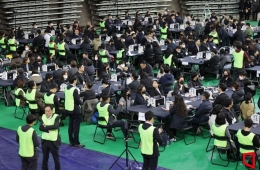
On the 3rd, participants at the policy briefing titled "Analysis of the Impact of Delivery Market Regulations from the Perspective of the Food Service Industry and Consumers" held at the National Assembly are taking a commemorative photo. Korea Delivery Platform Tenant Association
View original imageConcerns about potential side effects from enacting a commission fee cap continue to be voiced. At a policy briefing titled "Analysis of the Impact of Delivery Market Regulations from the Perspective of the Food Service Industry and Consumers" hosted by Assemblyman Lee Heonseung of the People Power Party at the National Assembly on March 3, participants emphasized the need to thoroughly examine the ramifications of regulatory changes, such as a commission fee cap, on the restaurant industry, consumers, and delivery workers, and to minimize any adverse effects.
Professor Lee Heeyeol of Sejong Cyber University stated, "As seen in international examples, regulations on commission fees tend to benefit large franchises, while potentially having negative effects on small business owners." Professor Lee Eunhee of Inha University explained, "Consumers are highly sensitive to price signals. If the commission fee cap leads to higher delivery charges for consumers or a reduction in free delivery benefits, this could result in decreased demand for delivery and dining out, ultimately reducing overall demand in the food service market." Professor Kim Taeyoung of Chung-Ang University also raised concerns about the potential decline in delivery orders for riders due to regulatory changes.
Hot Picks Today
 "Two Spend 500,000 Won in a Flash, Yet Wait Two Hours?" ... 'Dreamland' Shunned by Kids and Foreign Tourists
- The Era of Getting 200 Million Won After 30 Years Is Over... A Japanese Bank's "Perpetual Department Head" Who Just Clocked In Cries Out
- Spain Hit by Its Worst Tragedy... Lee Kangin, Moreno and Real Madrid Join Soccer World in Mourning
- They Said, “Make It Your Home for Life” - Then Suddenly Kicked 200 Passengers Off... What Happened to the Around-the-World Cruise?
- "130 Rice Bowls Sold Out in a Day"... 'Unfiltered Face' Adds 8 Million Won to Night Market Sales: China's Bungeunwoo
Although no consensus has been reached, there is a sentiment within and outside the industry that, with the upcoming local elections, the commission fee cap could suddenly be passed as a livelihood bill. An industry official commented, "There is a need to protect both small business owners and consumers through more sophisticated policy design that comprehensively considers the impact on all stakeholders in the delivery industry."
© The Asia Business Daily. All rights reserved. Unauthorized AI training and use prohibited.