Gyeonggi-do Proves Success of "4.5-Day Workweek"… Policy Forum to Be Held at National Assembly on the 10th
Results Announced for Reduced Working Hours Without Wage Cuts
Productivity Up by 2.1%, Turnover Rate Down
Annual Working Hours Expected to Decrease by About 240 Hours
Tripartite Discussion on Policy Improvements and Institutionalization
Gyeonggi-do's pilot project of the "4.5-day workweek," the first of its kind in South Korea, has been found to have policy effects, such as simultaneously increasing labor productivity and employee satisfaction, according to analysis results.

Gyeonggi-do will hold a policy discussion forum analyzing the effects of the "4.5-day workweek pilot project" at Seminar Room 3 of the National Assembly Members’ Office Building at 9:30 a.m. on March 10.
This forum has been organized to analyze the effects and share operational cases of the 4.5-day workweek pilot project that Gyeonggi-do has been promoting since 2025. The event will be co-hosted by Gyeonggi-do and National Assembly members including Ahn Ho-young, Kim Jooyoung, Lee Hakyoung, Park Jung, Lee Yongwoo, Park Hongbae, Seo Wangjin, Jeong Hyekyung, Choo Mi-ae, Kim Taenyon, So Byunghoon, Song Okjoo, Kim Youngjin, Choi Minhee, Seo Youngseok, Lee Sujin, Kim Seungwon, Min Byungdeok, Park Sanghyuk, Han Junho, Jeon Yonggi, Yeom Taeyoung, Lee Jaegang, Son Myungsoo, Kim Junhyuk, Kim Hyunjung, Kim Younghwan, Yoon Jonggun, Kim Namhee, Kim Yongman, Han Changmin, and Yong Hyein.
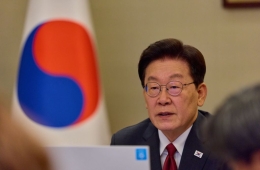
The forum will be attended by Dongyeon Kim, Governor of Gyeonggi-do; Chunho Kim, Chairman of the Gyeonggi Employers’ Federation; Yeonpoong Kim, Chairperson of the Korean Confederation of Trade Unions Gyeonggi Regional Headquarters; Sangjin Han, Policy Planning Director of the Korean Metal Workers’ Union Gyeonggi Headquarters; and approximately 100 other participants.
Gyeonggi-do’s 4.5-day workweek pilot project is a policy that reduces employees’ working hours without lowering their wages, aiming to expand social consensus on working hour reduction and to enhance both work-life balance and corporate competitiveness. It targets private companies and public institutions in the province and is being implemented temporarily and on a trial basis from 2025 to 2027. As of December 31, 2025, a total of 107 entities (106 companies and 1 public institution) are participating.
Last year, the province conducted surveys and in-depth interviews with participating companies. Analysis of key indicators compared to the previous year revealed that companies estimated a 2.1% increase in labor productivity per worker based on sales. The recruitment competition ratio increased from 10.3 to 1 to 17.7 to 1, and the employee turnover rate decreased by 5.4 percentage points from 22.8% to 17.4%. External customer (partner company) satisfaction increased by 2.4 points, reaching 82.1 out of 100.
Among workers, the perception of "having enough leisure time on weekdays" rose by 8.3 points to 55.0 points, while stress perception decreased by 6.9 points to 58.5 points. Life satisfaction increased by 2.2 points to 60.8 points.
Regarding commuting time, 31.7% of respondents said it had decreased. Overall, satisfaction with income and consumption also improved.
At the forum on March 10, Deokryong Yoon, CEO of the Gyeonggi Job Foundation, and Jongjin Kim, Director of the Working Citizens Research Institute, will present the project’s achievements and policy implications. Representatives from two pilot companies, Nimbus LLC and RAS Korea, will share their operational cases. Representatives from the Ministry of Employment and Labor, the Gyeonggi Employers’ Federation, the Gyeonggi branch of the Federation of Korean Trade Unions, and the Gyeonggi headquarters of the Korean Metal Workers’ Union will participate to discuss system improvement and expansion plans, and field feedback will be collected through a Q&A session.
The provincial government considers it significant that this pilot project has been adopted as a state governance task and has served as the impetus for the Ministry of Employment and Labor's "Work-Life Balance +4.5 Project." It also emphasized that the model for reducing working hours without wage cuts has been established at small and medium-sized enterprises, and that, despite the short implementation period, improvements have been observed in both corporate productivity and workers’ quality of life.
Hot Picks Today
 "Two Spend 500,000 Won in a Flash, Yet Wait Two Hours?" ... 'Dreamland' Shunned by Kids and Foreign Tourists
- The Era of Getting 200 Million Won After 30 Years Is Over... A Japanese Bank's "Perpetual Department Head" Who Just Clocked In Cries Out
- Spain Hit by Its Worst Tragedy... Lee Kangin, Moreno and Real Madrid Join Soccer World in Mourning
- They Said, “Make It Your Home for Life” - Then Suddenly Kicked 200 Passengers Off... What Happened to the Around-the-World Cruise?
- "130 Rice Bowls Sold Out in a Day"... 'Unfiltered Face' Adds 8 Million Won to Night Market Sales: China's Bungeunwoo
A Gyeonggi-do official stated, "As the 'No. 1 national governance partner,' Gyeonggi-do will pursue a collaborative model in which large corporations and small and medium-sized enterprises work together to ensure the sustainable expansion of the 4.5-day workweek starting this year. Through this, we aim to establish the Gyeonggi-do-style win-win model that simultaneously improves the working environment and strengthens corporate competitiveness, and to spread its achievements nationwide."
© The Asia Business Daily. All rights reserved. Unauthorized AI training and use prohibited.