"Let’s Trade Stocks After Work" While the US and Japan Operate Overnight... Korea Still Held Back by '15% Rule' [NextTrade 1 Year]③
The U.S. and Japan Offer Pre-Dawn Trading, Attracting Foreign Demand
Beyond ETFs: Bonds and Derivatives Also Traded
Flexible Fee Structures and Integrated Disclosure Systems Needed

Major countries overseas have already established a segmented market structure in which various Alternative Trading Systems (ATS) compete with regular exchanges. Although South Korea's securities trading market has transitioned to a competitive system with the launch of NextTrade, ongoing innovation remains necessary. In the short term, there are calls to pursue flexible activation policies referencing Japan's example, while in the mid-to-long term, it is suggested to establish a fair competition framework and integrated disclosure system similar to those in the United States and Europe.

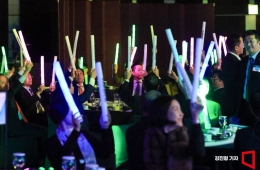
On March 4 last year, at the Alternative Trading System (ATS) 'NextTrade (NXT)' opening ceremony held at the Financial Investment Center Building in Yeouido, Seoul, Kim Haksoo, CEO of NextTrade, delivered the welcome address. Photo by Yoon Dongju
View original image◆ Innovation in Major Markets’ Exchange Infrastructure
According to the Korea Capital Market Institute on March 4, the operation of ATSs in each country has settled in a way that enhances market efficiency. In the United States, currently 78 ATSs are registered and operating, and the share of ATSs in listed equities (NMS) trading is about 13.3%. As of 2023, the average daily trading value on ATSs was 68.8 billion dollars, marking a steady growth of 26.5% compared to 2020.
Within the European Union (EU), as of 2022, 152 Multilateral Trading Facilities (MTFs) and 30 Organized Trading Facilities (OTFs) are in operation, accounting for 34% of stock trading and 28% of bond trading. Notably, in the EU bond market, the share of regular exchanges (RM) is only 7%, underscoring the critical role of alternative trading facilities. MTFs compete with regular exchanges, alleviating market concentration and enhancing efficiency through diverse order systems and fee structures. OTFs, on the other hand, exclude stock trading and serve as dedicated platforms for bond and derivative transactions, granting operators the discretion to directly connect specific buyers and sellers.

Japan, which operates Proprietary Trading Systems (PTS) structurally most similar to Korea’s Multilateral Trading Companies, has pursued long-term regulatory reforms to expand its market share. Japan abolished the exchange concentration obligation in 1998 and introduced the PTS system, but initially, growth was sluggish due to regulations centered on regular exchanges.
Starting in 2010, Japan allowed central clearing of PTS transactions, then further relaxed regulations by exempting the 5% tender offer rule in 2012, providing a foundation for growth. Subsequent measures included allowing margin trading on PTS in 2019, and the enforcement of the best execution principle in 2023. As a result, the share of PTS in Japan’s stock trading rose to 12.2% by 2024. Within over-the-counter trading, the PTS share surged from 13.8% in 2010 to 75.9% in 2024, establishing itself as a core axis.

◆ The Market That Never Sleeps
Overseas, the emergence of ATSs operating night markets has dramatically expanded securities trading hours. Japan’s JapanNext offers not only daytime trading from 8:20 a.m. to 4:00 p.m., but also nighttime trading from 4:30 p.m. to 6:00 a.m. the following day. In the United States, Blue Ocean operates as a dedicated nighttime ATS from 8:00 p.m. to 4:00 a.m., maximizing accessibility for global investors.
Recently, the U.S. nighttime stock market has become increasingly diversified. In addition to the existing 'BOATS' and 'IEOS', 'MOON ATS' is scheduled to launch in November 2024 and 'BRUCE ATS' in March 2025, further expanding night trading platforms. Within the United States, this market diversification is accelerating, driven by nighttime trading demand from Millennials & Gen Z and the goal of improving accessibility for Asian investors.
Domestically, NextTrade also sought to differentiate itself by offering a total of 12 trading hours from 8:00 a.m. to 8:00 p.m. at the time of its launch. However, with the Korea Exchange planning to extend trading hours in June, there is a growing need for further innovation, such as additional expansion of trading hours and more sophisticated regulations, to secure competitiveness.
NextTrade has announced plans to pursue the development of differentiated services, the expansion of tradable products such as Exchange Traded Funds (ETFs) and fractional investment to global ATS standards, and to provide opinions on rationalizing ATS regulations. Kim Haksoo, CEO of NextTrade, stated, "We will continue to lead changes in the capital market and offer better services to investors, contributing to the expansion of global investment and the normalization of Korea’s capital market."

◆ Remaining Challenges
While NextTrade’s successful first year marks the end of the monopoly era, the coming year is expected to be a crucial test for connecting quantitative growth to qualitative innovation and refining regulations. Seo Jiyong, Professor of Business Administration at Sangmyung University, commented, "With NextTrade’s entry into ETF trading and progress toward global standardization, liquidity expansion and ongoing market competition are expected. However, in areas such as nighttime trading, domestic ATSs face significant constraints compared to those in the United States and Japan, namely the 15% trading volume cap and limited foreign participation. Key future tasks include easing the market share cap and fully permitting nighttime trading."
Related Articles
 "What Is This?" Even Samsung Electronics Hits Sudden Price Floor... Investors Anxiously Watch Stock Apps During Commutes [Nextrade 1st Anniversary]②
Han Areum, Senior Research Fellow at the Korea Capital Market Institute, stated, "Japan revitalized its market through regulatory improvements such as permitting margin trading; therefore, Korea should consider flexible policies to improve accessibility for investors and relax trading requirements, such as expanding tradable items, strengthening incentives for market makers, diversifying fee structures, and enhancing information provision." She added, "Like the United States and Europe, establishing institutional integration and fairness, unifying market surveillance systems, linking abnormal transaction detection, and building an integrated market disclosure system will require mid-to-long-term efforts to institutionalize a multi-market structure."
© The Asia Business Daily. All rights reserved. Unauthorized AI training and use prohibited.