Seoul Speeds Up Reconstruction and Redevelopment... "85,000 Housing Units to Break Ground in 3 Years" (Comprehensive)
Six-Item Rapid Groundbreaking Package... KRW 50 Billion in Relocation Loan Support
Reviewing Application of 4-5% Interest Rates
Groundbreaking Volume for 2026-2028: Eunpyeong Has the Most, Hangang Belt Remains Strong
30,000 Units to Break Ground

Oh Sehoon, Mayor of Seoul, is speaking at the "Rapid Groundbreaking for 85,000 Housing Units" core supply strategy announcement for the housing project held at Seoul City Hall on the 26th. Photo by Yonhap News
View original imageThe Seoul Metropolitan Government will shorten administrative procedures such as reviews for redevelopment and reconstruction in the Hangang Belt areas including Yongsan and Dongjak, and will break ground on 85,000 housing units within the next three years. To this end, it has decided to newly introduce a "6-Type Rapid Groundbreaking Package," which includes electronic general meetings, the involvement of experts in demolition plans, and integrated reviews. The city also plans to accelerate urban renewal projects by specifying stage-by-stage deadlines in the standard construction contracts.
Mayor Oh Sehoon of Seoul said at the announcement held at City Hall on the 26th, "We will concentrate administrative resources on projects that are in the management and disposal, relocation, and release stages." This represents an increase of 6,000 units from the original target of 79,000 units. The city also plans to raise this year's groundbreaking volume from the existing 23,000 units to 30,000 units to break through the current supply drought.
According to the city, 21,000 units are scheduled to be demolished this year through urban renewal projects, while 35,000 new units will be occupied. The net increase is tallied at 14,000 units. Next year's net increase will be 3,000 units (21,000 units demolished and 24,000 units occupied). The yearly groundbreaking volumes are 30,000 units this year, 30,000 units next year, and 25,000 units in 2028, for a total of 85,000 units.
Eunpyeong to See the Most Groundbreaking Within 3 Years... Hangang Belt Areas Strong
Among the 85 districts that the Seoul Metropolitan Government released to the public on this day, Eunpyeong District will see the largest volume. Including Galhyeon District 1 (4,116 units), Bulgwang District 5 (2,387 units), Jeungsan District 5 (1,775 units), and Susaek District 8 (621 units), the total comes to 9,398 units.
Groundbreaking volumes are also concentrated in Hangang Belt areas such as Yongsan, Dongjak, Dongdaemun, and Seongdong. Yongsan District will have a total of 8,154 units, including Hannam District 3 (5,970 units), which aims to break ground in 2026, Hannam District 2 (1,537 units), and Sanho Apartment (647 units). The Hannam New Town area is regarded as a representative high-end residential district that combines views of the Han River with convenient access to Gangnam.
Dongjak District (7,657 units) is also a key axis of the Hangang Belt. Large-scale urban renewal sites such as Noryangjin District 1 (2,992 units), Heukseok District 11 (1,515 units), and Noryangjin Districts 3, 4, 5, and 7 are included. When Seongdong District (1,113 units) and Mapo District (1,652 units) are added, the groundbreaking volume in autonomous districts adjacent to the Han River exceeds 20,000 units.
Among the three Gangnam districts, Songpa District will see the largest groundbreaking volume with 7,305 units. This includes Garak Samik Mansion (1,531 units), Macheon District 4 (1,254 units), Samhwan Garak Apartment (1,101 units), and Garak Plaza Apartment (1,068 units). In addition, the reconstruction of Gaepo Jugong Complex 5 in Gangnam District (1,279 units) has been moved up by 12 months compared with the previous schedule.

"6-Type Rapid Groundbreaking Package" Applied to 85 Districts
The six-part package focuses on significantly streamlining administrative procedures up to the groundbreaking stage. The Seoul Metropolitan Government will fully subsidize the cost of activating electronic general meetings, shortening each meeting by two weeks to one month. To expedite dissolution reviews for associations that have started relocation, it will provide expert advisory support when preparing demolition plans, cutting one month from the schedule, and plans to bring forward by one month the start of construction by "integrating" the structural review and excavation review, which had previously been conducted separately before groundbreaking.
In addition, to prevent conflicts between the association and the contractor, the city has mandated that the deadlines for each stage of relocation, release, and groundbreaking be clearly stipulated in the standard construction contracts. For projects that have completed project implementation approval, it will also provide consulting on construction change contracts before groundbreaking. Next year, the city plans to develop a "Urban Renewal Project Schedule Management Calendar" application (app) to encourage meticulous schedule management.
KRW 50 Billion Housing Promotion Fund Allocated for Relocation Loans
The Seoul Metropolitan Government will allocate KRW 50 billion from the Housing Promotion Fund this year to provide relocation loan support for project sites that are facing difficulties at the final hurdle before groundbreaking, namely the "relocation stage," due to regulations on relocation loans. Under the Urban and Residential Environment Improvement Act, the state or local governments may subsidize or provide loans for costs necessary for urban renewal projects to ensure their smooth implementation. Applications will begin in March, with reviews in April and disbursement by May. The city explained that this year the support is expected to cover around three complexes. It is considering applying an annual interest rate of 4-5%. Housing Director Choi Jinseok said, "Relocation loans are basically a private-sector matter, but based on the Urban Renewal Act, we intend to provide partial loans for residents' relocation costs."
Hot Picks Today
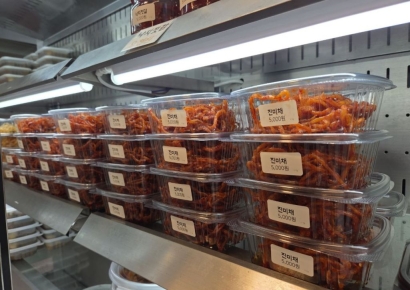 "Auntie, When Will Dried Shredded Squid Return as a Side Dish?"...Once Vanished from Restaurants, Now Making a Comeback
- "Saved Up for Overseas Trips, but When Can We Use Them?"... Korean Air Mileage Surpasses 3 Trillion Won
- "They Thought They Hit the Jackpot: Thieves Steal Nvidia-Branded Trailer, Flee After Discovering Only Sand Inside"
- Resident in Cardiac Arrest After Fire in Eunpyeong Multi-Family Residence on Chuseok
- Already 1,000 Examined, Stirring Up Protest: "Why Go to the Army When We Said No?" Students Rally in the Streets
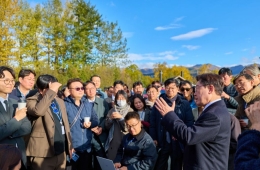
However, the city noted that a fund of KRW 50 billion is insufficient to support all 253 urban renewal districts across Seoul, and therefore it plans to continue urging the central government to ease regulations going forward. At the announcement venue, the heads of associations for the 85 core supply strategy projects attended and submitted a petition to the city detailing the difficulties caused by current central government regulations, including issues related to relocation loans and restrictions on the transfer of association member status. Mayor Oh said, "We will secure the Housing Promotion Fund even if we have to adjust the budget plan, and if necessary, we will expand it further," adding, "We will strongly call on the central government to ease regulations."
© The Asia Business Daily. All rights reserved. Unauthorized AI training and use prohibited.