Government Draws Sword on TRQs That Only Fatten Importers' Pockets... Dedicated Body to Oversee Intensive Management
Measures to Block Unjust Seizure of Tariff Cut Benefits Criticized by Lee
and Achieve the Intended Impact of Price Stabilization Policies
Intensive Management of Items with Prior Violations or Complex Distribution Structures
High-Intensity Special Investigations for Repeated Violations or False TRQ Recommendations
The government will carry out an extensive overhaul of the overall tariff rate quota (TRQ) system, which has been criticized for fattening the pockets of certain importers rather than stabilizing food prices. It will designate a dedicated body to centrally manage the entire process of import, customs clearance, and distribution for TRQ items, and strengthen sanctions such as cancellation of allocated quotas and high-intensity special investigations in the event of violations. The aim is to prevent some importers from abusing the system by deliberately delaying import procedures or domestic distribution in order to seize the benefits of tariff cuts that should be passed on to the public.

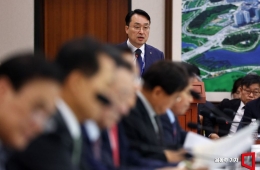
On the morning of the 26th, the Ministry of Economy and Finance announced these measures, titled "Inspection and Improvement Plan for the Tariff Rate Quota System," at the second meeting of the "Task Force on Special Management of Essential Living Costs," presided over by Deputy Prime Minister and Minister of Economy and Finance Koo Yooncheol. A tariff rate quota is a system that lowers tariff rates on specific imported goods to stabilize prices and for similar purposes. Under the Yoon Suk Yeol administration, it was actively used as a tool to curb inflation, with support of more than 1 trillion won each year for around 100 items since 2022.
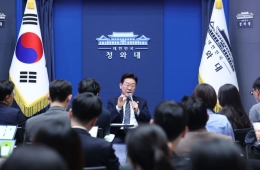
On January 27, President Lee Jaemyung directly criticized the abuse of the expanded TRQ system under the Yoon administration at a Cabinet meeting, stating, "We told them to import cheaply and supply cheaply, but the authorized companies imported cheaply and sold at normal prices, which did nothing to help lower prices and instead allowed them to unjustly profit from taxpayers' money," and ordered improvements to the system.
The government will first designate items with a high likelihood of unfair practices as "intensive management items." These will include food items with storability such as frozen meat and food ingredients, items with a history of violations, and items with complex domestic distribution structures.
Once designated as intensive management items, the current rule on the mandatory deadline for removal from bonded areas (40 days), which now applies only to livestock products, will also apply to them, and any violation will result in additional tariff collection. If an importer delays filing an import declaration, a strict additional tax will be imposed once 20 days have passed since the goods entered the bonded area. Depending on market conditions, a new standard will also be introduced for customs directors to order immediate removal from bonded areas when rapid supply is needed for price stabilization. In addition, the current administrative fine of 1 million won for failing to comply with removal obligations will be raised to 5 million won (provisional).

Post-management will also be strengthened to prevent cases in which the authority to grant tariff exemptions for price stabilization is fraudulently abused. Choi Jaeyoung, Director-General for Customs and Tariff Policy at the Ministry of Economy and Finance, explained, "If companies violate the obligation to remove goods from bonded areas or the obligation to distribute them quickly, they will not only be subject to additional tariff collection but will also face penalties restricting the allocation of TRQ volumes in the future."
A dedicated body will be designated to centrally manage the entire process of import, distribution, and sales for TRQ items. Park Junghoon, Director-General for Food Policy at the Ministry of Agriculture, Food and Rural Affairs, said, "We plan to actively utilize existing TRQ recommendation agencies such as the Korea Agro-Fisheries & Food Trade Corporation (aT)," adding, "We intend to strengthen monitoring to block illegal activities that divert the benefits of tariff reductions away from the public, and to check whether the TRQ system is being operated in line with its original policy objective of stabilizing prices."
The government will also pursue measures to simplify the multi-stage distribution structure in which goods pass through importers, wholesale distribution centers, and retailers before reaching consumers, by increasing the share of direct supply to distribution channels such as large discount stores. An official from the Ministry of Economy and Finance said, "The intention is to adjust the distribution system so that reductions in import prices can be directly felt by consumers."
To further strengthen market monitoring, the government also plans to swiftly complete the agricultural import recommendation management system currently under development, so that recommendation records and customs clearance records can be constantly monitored, and to make it mandatory for importers to report the results of their import execution, including sales prices of agricultural products.
Investigations and sanctions for violations of laws and regulations will also be reinforced. The government plans to conduct intensive customs investigations into importers that repeatedly delay removal from bonded areas or falsely inflate import prices in their declarations, and to carry out high-intensity special investigations into companies that engage in malicious acts such as obtaining TRQ recommendations through false applications.
Recently, the Korea Customs Service conducted a fact-finding investigation into livestock importers, additionally collecting a total of 18.5 billion won in tariffs from 23 companies that delayed domestic distribution, and imposing 380 million won in additional taxes on companies that delayed filing import declarations.
Hot Picks Today
 "It's Just Normal in Korea" Foreigners Marvel at Seoul Subway, Hailed as "Hypermodern"
- "Please Let Me Go Home"... Customers Trapped in Department Store Parking Lot for 5 Hours Vent Their Anger
- "I Should Enjoy It After Retirement": Prices Quadruple... Memberships Over 100 Million Won Popular, but Closures Mount
- “The Strong Drink This” Goes Viral on Social Media... What China's Millennials and Gen Z Are Hooked on After Ditching Coffee and Milk Tea
- "Come Live With Me on My Farm": Man Sells Everything and Travels 1,930 km, Trusting a Beautiful Woman
A government official stated, "The government plans to revise the Customs Act and related laws and regulations so that these measures can be implemented as early as possible," adding, "We will closely monitor whether the effects of these institutional improvements are reflected in the market and, if necessary, prepare additional measures."
© The Asia Business Daily. All rights reserved. Unauthorized AI training and use prohibited.