[Q&A] Song Miryeong: "Nonghyup Reform Plan to Be Announced Next Month... We Will Revise the Election System"
Minister Song Miryeong Holds Regular Briefing on the 9th
Song Miryeong, Minister of Agriculture, Food and Rural Affairs, said on the 9th, "We plan to announce a reform package, including a revision of the election system of the National Agricultural Cooperative Federation (Nonghyup), next month."
On this day, Minister Song held a regular briefing at the Government Complex Sejong and said, "We are trying to conclude discussions on Nonghyup reform tasks by the end of this month."

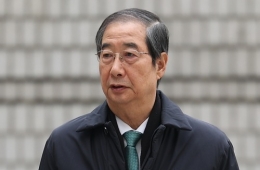
Song Miryung, Minister of Agriculture, Food and Rural Affairs (left), is holding a regular meeting and answering questions at the Government Complex Sejong on the 9th. Ministry of Agriculture, Food and Rural Affairs
View original imageThe Ministry of Agriculture, Food and Rural Affairs held the second plenary meeting of the Nonghyup Reform Task Force on the 6th. At the meeting, participants discussed the basic direction of Nonghyup reform, including expanding transparency in Nonghyup management and strengthening internal control systems, improving the election system to prevent money-driven elections, revitalizing Nonghyup's economic projects, and enhancing the role of urban Nonghyup branches.
Minister Song explained, "We are placing particular importance on several elements of the Nonghyup reform plan, including the revision of the election system, and we are also conducting on-site inspections of local cooperatives," adding, "We intend to announce, in early March, the issues identified through special audits and the institutional reforms to be implemented."
The following are key excerpts from the Q&A session between the press corps and Minister Song.
▲ Please explain the government's 'January 29 Real Estate Supply Measures', which include relocating the Gwacheon Race Park in Gyeonggi Province (Korea Racing Authority LetsRun Park) and developing public housing on the site.
=First of all, I believe the process must move forward based on sufficient consultations with the Korea Racing Authority. We are reviewing relocation sites within Gyeonggi Province. Appropriate relocation sites and related matters must also be thoroughly discussed with the Korea Racing Authority. From the government's perspective, the horse industry is important, and so are the employees working at the Korea Racing Authority. The local community is, of course, important, and so is the supply of housing, which is a matter of broad importance for our society as a whole. We will make sure that these factors are balanced so that the playing field does not become tilted, and we will reach a decision after sufficient consultation.
▲ Is there a possibility of further opening the agricultural market in relation to non-tariff negotiations with the United States?
=The Korea-U.S. tariff consultations do not appear to be proceeding as originally scheduled, and, as far as I know, this is an issue related to delays in legislation at the National Assembly. The Ministry of Agriculture, Food and Rural Affairs will implement the agreed measures within the scope of the previously agreed Joint Fact Sheet and will not go beyond that scope.
▲ What impact will the expansion of imports of U.S. potatoes have on the domestic potato industry?
=Potatoes produced in 22 U.S. states are already being imported, and they have not affected the Korean market because domestically produced potatoes are competitive in terms of quality and price. With potatoes from an additional 11 states being added this time, we assess that "the impact on the domestic market will be very limited." The decision to allow imports of U.S. potatoes was made after more than six years of scientific reviews on pests and diseases, and it is unrelated to the approval of imports of other agricultural products.
▲ What impact would the introduction of a sugar levy have on prices?
=The amendment to the National Health Promotion Act provides for the introduction of a sugar levy limited to sugar-sweetened beverages. If the sugar levy is introduced only for sugar-sweetened beverages, we assess that "the impact on price inflation will be limited." However, we will need to conduct scenario-based analyses for more concrete estimates.
Hot Picks Today
 "Two Spend 500,000 Won in a Flash, Yet Wait Two Hours?" ... 'Dreamland' Shunned by Kids and Foreign Tourists
- The Era of Getting 200 Million Won After 30 Years Is Over... A Japanese Bank's "Perpetual Department Head" Who Just Clocked In Cries Out
- Spain Hit by Its Worst Tragedy... Lee Kangin, Moreno and Real Madrid Join Soccer World in Mourning
- They Said, “Make It Your Home for Life” - Then Suddenly Kicked 200 Passengers Off... What Happened to the Around-the-World Cruise?
- "130 Rice Bowls Sold Out in a Day"... 'Unfiltered Face' Adds 8 Million Won to Night Market Sales: China's Bungeunwoo
▲ What measures are in place in case rice prices rise further?
=Current rice stock levels are not particularly high compared with the average for previous years. However, if there are concerns about a "sharp surge in prices," I can say that the government has policy tools at its disposal and "can release rice from government reserves."
© The Asia Business Daily. All rights reserved. Unauthorized AI training and use prohibited.