Intensified Checks on Coupang... Flashpoint for Trade Talks and Small Merchants
Ruling Camp Moves to Allow Early-Morning Delivery by Large Discount Stores
Legislation Aimed at Resolving Online-Offline Regulatory Imbalance in Distribution
Also Seen as a Counter to Tepid Response to Coupang Personal Data Leak
Backlash from Small Merchants and Labor Groups a Key Variable
U.S. Congress' Perception of "Discrimination Against Coupang" Also a Burden
The political sphere is accelerating efforts to ease distribution regulations. In the wake of Coupang's massive personal data leak, there is a move to tighten control over online platforms, which had been relatively loosely regulated, while easing the constraints on offline sales channels. Measures under discussion include allowing early-morning delivery by offline channels such as large discount stores and super supermarkets (SSMs), and shortening the settlement cycle for sales proceeds paid by large-scale distributors. However, small merchants and labor groups are opposing these moves, and there is considerable concern that the issue could escalate into a trade dispute between South Korea and the United States, so the legislative process is expected to face difficulties.

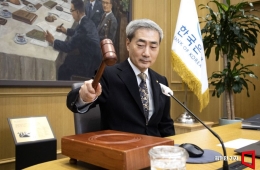
According to related industry sources on the 9th, the Democratic Party of Korea, the government, and the presidential office held a high-level party-government meeting the previous day and reached a consensus to amend the Distribution Industry Development Act. With the aim of resolving the regulatory imbalance between online and offline channels and creating a fair competitive environment, they plan to push forward legislation to rationalize online delivery regulations, including allowing early-morning delivery by large discount stores.
The outline of the legislative initiative led by the ruling camp has already emerged. According to the partial amendment bill to the Distribution Industry Development Act that 15 Democratic Party lawmakers, including Assemblyman Kim Donga, have pre-announced, the core content is to allow online delivery for large discount stores and quasi-large stores within the scope of business hour restrictions. The current Distribution Industry Development Act stipulates that large discount stores and quasi-large stores are subject to "business hour restrictions from midnight to 10 a.m." and "designation of two mandatory closing days per month." In this regard, online platforms including Coupang have been able to offer early-morning delivery, while large discount stores have not been allowed to provide such services, leading to claims that this constitutes reverse discrimination.

The opposition party is pushing for an even more relaxed amendment. Under the amendment bill pre-announced by 11 People Power Party lawmakers including Assemblyman Kim Sungwon, the regulation on business hour restrictions for large discount stores and quasi-large stores would be abolished, and the principle of designating two mandatory closing days per month on public holidays would be deleted. Instead, the number and days of mandatory closing would be autonomously determined in accordance with local conditions in each region.
An industry official said, "Although this started as a move to keep Coupang in check, it is positive in the sense that there is now a consensus on the need to resolve the regulatory imbalance between online and offline sales channels," adding, "From the perspective of offline sales channels, not only allowing early-morning delivery but also easing mandatory closing regulations must be pursued in tandem."
Legislation to amend the Act on Fairness in Large Franchise and Retail Business, targeting Coupang, is also underway. The plan is to shorten the settlement deadline for sales proceeds from goods directly purchased by the platform, such as those for rocket delivery, from the current 60 days to a maximum of 20 days. It also includes reducing the settlement deadline for consignment transactions from 40 days to a maximum of 10 days. The proposal by 12 lawmakers from the broader pro-government camp, including Assemblyman Song Jaebong, also contains a provision requiring large-scale distributors to deposit and manage at least 50% of sales proceeds for goods with banks or other financial institutions specified by presidential decree. The intent is to keep funds owed to suppliers safely segregated.

On the 6th, in front of the main gate of the National Assembly in Yeouido, Seoul, participants at a joint press conference held by Hanguk Jungsosangin Jayeongeopja Chongyeonhaphoe, Mateu Saneop Nodongjohap, and Chamyeoyeondae Minsaeng Huimang Bonbu are denouncing the government and the ruling party for pushing to allow early-morning delivery by large supermarkets. Yonhap News
View original imageSuch legislation faces obstacles because the views of stakeholders are sharply divided. Small merchants and unions representing mart and parcel delivery workers immediately protested that allowing early-morning delivery by large discount stores would destroy small offline commercial districts and increase the work burden on mart and delivery workers. Taking this into account, the party and government plan to soon announce a mutual growth package to protect, foster, and support traditional markets and neighborhood commercial districts. They also decided to prepare measures to protect the health rights of delivery workers. If the settlement cycle for sales proceeds is brought forward, it could further intensify funding pressures on Homeplus, which is already facing an existential crisis due to liquidity deterioration.
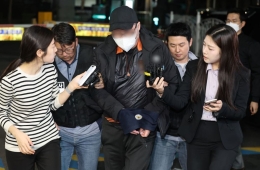
In a situation where South Korea-U.S. tariff negotiations are tough, it is also impossible to ignore that the U.S. Congress views regulations by our government and political circles applied to Coupang as discrimination against a U.S. company. The U.S. House Judiciary Committee has recently demanded that Harold Rogers, acting head of Coupang's Korean subsidiary, appear on the 23rd to testify about what it calls the South Korean government's "targeting" of U.S. companies.
Hot Picks Today
 Despite "Insufficient Balance" Notices, They Board Anyway... Reports of Foreign Fare Evasion Mounting
- "If It Helps My Child's Studies, It's Worth Every Penny"... U.S. Parents Open Their Wallets for $10,000 Tests
- [Exclusive] "We Came for a KRW 140,000 Trip": Following Chinese Tourists in Korea Uncovers a 'Suspicious' Tour
- "I'm paying to stay, and you want me to do the laundry and dishes too?" ... Airbnb bans excessive cleaning demands
- "Baek Jongwon Had Been Quiet, Then Hit It Big"... Waits in the 100s in U.S. Despite KRW 46,000 Pork Belly
In the subpoena, U.S. House Judiciary Committee Chairman Jim Jordan of the Republican Party and Scott Fitzgerald, chairman of the Subcommittee on Administrative State, Regulatory Reform, and Antitrust, stated that "the South Korean government has continued its targeted attacks despite a recent trade agreement with the Trump administration in which it pledged to avoid discriminatory treatment of U.S. companies and the creation of unnecessary barriers," and argued that "the South Korean government's moves to target Coupang and seek the indictment of an American executive are in direct conflict with its recent commitments."
© The Asia Business Daily. All rights reserved. Unauthorized AI training and use prohibited.