"Collective Response to Corporate Abuse Now Possible"...Exempting SME Group Bargaining from the Fair Trade Act
First Meeting of the "Task Force on Strengthening the Bargaining Power of Economically Weak Parties"
Plan to Grant Legal Exemptions for Collective Bargaining by Small Business Operators
Going forward, even if small business operators negotiate collectively with large corporations to secure their fair share, they will no longer be punished for "collusion." In addition, a plan is being pursued to clearly exclude collective actions by workers and service providers under the Labor Union Act from the scope of the Fair Trade Act, in order to guarantee the exercise of their legitimate rights.

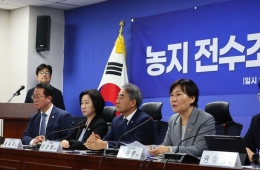
On February 9, the Korea Fair Trade Mediation Agency in Seoul hosted the first meeting of the "Task Force on Improving Fair Trade Systems to Strengthen the Bargaining Power of Economically Weak Parties," where the Korea Fair Trade Commission discussed plans to revise the Fair Trade Act along these lines.
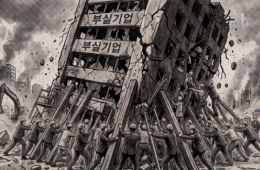
The core of this reform is to resolve the "power imbalance" between large corporations and small and medium-sized enterprises. Until now, small business operators have found it difficult to raise their voices collectively to secure their fair share, because they were constrained by the collusion provisions of the Fair Trade Act.
Through this institutional improvement, the Korea Fair Trade Commission has decided to pursue a measure that would recognize exemptions from the Fair Trade Act when small business operators that meet certain criteria engage in collective bargaining with large corporations and others. Once this measure is introduced, small and medium-sized enterprises are expected to be able to exercise collective bargaining power without concerns about violating the law and discuss contract terms from an equal position.
The Korea Fair Trade Commission is also reviewing a plan to clearly exclude workers under the Labor Union Act, service providers under the Industrial Accident Compensation Insurance Act, and labor unions from the scope of the Fair Trade Act. There has been frequent confusion in the field over whether to regard collective actions by specially employed service providers as "concerted actions by business associations" and thus subject to the Act. By excluding these parties entirely from the scope of application, the Korea Fair Trade Commission intends to exempt them from the Fair Trade Act without additional review and thereby guarantee the exercise of their legitimate rights.
However, the Korea Fair Trade Commission plans to design the system carefully so that such collective responses by weaker parties do not lead to price increases that fuel consumer inflation, or undermine the competitiveness of exporting companies. During the task force discussions, particular focus will be placed on issues such as the method and scope for recognizing exemptions from application, and measures to control potential side effects.
Hot Picks Today
 "President's Salary and Home Address Also Leaked"...Costa Rica in Uproar Over Dark Web Exposure of '400 Million' Personal Records
- Godongjin: "Honam Semiconductor Is for Election Purposes... The Market Could Shift by Completion" [AI Rulemakers] ⑨
- "Contributing 9 Million Won Annually…430,000 Won per Month Steadily from Age 65" …The Power of the “Three-Tier Pension”
- "I’ll Take This, Please"... Buying the Last Lottery Ticket Brings a Jackpot
- [Exclusive] "Nvidia Researchers to Head to Yangjae"... LG Teams Up to Create Joint Robot Development Hub
Based on the outcome of the task force discussions, the Korea Fair Trade Commission plans to finalize the improvement plan within the first half of this year and then launch a full-scale process in the second half to amend the Fair Trade Act and its subordinate regulations.
© The Asia Business Daily. All rights reserved. Unauthorized AI training and use prohibited.