[Economy Pulse]Trump's Selective Pressure on the Weak and Deference to the Strong

As the United States has begun procedures to raise the agreed tariff rate on Korea from 15% to 25%, citing delays in the enactment of the Special Act on Investment in the United States, President Donald Trump suddenly announced that he had reached a tariff agreement with India. He is using Korea as an example to pressure compliance with the deal, while at the same time extending an olive branch to India.
Over the past year, negotiations between the United States and India have made little progress. In fact, because India has been importing large volumes of Russian crude oil and thereby "funding Russia's war," President Trump imposed an additional 25% tariff, forcing India to endure a punitive tariff rate of 50% since last August. In February last year, Indian Prime Minister Narendra Modi hurriedly visited the United States, highlighting his personal rapport with President Trump and rushing into trade talks in a manner similar to Japan, but the outcome was disappointing. The negotiations reached an impasse after merely reaffirming Trump's commitment to high tariffs.
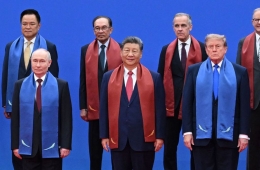
The turning point came at the ASEAN+3 summit held in Malaysia at the end of October. Shortly after the United States imposed high tariffs on India, India was already responding by concluding a Free Trade Agreement (FTA) with the European Union (EU). From the U.S. perspective, there must have been a growing sense of crisis that its unilateral pressure tactics might no longer work.
Deepening diplomatic isolation also contributed to Trump's change in attitude. Late last year, when President Trump again raised the idea of purchasing Greenland, anti-American sentiment in European countries soared to new heights. The European Parliament postponed ratification of a tariff agreement with the United States and demanded renegotiation. President Trump attended the World Economic Forum (WEF) in Davos at the beginning of the year in an attempt to mollify Europe, but returned empty-handed. If anything, many countries, including Germany, have moved closer to China again.
To make matters worse, the domestic situation in the United States is also difficult. A heavy-handed crackdown on undocumented immigrants by U.S. Immigration and Customs Enforcement (ICE) led to the deaths of two citizens in Minnesota, sparking public outrage. It was this same ICE that raided the Hyundai Motor–LG joint-venture battery plant in Georgia last September and arrested 475 workers. In the past, despite frequent fatal incidents, President Trump drew national indignation by insisting on the legitimacy of rooting out illegal immigration rather than offering condolences to the bereaved families.
On top of this, with the new fiscal year starting in April approaching, budget negotiations are faltering, reviving fears of a federal government shutdown. After experiencing a partial shutdown in January, the government only managed to put out the immediate fire with a short-term budget bill, and with no fundamental agreement in place, there is serious concern that another shutdown could occur in early April.

In his second year in office and facing midterm elections, President Trump is surrounded by domestic and international headwinds created by his reckless and unilateral policies. Except for a few cases such as the United Kingdom and the EU, tariff negotiations are still ongoing, and even the published fact sheet represents only a basic agreement, not a complete settlement. Korea is also continuing negotiations to remove non-tariff barriers.
Ultimately, President Trump must have desperately needed visible achievements within this year in order to win the midterm elections. This is the backdrop to why the United States has been so forcefully demanding that Korea enact a special investment law. While embracing India, which has joined hands with the EU, the United States has taken retaliatory measures against Korea, which is heavily dependent on the United States in both security and economic terms and therefore finds it difficult to push back. This starkly reveals Trump's characteristic tendency to be weak toward the strong and ruthless toward the weak.
In many respects, the agreement with India appears to have been hastily put together. Apart from agreeing to halt imports of Russian crude oil, most of the supposed achievements remain highly questionable. In particular, President Trump's reference to "India importing 500 billion dollars worth of U.S. goods" is an unattainable figure, given that India's imports from the United States stood at around 40 billion dollars in 2024. It is highly likely to be a classic publicity strategy to exaggerate the outcome of the negotiations.
Fortunately, our National Assembly has decided to move quickly on enacting the Special Act on Investment in the United States. It is an undeniable mistake that the finance minister's remarks about delaying the timing on the grounds of exchange-rate instability, along with the legislative delay, gave Trump a pretext to raise tariffs. Annual investment in the United States amounting to 20 billion dollars is clearly a heavy burden on our economy. However, for now, the best course of action is to enact the law swiftly and persuade the United States to keep the tariff rate at 15%. We must soberly reflect on the fact that last year the United States emphasized "implementation" as much as the content of the agreement itself.
Hot Picks Today
 "Two Spend 500,000 Won in a Flash, Yet Wait Two Hours?" ... 'Dreamland' Shunned by Kids and Foreign Tourists
- The Era of Getting 200 Million Won After 30 Years Is Over... A Japanese Bank's "Perpetual Department Head" Who Just Clocked In Cries Out
- Spain Hit by Its Worst Tragedy... Lee Kangin, Moreno and Real Madrid Join Soccer World in Mourning
- They Said, “Make It Your Home for Life” - Then Suddenly Kicked 200 Passengers Off... What Happened to the Around-the-World Cruise?
- "130 Rice Bowls Sold Out in a Day"... 'Unfiltered Face' Adds 8 Million Won to Night Market Sales: China's Bungeunwoo
Jung Inkyo, Professor at the Department of International Trade, Inha University (former Chief Negotiator for Trade)
© The Asia Business Daily. All rights reserved. Unauthorized AI training and use prohibited.