U.S. Redesigns Critical Minerals Cooperation Framework... South Korea to Remain FORGE Chair Country
Parallel Multilateral and Bilateral Cooperation, with a U.S.-Korea MOU Proposal Under Review
Separate Mechanism with the EU and Japan Also in the Works
The United States is understood to be in full swing pushing a multi-layered cooperation framework that combines the restructuring of multilateral consultative bodies with bilateral cooperation in order to secure critical mineral supply chains. This is interpreted as a strategy to keep China in check while simultaneously securing both national security and competitiveness in high-tech industries.

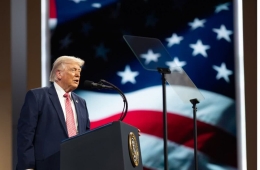
Cho Hyun, Foreign Minister, is attending the Critical Minerals Ministerial Meeting held on the 4th (local time) in Washington DC, United States. Photo by Ministry of Foreign Affairs
View original imageSouth Korea is prioritizing participation in multilateral cooperation mechanisms in which it has already been involved, while also reviewing whether to join separate consultative bodies that the United States is promoting mainly with the European Union (EU) and Japan, as well as potential bilateral cooperation between South Korea and the United States.
According to the Ministry of Foreign Affairs on the 5th, Foreign Minister Cho Hyun attended the Critical Minerals Ministerial Meeting held on the 4th (local time) in Washington, United States. Using this meeting as a starting point, the “Facilitating Outstanding Resource Growth for the Energy transition (FORGE) Initiative” was officially launched, and the Trump administration is now pushing to reorganize the Minerals Security Partnership (MSP), which was established during the Joe Biden administration.
The 17 existing MSP member countries automatically became FORGE participants, and South Korea, which has served as MSP chair since July 2024, decided to remain as FORGE chair country until June this year. Within the FORGE framework, South Korea will both continue its existing role and at the same time find itself in a position where it must respond to future changes in the cooperation structure.
Separately from FORGE, the United States is also known to be considering an additional mechanism aimed at cooperation with the EU and Japan. However, this consultative body is still in its early stages, and its specific objectives and scope of participation have not yet been finalized. The U.S. side has described this as a concept for a “critical minerals preferential trade zone” that would set reference prices for each stage of production.
Regarding this, the Ministry of Foreign Affairs stated that it is “a mechanism that is slightly different in nature from FORGE,” and added, “Although it shares the same overarching purpose, no concrete review of participation at the government level has yet taken place.” It is understood that, as of now, the United States has not formally requested South Korea’s participation.
At the same time, the United States is also pursuing bilateral memorandums of understanding (MOUs) on critical mineral cooperation with individual countries, and a proposal has been conveyed to South Korea and is under review. As a result, South Korea is simultaneously examining multiple options: maintaining multilateral cooperation, joining new consultative bodies, and strengthening bilateral cooperation.
This meeting was hosted by the U.S. Department of State and was attended by more than 50 countries, including the G7 nations, that are cooperating across the entire supply-chain cycle, from mining and refining to intermediate goods and finished product manufacturing. Vice President J.D. Vance, Secretary of State Marco Rubio, and Jamison Greer, head of the Office of the United States Trade Representative (USTR), along with many other key figures in the Trump administration, attended in force to share policy directions for diversifying critical mineral supply chains.
Hot Picks Today
 "Japanese Consumers Fall for K-Beauty Like Kore...
- "Sulfur Supply Shock More Alarming Than Oil... Impact Spreads to Semiconductors ...
- Early Rally: KOSPI Eyes 6,200 Mark in Morning Trade
- The Wealthier They Are, the Less They Believe in the "Invincibility of Real Esta...
- Israeli Soldier Smiling, Woman Trembling... Italian Magazine Photo Shocks the Wo...
The participants agreed on the importance of cooperation among reliable partners amid growing geopolitical uncertainty and stressed the need to accelerate multilateral cooperation to restructure critical mineral supply chains.
© The Asia Business Daily(www.asiae.co.kr). All rights reserved.