National Medical Center Relocation and Reconstruction Project Set at 1.8 Trillion Won...Groundbreaking in First Half of Next Year
Construction Cost and Inflation Reflected in 24% Budget Increase...Completion Scheduled for 2030
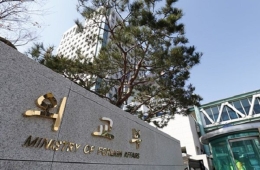
The Ministry of Health and Welfare announced on the 5th that the project to relocate and rebuild the National Medical Center, currently located in Jung-gu, Seoul, and to construct the Central Infectious Disease Hospital has completed total project cost adjustment consultations with the Ministry of Economy and Finance and has entered the detailed design phase.

The total project cost was finally set at 1.8345 trillion won, an increase of 24.0% (354.5 billion won) from the original 1.48 trillion won. In particular, construction costs were set at 920.3 billion won, up 61.4% from the original estimate, reflecting higher labor and material costs due to inflation and the site conditions in downtown Seoul.
Preliminary procedures for project implementation and the process of transferring the site have also been completed. The former U.S. Army Corps of Engineers site, which will be the new relocation site, underwent cultural heritage surveys and soil decontamination work starting in August 2023, and management authority was recently transferred from the Ministry of National Defense to the Ministry of Health and Welfare.
Through this project, the National Medical Center, the Central Infectious Disease Hospital, and a trauma center will be built in a complex with four underground floors and 14 above-ground floors, a total floor area of 189,681 square meters (approximately 57,378 pyeong), and a total of 776 beds (526 general beds, 150 negative-pressure beds, and 100 trauma beds). With the project cost finalized, the ministry will fully embark on the final design phase, the detailed design, with the goal of starting construction in the first half of next year and completing the project by the end of 2030.
For the Central Infectious Disease Hospital, 500 billion won in donations contributed in 2021 during the COVID-19 pandemic by the bereaved family of the late Samsung Chairman Lee Kun-hee, along with the investment income generated from these funds, will be used as construction financing.
In addition, office space for six commissioned projects, including the National Emergency Medical Center and the National Dementia Center, which were not originally included in the project scope, will now be incorporated into the design, and additional project costs for these will be reflected separately at a later stage.
Hot Picks Today
 Despite "Insufficient Balance" Notices, They Board Anyway... Reports of Foreign Fare Evasion Mounting
- A 'Premium Dessert' from Korea... 'Orion Custard' Hits Big in China and Vietnam as Production Lines Expand
- "I Hide in the Classroom Alone to Eat Steamed Buns. Please Help Me"... Tearful Plea Draws 600 Million Views, But It Turns Out...
- "I Killed My Mother": Daughter in Her 40s Reports Herself to Police; Police Make Emergency Arrest
- [Exclusive] "We Came for a KRW 140,000 Trip": Following Chinese Tourists in Korea Uncovers a 'Suspicious' Tour
Lee Joongkyu, Director-General for Public Health Policy at the Ministry of Health and Welfare, said, "We will make thorough preparations so that the National Medical Center can have the capabilities and status befitting a central institution for essential national healthcare," adding, "We will do our utmost in promoting this project to live up to the noble intentions and expectations of the donor."
© The Asia Business Daily. All rights reserved. Unauthorized AI training and use prohibited.