"My Neighborhood Convenience Store Is Gone"...First Decline Since Introduction in Korea After Growing to Japan-Like Levels
First Store Decline Since Industry Launch in 1988
1,600 Locations Closed in One Year
Strategic Closures Spread Amid Market Saturation and Rising Labor Costs
With market saturation, weakened consumer spending, and rising labor costs overlapping, growth in the domestic convenience store industry has come to a halt. As the number of stores operated by the four major convenience store chains declined for the first time since statistics began to be compiled, and both sales and transaction counts slowed, a restructuring trend is spreading across the industry.

According to the Ministry of Trade, Industry and Energy on the 4th, the number of stores operated by the four major convenience store chains in Korea (GS25, CU, 7-Eleven, and Emart24) stood at 53,266 as of the end of last year. This represents a decrease of 1,586 from the previous year’s 54,852 stores. Since the convenience store industry was introduced in Korea in 1988, this is the first time that the annual number of stores has declined.
The main cause of the decline in store count is cited as market saturation. Japan, with a population of about 120 million, more than twice that of Korea, has around 57,019 convenience stores, a level similar to Korea’s. This is pointed to as an indicator that the domestic convenience store market is overcrowded. In addition, the burden of labor costs due to annual increases in the minimum wage, as well as weakened consumer sentiment caused by the economic slowdown, are also analyzed to have squeezed franchisees’ profitability.
There is also an assessment that, as consumer sentiment weakened and preference for ultra-low-priced products grew, convenience stores, which are relatively expensive among offline retail channels, took a direct hit. In fact, total sales of the four major convenience store chains last year increased by only 0.1% year-on-year. Despite being a sector that significantly benefited from the government’s consumer coupon policy, growth has effectively come to a standstill, and some point out that, after accounting for inflation, it is closer to negative growth in real terms.
The slowdown in performance is also clear. The year-on-year sales growth rate of the four major convenience store chains plunged from 8.0% in 2023 to 3.9% in 2024 and 0.1% in 2025. Year-on-year growth in the number of purchase transactions also shifted, rising 1.9% in December 2024 but turning to a 0.7% decline in December last year, one year later.
Hot Picks Today
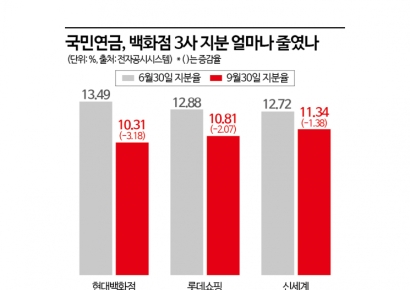 'Big Investor' NPS Has Already Cut Its Losses... Sold Department Store Stocks in Q3 Despite Strong Earnings Outlook
- "There's a Drink Like This?"... Chinese Beverage With "Korean" in Its Name Rakes in 85 Million Won in Monthly Sales
- "Bump," Then "My Phone's Broken"... Man in His 20s Arrested for Scamming 22 Million Won in Repair Costs
- "I Put in 10 Million Won, but Only 2 Million Won Is Left" ... 77% Plunge Leaves Retail Investors in Samsung Electronics and SK hynix Leveraged ETFs Crying Out
- "The leggings are all see-through. It's so embarrassing to look at," complaints prompt Lululemon to fire development staff.
The industry is expected to focus on strengthening fundamentals by reducing low-profit stores. As 7-Eleven carried out store efficiency measures, its number of stores stood at 12,152 as of the end of 2024, down by more than 2,000 from 14,265 in 2022. Last year as well, the company continued its “strategic closures,” including closing around 700 stores in just the first half.
© The Asia Business Daily. All rights reserved. Unauthorized AI training and use prohibited.