[Choi Seokjin's Law & Biz] Aftermath of the Pizza Hut Ruling... Franchisees File Lawsuits One After Another
Wave of lawsuits spreads after Supreme Court ruling in Pizza Hut case
Other lawsuits against different franchisors also pick up speed
Following YK, Choi Sun and Doa also pursue differential franchise fee suits
Franchisors' information disclosure
In September 2024, after the appellate court in the second trial of the Pizza Hut differential franchise fee lawsuit ordered the headquarters to return to store owners an amount of differential franchise fees nearly three times that awarded in the first trial, other franchise store owners who had been watching how the case unfolded began filing a series of lawsuits against their own headquarters.
Starting with BHC and Lotte Super/Lotte Fresh, store owners from 16 franchise brands, including Baskin Robbins, Puradak, Kyochon Chicken, BBQ, Goobne Chicken, Twosome Place, Mom's Touch, and Burger King, visited YK Law Firm and entrusted it with their cases. After the Supreme Court finally ruled in favor of the franchise store owners on the 15th of last month, inquiries from store owners of various other franchise brands have continued, and additional retainers are now being signed.
![[Choi Seokjin's Law & Biz] Aftermath of the Pizza Hut Ruling... Franchisees File Lawsuits One After Another](http://www.asiae.co.kr/news/img_view.htm?img=2026020413395828458_1770179998.jpg)
Frank Burger, Myeongryun Jinsa Galbi, Mega MGC Coffee...Wave of lawsuits spreads against franchisors
Other law firms have also joined the wave of differential franchise fee lawsuits.
Law Firm Choisun filed separate lawsuits in July last year to demand the return of differential franchise fees from Frank F&B Co., Ltd., the operator of Frank Burger, and from Myeongryundang Co., Ltd., the operator of Myeongryun Jinsa Galbi. The Frank Burger case was referred to mediation in August last year, but mediation broke down in October of the same year, and a hearing has now been scheduled for March 24. The Myeongryundang case was referred to mediation in September last year, with two mediation sessions held in October and December, and a third mediation date has been set for the 11th of this month.
Doa Law Firm plans to file the first differential franchise fee lawsuit against Mega MGC Coffee, which has more than 4,000 franchise locations in Korea, in March. Going beyond merely recruiting plaintiffs to participate in the lawsuit, the firm has signed a memorandum of understanding (MOU) with the Mega MGC Coffee Franchisee Council, which has around 1,000 member store owners, and has begun providing responses and legal advisory support regarding the headquarters' unfair trade practices.

Park Jongmyung, representative attorney at Doa Law Firm, said, "Since the Supreme Court handed down its ruling in the Pizza Hut case, we have been inundated with inquiries from store owners who want to participate in lawsuits," adding, "Many store owners are contacting our office, but at the moment we are not taking individual cases; we are only accepting clients through the council."
Attorney Park added, "In addition to differential franchise fees, we plan to support store owners through separate lawsuits regarding other problematic areas, such as the unfair shifting of promotion costs onto franchisees."
Meanwhile, with the Pizza Hut case now concluded, the remaining lawsuits are also expected to pick up speed. In the Twosome Place case, a mediation session will be held on the 3rd of next month; in the BBQ case, a hearing is scheduled for the 6th of next month; in the Dujjim case, a hearing is scheduled for the 12th of next month; and in the Burger King case, a hearing is scheduled for the 24th of next month.
Revisions to laws, enforcement decrees, and notices...A turning point for modernizing the system
The Pizza Hut lawsuit has served as a catalyst for overhauling the entire domestic franchise business system.
After the litigation began, the Fair Transactions in Franchise Business Act and its enforcement decree were amended so that the obligations to register and provide disclosure documents and to place franchise fees in escrow were extended to small franchisors with annual sales of 200 million won or less and fewer than five franchise locations. In addition, when advertising or promotional events are conducted at the franchisee's expense, it became mandatory to obtain prior consent from a certain percentage of franchisees.
Furthermore, the types of essential items and the method for calculating their supply prices became mandatory items to be specified in franchise agreements, and a new provision was introduced requiring franchisors to consult with franchisees in advance when changing transaction terms, such as essential items, in a way that is unfavorable to franchisees. To strengthen the bargaining power of franchisees, a registration system for franchisee organizations was introduced, and a new rule was established obligating franchisors to respond in good faith to consultation requests from organizations registered with the Korea Fair Trade Commission.
At the end of last month, the Korea Fair Trade Commission pre-announced for legislation a draft amendment to the enforcement decree of the Fair Transactions in Franchise Business Act that reorganizes the structure and content of disclosure documents in order to resolve the "information asymmetry" between franchisors and franchisees, and it also pre-announced related amendments to its public notices. The amended enforcement decree and notices include provisions requiring franchise business operators to record in the disclosure documents their payment information for initial franchise fees and other costs paid before the opening of a franchise location.

On the 2nd, at the YK Law Firm Gangnam main office in Gangnam-gu, Seoul, attorney Hyun Minseok is giving an interview to The Asia Business Daily. Photo by Yoon Dongju
View original image"Inevitable growing pains" despite industry concerns
The Pizza Hut differential franchise fee lawsuit, which shook Korea's franchise market with sales reaching 162 trillion won, posed the question to our society: "Is it truly legitimate for franchisors to collect undisclosed, off-contract margins from store owners under the guise of business practice?" The Supreme Court answered this by ruling that "undisclosed differential franchise fees (distribution margins) constitute unjust enrichment without legal cause."
It is true that the franchise industry is facing a crisis as the risk of litigation is now being added to the existing burdens of sluggish domestic demand, intensifying competition, and rising costs of various kinds. Both inside and outside the industry, however, there is analysis that these are inevitable growing pains that the sector had to go through at least once in order to establish an advanced franchise business system. What is clear is that this ruling has become the starting point for eliminating the so-called "blind distribution margins" that had long been tolerated in the name of business practice.
Related Articles
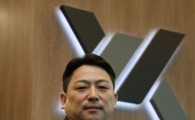 The Ruling That Shook the Industry: Attorney Hyun Minseok of YK Expects a Turning Point for Win-Win Relations Between Franchisors and Franchisees
Hyun Minseok, a partner attorney at YK Law Firm who represented the franchise store owners in the Pizza Hut differential franchise fee lawsuit, said, "The Supreme Court has now definitively confirmed, through judicial decision, the legislative determination embodied in the Fair Transactions in Franchise Business Act that 'there is no such thing as an automatic margin,'" adding, "This ruling is a stern order from the judiciary, telling franchisors and store owners to meet again on the basis of 'transparent contracts.'"
© The Asia Business Daily(www.asiae.co.kr). All rights reserved.