Choi Eunseok: "Job Shock from AI and Robot Expansion"...Bill Introduced to Mandate Employment Stability
Bill to Promote AI Development and Build a Trusted AI Ecosystem Introduced
Mandatory Job-Transition Training and Employment-Stability Support Measures
As the rapid development of artificial intelligence (AI) and robotics is expected to cause job shocks in the labor market, a bill has been introduced to strengthen the government's responsibility for employment stability.
On the 3rd, Choi Eunseok, a People Power Party lawmaker representing Daegu Dong-gu and Gunwi-gun (Gap constituency), announced that he had sponsored a partial amendment to the Framework Act on the Promotion of AI Development and the Creation of a Trusted AI Ecosystem.
Recently, as seen in the Hyundai Motor labor union's opposition to deploying the humanoid robot "Atlas" to production sites, labor-management conflicts over the introduction of so-called "physical AI" are intensifying across industrial workplaces.
According to industry sources, while the annual maintenance cost of the humanoid robot "Atlas" is around 14 million won, the average annual salary of Hyundai Motor employees reaches 130 million won. Robots can operate 24 hours a day, allowing them to far surpass humans in terms of productivity. This is why "employment fears" are spreading across society, with concerns that not only simple, repetitive work but even professional jobs could be threatened.

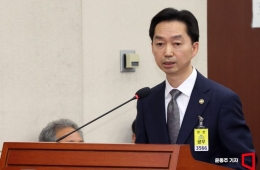
Choi Eunseok, member of the People Power Party. Provided by the office of Choi Eunseok.
View original imageIn response, Representative Choi prepared an amendment that would require the AI master plan under the AI Framework Act to explicitly include measures to respond to changes in the employment environment caused by AI technology development, as well as policies to support employment stability and labor transition for the public.
The current law is focused on promoting the AI industry and advancing technology, and has been criticized for lacking concrete legal grounds for the government's response to rapidly changing working conditions and job-related issues.
Accordingly, the main thrust of this amendment is to obligate the government to closely forecast changes in the employment environment driven by the spread of AI and to establish mandatory measures such as job-transition training and employment-stability support, so that workers are not pushed out by AI technologies but can continue working by adapting to the new industrial environment.
Hot Picks Today
 "300,000 Won Grant" Shelved at Chuseok to Go to All Residents After All... This City Says It Will Pay Before Lunar New Year
- "Didn't Save This Money to Leave to Our Kids?"... Retired Couples Spend $10,000 on a Single Trip
- "Make $10 Million by Flipping It Right After Delivery?"... The Market Drawing the World's Ultra-Rich in ‘This Market’
- Friend Who Went Abroad Goes "Silent"... 617 South Koreans Out of Contact, What's Going On?
- "Stockpile 9 Liters of Bottled Water and Three Days' Worth of Food"... UK on Edge as Nationwide Emergency Preparedness Alert Issued
Representative Choi stressed the legislative intent, saying, "Productivity innovation through the introduction of AI and robots is an unstoppable trend, but if we neglect the employment anxiety experienced by workers in this process, we will end up paying a serious price in the form of social conflict," and added, "As the Hyundai Motor case shows, we need a proactive and systematic master plan at the government level so that technology does not replace humans, but rather the benefits of technological progress lead to a stronger employment safety net."
© The Asia Business Daily. All rights reserved. Unauthorized AI training and use prohibited.