[Insight & Opinion] New Media Power in an Era of Extreme Politics
The Dangerous Alliance Between Agitational Political YouTube Channels and Camp-Based Politics
![[Insight & Opinion] New Media Power in an Era of Extreme Politics](http://www.asiae.co.kr/news/img_view.htm?img=2026020409375927905_1770165479.jpg)
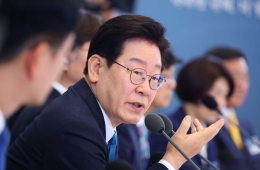
The influence of Kim Eo-jun on the Democratic Party is already well known. Most recently, his response to Prime Minister Kim Minseok drew attention. At the memorial altar for former Prime Minister Lee Haechan, he posed an uncomfortable question to Prime Minister Kim and then introduced it the following morning on his YouTube show. Previously, when Prime Minister Kim had asked to be excluded from a poll of potential candidates for the next Seoul mayoral race, Kim Eo-jun brushed it off, saying, "That is for this side to decide, and for the polling agency to judge." It was bound to stir controversy. Many interpreted it as a strategic move aimed at influencing the relationship between the party and the government, as well as the power struggle within the party. In this era of camp-based politics, he represents a new kind of media power.
This is not limited to the ruling camp. Hardline conservative YouTubers who claim to be the "free right wing" are also accompanying the moves of Jang Donghyuk, leader of the People Power Party, who stands at the center of controversy. It appears that he has effectively inherited the political mobilization power and information of those YouTubers on whom former President Yoon Sukyeol relied. Established conservative media outlets criticize Jang's actions, arguing that they are confining the People Power Party to a hardline conservative bloc and thereby isolating it. However, these so-called "conservative right-wing" YouTubers go so far as to denounce even those media outlets as pseudo-media. The party leadership seems unbothered by criticism from traditional conservative media and appears to be choosing to walk in step with the hardline YouTubers.
As camp-based politics becomes more extreme, partisan YouTube channels are seizing the initiative in political journalism, creating a new form of media power. One might see this as a result of changes in the media environment. Yet these outlets are far removed from the expected role of the press as a watchdog over power and a stage for public discourse. Rather than news media in the traditional sense, they function as partisan propaganda organs and companions of power. The doctrine of political camps is encroaching on the public sphere. Of course, existing media are not free from partisan tendencies either. It is a well-known fact that media outlets and journalists display particular ideological leanings or editorial lines. At a more fundamental level, knowledge and truth themselves are social products. The historical shift from geocentrism to heliocentrism illustrates this, and theories such as paradigm shift, ideology theory, and Michel Foucault's power-knowledge thesis explain such relativity. But that does not mean that tools of partisan power can be justified as legitimate media as they are.
The role of the press in monitoring those in power has always been set as a task, and excessive partiality has likewise been subject to criticism. There have been media movements such as various "anti-○○ campaigns" that pointed to excessive bias and the growing power of the media, and every time administrations changed, the pro-government bias of public broadcasters became a matter of public debate. Even amid disputes over political bias, the media still fulfilled, to some extent, their role as a public forum for political and social issues. Recently, however, YouTube and similar outlets that lead political opinion within camps are less channels for public discussion than political machines mobilizing Red Guards for their respective camps. They lock people inside the caves of their own camps and block the public sphere that underpins democracy. In the age of social media, the simultaneous spread of information combined with confirmation bias turns partisan information into doctrine. Media forces in effect participate directly in power struggles. Camp-based politics and partisan social media are intertwining and driving Korean politics backward.
Political confrontation can at times escalate into politics of extreme warfare, and the media can find themselves at the very center of it. But today, the power politics of camp cartels have become structured in tandem with partisan social media. Speakers of confirmation bias lead political opinion and erode the media's function as a public forum. Once the public sphere collapses, democracy can hardly function. Even as a significant portion of the public is drawn into camp-based politics, there is also no small amount of critical questioning of this trend. We must be vigilant against the transformation of partisan social media into a media power that accompanies this era of extreme politics. This is both a strategy for overcoming camp-based politics and a task for restoring the public-forum function of political journalism.
Hot Picks Today
!["It's Great to Make Quick Profits Again Today," But... The Problem of Identical ETFs Flooding the Market [ETF 400 Trillion Era]](https://cwcontent.asiae.co.kr/asiaresize/93/2026033110173797170_1774919857.png) "It's Great to Make Quick Profits Again Today,"...
"It's Great to Make Quick Profits Again Today,"...
- "Graduated Second from Technical High and Switched Jobs, Satisfied When Checking...
- "Japanese Consumers Fall for K-Beauty Like Korean Women... Qoo10 Japan Achieves ...
- No More "Forgot to Put Away Shoes or Walk the Dog"... Spot Becomes the Ultimate ...
- Israeli Soldier Smiling, Woman Trembling... Italian Magazine Photo Shocks the Wo...
Kim Manheum, former Director General of the National Assembly Research Service
© The Asia Business Daily(www.asiae.co.kr). All rights reserved.