Accelerating Local Generation and Consumption Power Systems... Distributed Special Zone Public-Private Task Force Launched
First Meeting of the Distributed Special Zone Implementation Task Force
Institutional Reforms for Stored Electricity Sales, Data Center PPA, V2G, and P2H Underway
Progress Review for Seven Special Zones and Accelerated Fostering of New Industries
The government is accelerating the spread of a “local generation and consumption” power system, where electricity is produced and consumed within the same region. To this end, it will officially launch a public-private task force involving central and local governments as well as companies, and will simultaneously implement institutional reforms such as enabling stored electricity sales, renewable energy power purchase agreements (PPA), and vehicle-to-grid (V2G) power transactions linked to electric vehicles. The goal is to ensure the early stabilization of the Distributed Energy Special Zones (Distributed Special Zones) initiative.
On February 3, the Ministry of Climate, Energy and Environment announced at the Government Complex Sejong that it had held the inaugural meeting of the “Distributed Energy Special Zone Implementation Task Force,” establishing a cooperative system among local governments, companies, and related organizations. The meeting was organized to support the smooth and prompt advancement of the seven newly designated Distributed Special Zone projects from last year. It reviewed the business models and implementation plans for each region—Busan, Jeonnam, Jeju, Uiwang in Gyeonggi, Pohang in Gyeongbuk, Ulsan, and Seosan in Chungnam—and gathered suggestions from stakeholders.
The Distributed Special Zone is a policy designed to foster new industries that utilize distributed resources by establishing a “local generation and consumption” power system near demand centers, instead of constructing large-scale long-distance transmission networks. It also provides regulatory exemptions under the Electricity Business Act and related laws. Since designating seven regions as Distributed Special Zones for the first time last year, the government has expanded institutional and administrative support to ensure that the business models proposed by each region can be realized as actual projects.

At this meeting, the main agenda item was institutional reform for the stored electricity sales business. Under current regulations, distributed energy operators must supply 70% of contracted user electricity demand through their own generation. However, for stored electricity sales businesses using energy storage systems (ESS), it is practically difficult to meet this requirement. The government plans to rationally adjust the criteria for the mandatory supply ratio and to create detailed rules that will allow operators to purchase any shortfall in electricity directly from the power market, rather than only from Korea Electric Power Corporation (KEPCO).
Institutional reforms to support the attraction of power-intensive facilities such as data centers to non-metropolitan areas will also be pursued. Recently, some data centers have sought to utilize renewable energy PPAs to achieve “100% renewable energy use (RE100),” but current regulations only allow PPA contracts if the user is supplied by KEPCO. The government is considering revising the system so that users supplied by local electricity business operators or distributed energy operators can also enter into renewable energy PPAs. This is intended to diversify renewable energy procurement channels and to disperse data center demand, currently concentrated in the capital region, to other areas.
Relaxing the facility capacity limit for local electricity businesses is also under discussion. Currently, these businesses are limited to 35MW (megawatts), which has been criticized as insufficient for reliably supplying large-scale data centers. The government is considering raising the capacity limit for facilities linked with renewable energy and ESS, thereby increasing local energy self-sufficiency and supporting the attraction of new industries.

Institutional improvements for future technology areas to activate distributed resources will also be pursued. Notable examples include V2G (Vehicle to Grid), which uses electric vehicle batteries as ESS to trade electricity, and P2H (Power to Heat), which converts surplus renewable electricity into thermal energy via heat pumps. The government will establish a legal basis for recognizing electric vehicle batteries as auxiliary resources and will consider ways to formalize the electric vehicle power trading system based on the outcomes of the ongoing regulatory sandbox projects.
In particular, in Jeju, efforts are underway to increase grid flexibility and ease output control through ESS and V2G, thereby expanding the connection of additional renewable energy. At the same time, a P2H project is being promoted to shift from fossil fuel heating to electric-based heating.
KEPCO will ensure that contracts for the use of transmission and distribution facilities are executed smoothly, so that distributed energy operators can supply electricity for the first time this year without disruption. In Ulsan and Chungnam, business models are being developed to use liquefied natural gas (LNG) combined heat and power facilities to design competitive electricity rates and supply power to nearby companies, thereby attracting additional demand. In Jeonnam, the plan is to expand local electricity businesses based on renewable energy resources by attracting large-scale data centers.
Hot Picks Today
 "Eat and Play All Day for Just 20,000 Won"... Rise of 'Chinese Gatherings' Spreading by Word of Mouth
- "I Washed Dishes Too"... The '22,000-Won Jensen Huang' Who Went Viral Makes a Sincere Request to NVIDIA
- Korean Student Among Alleged Perpetrators in Cornell University Gang Rape Case... US Actress Florence Pugh Calls Incident "Disgusting"
- "One in Three Unsuitable for Marriage": 72-Year-Old Professor's Diagnosis Sparks Fierce Debate Among Chinese Netizens
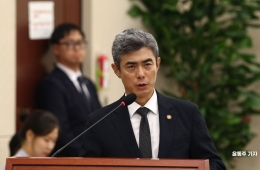
The government will continuously monitor the implementation status of each special zone and will review institutional reform requests and regulatory challenges raised in the field to prepare additional measures as needed. Lee Wonjoo, policy chief of the Ministry of Climate, Energy and Environment, stated, “As the gap in electricity self-sufficiency between the capital and non-capital regions increases grid investment costs, the Distributed Special Zone is a system that can ease the burden of grid construction by realizing local generation and consumption of electricity. We will push forward rapidly so that bold institutional reforms can make the Distributed Special Zone a catalyst for new energy industries.”
© The Asia Business Daily. All rights reserved. Unauthorized AI training and use prohibited.

!["Failed Even With Net Assets of 400 Million Won?"... Six Criteria That Define 'The Real Middle Class' [Data Pick]](https://cwcontent.asiae.co.kr/asiaresize/307/2026092809144741876_1790554486.jpg)