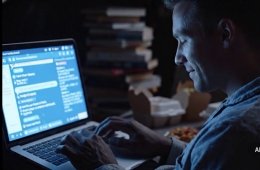
"Is My ID at Risk Too?"... Personal Information Protection Commission Expands 'Find My Leaked Information' Service
Check for Account Information Circulating on the Dark Web
Now Includes Email Address in Addition to ID and Password
The Personal Information Protection Commission announced that it will expand and revamp the "Find My Leaked Information" service and begin full operation starting on the 29th.
The Find My Leaked Information service allows users to enter the combinations of IDs and passwords they commonly use to check whether their account information is being illegally distributed on the dark web and other platforms. If a leak is detected, users can reduce the risk of account hacking by changing their password or enabling two-factor authentication.

The Personal Information Protection Commission announced that it will expand and revamp the "Find My Leaked Information Service" and begin full operation starting from the 29th. Screenshot of the inquiry screen of the Find My Leaked Information Service.
View original imageWith this update, the scope of inquiries has been expanded to allow users to check not only IDs and passwords but also email addresses. This change reflects the growing trend of using email addresses as IDs. In addition, the service has been improved by introducing a cross-checking method for the entered account information and increasing the daily usage limit from once to three times.
The Commission decided to expand and revamp this service due to a recent surge in "credential stuffing" attacks that exploit account information leaked on the dark web and similar sources. Credential stuffing is a hacking attack in which an attacker obtains account and password information by some method and then attempts to use the same credentials to log in to other sites. This type of attack is characterized by a sharp increase in both the number of login attempts and the login failure rate.
Hot Picks Today
 Cicada COVID Variant Shows Signs of Spread Afte...
- "How Is This Possible?"... More Guests, Yet Revenue Plunged by 40%
- "What Is Annual Leave? We Go to Work Even When Sick"... The Reality for Kinderga...
- Earned 350 Million Won in a Year by Posting Movie Plots... Guilty Verdict for "C...
- "I Fed Him for His Health": Woman in Her 30s Gave Tteokguk to 2-Month-Old Baby
A representative from the Commission emphasized, "In order to reduce the increasing number of personal information leaks, it is important for the public to take proactive preventive measures," adding, "Personal information handlers should also strengthen security measures such as intrusion detection and blocking for abnormal activities, and actively implement CAPTCHAs during login attempts or require additional authentication when accessing pages containing personal information."
© The Asia Business Daily(www.asiae.co.kr). All rights reserved.