Financial Supervisory Service Avoids Public Institution Designation
Public Institution Management Committee Confirms 342 Institutions
11 Newly Designated, Including Korea Customs Information Center

The Financial Supervisory Service has avoided being designated as a public institution. However, this comes with conditions: it must consult with the relevant ministries when making organizational adjustments and disclose detailed information on the institution head's business expenses.
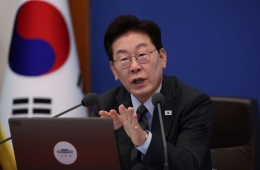
The Ministry of Economy and Finance announced on January 29 that it held a Public Institution Management Committee meeting, presided over by Deputy Prime Minister and Minister of Economy and Finance Koo Yooncheol, and reviewed and approved the “2026 Public Institution Designation Plan.”
This time, 11 organizations, including the Korea Customs Information Center and the Gaduk New Airport Construction Corporation, were newly designated as public institutions, and none had their designation revoked. For two institutions, the Korea Broadcasting Advertising Corporation and the Korea Legal Protection and Welfare Corporation, their designation type was changed.
As a result, the number of public institutions this year increased by 11 to a total of 342, compared to last year.
The Financial Supervisory Service, which drew the most attention regarding its potential designation, avoided being listed as a public institution on the condition that it enhances the public interest and transparency of its operations and overall work, focusing on substantive improvements rather than formal designation.
However, during this year, it is required to formalize consultations with the relevant ministries when adjusting staffing or reorganizing, and to disclose detailed information on the institution head’s business expenses and additional ESG items through ALIO.
The scope of welfare regulations will also be expanded, and to innovate financial supervisory work, the agency must shift from a sanction-focused approach to a preemptive and consulting-based inspection method. It is also required to faithfully implement the roadmap for improving financial consumer protection.
In his opening remarks, Deputy Prime Minister Koo stated, “Public institutions must serve as a solid pillar of the national economy and lead the way in Korea’s economic leap forward and the realization of a super-innovative economy.”
Hot Picks Today
 "Once Worth 4 Million Won a Day, Now Going for Chicken Money"... Chinese Robots' Humiliating Fall to 'Bargain-Bin' Prices in Just One Year
- "Who Says It's a Meal for Ordinary People? It Deserves 'Special Dish' Status Now"... The Era of 12,000-Won Bibimbap
- "I will open fire at a childcare center"... Australian man in his 20s arrested over AI chatbot conversation
- U.S. Treasury Secretary: "Even if Democrats win the House, it will be hard to block tariff policy"
- "I Won't Take It Even If You Leave It to Me"... 9 Million Parents' Homes Sit Empty as 320,000 Japanese Renounce Inheritances
He added, “To this end, we will streamline operations, pursue functional reforms to improve public service satisfaction, and contribute to providing high-quality jobs for young people.”
© The Asia Business Daily. All rights reserved. Unauthorized AI training and use prohibited.