Public Institution Designation Postponed... FSS Gets a Temporary Reprieve
Stronger Oversight Than Public Institutions
Designation to Be Reconsidered Next Year
The government has decided to postpone the designation of the Financial Supervisory Service (FSS) as a public institution. However, oversight and supervision of the FSS will be strengthened to a level exceeding that of public institutions, meaning the FSS is expected to face certain restrictions on its management autonomy due to the application of enhanced management evaluations.

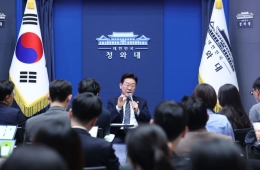
On January 29, Deputy Prime Minister and Minister of Economy and Finance Koo Yooncheol convened the Public Institution Management Committee (PIMC) at the Government Complex Seoul and deliberated and approved the “2026 Public Institution Designation Plan,” which included these measures. At this meeting, the committee reached a decision on whether to designate the FSS as a public institution, a matter that had been under discussion during last year’s government organizational restructuring.
The committee stated, “After comprehensive discussions on the need to enhance the autonomy of financial supervisory work and the transparency and accountability of institutional management, we determined that rather than focusing on the formal designation as a public institution, it is necessary to substantially improve the public nature and transparency of the FSS’s operations and work overall.” It added, “On this condition, we have decided to postpone the designation as a public institution.” In consideration of the unique and independent nature of financial supervisory work, the committee decided not to designate the FSS as a public institution, but to apply oversight and supervision to its overall management at a level exceeding that of public institutions.
Accordingly, the FSS will be subject to enhanced management evaluations across all aspects of management, including staffing and organizational operations, budgets and employee welfare, and management disclosures. Specifically, within this year, the FSS will be required to: ▲ formalize consultation procedures with its supervising ministry, the Financial Services Commission, when adjusting staffing or restructuring the organization; ▲ disclose detailed information on the institution head’s business expenses; and ▲ add ESG items, among other measures, thereby strengthening management disclosures through ALIO (the public institution information disclosure system).
In addition, to innovate financial supervisory work, the FSS must shift from a sanction-focused supervisory approach to a preemptive and consulting-centered inspection method, establish notification procedures for inspection results, and implement reforms such as improving inspection, sanction procedures, and immunity systems. With more disclosure items and the requirement to disclose detailed business expenses of the institution head, the FSS will, in effect, be subject to a management system equivalent to that of a public institution.
Hot Picks Today
 Changing Outfits and Snapping Photos in Hotels... "Please Don't Take Pictures": Europe Cracks Down on Influencers Over Privacy Concerns
- "Tried leveraged semiconductor stocks, watched 3.5 billion won shrink to 200 million won": Salaried investor in tears
- "Please Let Me Go Home"... Customers Trapped in Department Store Parking Lot for 5 Hours Vent Their Anger
- "I Should Enjoy It After Retirement": Prices Quadruple... Memberships Over 100 Million Won Popular, but Closures Mount
- "Come Live With Me on My Farm": Man Sells Everything and Travels 1,930 km, Trusting a Beautiful Woman
The supervising ministry, the Financial Services Commission, will conduct rigorous management evaluations equivalent to those for public institutions and reflect these postponement conditions in the FSS management evaluation manual, which must be reported to the committee. The committee plans to comprehensively review the results of management efficiency improvements resulting from the implementation of these conditions and reconsider the designation of the FSS as a public institution next year.
© The Asia Business Daily. All rights reserved. Unauthorized AI training and use prohibited.