Ruling Party Aims to Pass U.S. Investment Act by Late February to Early March... Opposition Slams "Incompetent Diplomacy"
After U.S. President Donald Trump mentioned the possibility of reinstating a 25% tariff on South Korea, the Democratic Party of Korea is expediting discussions on the "Special Act on the Management of Strategic Korea-U.S. Investments" (Special Act on U.S. Investment). The People Power Party has labeled the controversy as "incompetent diplomacy" and is ramping up its criticism.
On the morning of January 28, Democratic Party lawmaker Jung Taeho, a member of the National Assembly's Planning and Finance Committee, appeared on MBC Radio and stated, "The legislative process for the Special Act on U.S. Investment is proceeding normally, and we are now entering the full-scale review phase," adding, "The Special Act on U.S. Investment is included among the bills to be processed in February."

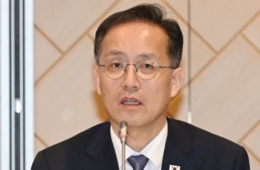
The Democratic Party expects the Special Act on U.S. Investment to pass between late February and early March. Han Jeongae, Chair of the Democratic Party's Policy Committee, met with Deputy Prime Minister and Minister of Economy and Finance Koo Yooncheol the previous day and told reporters, "Since this is a new law, a public hearing is required, but there are ways to conduct it at the committee level," adding, "If the review proceeds without issue, I believe the bill could be passed within the first quarter."
The ruling party is accelerating the Special Act on U.S. Investment because it interprets President Trump's remarks as pressure on the National Assembly to legislate quickly. Woo Sangho, former Senior Presidential Secretary for Political Affairs, said in an interview with YTN Radio, "Rather than seeing this as the U.S. actually intending to raise tariffs, we believe the main purpose is to pressure the National Assembly," adding, "If the ruling and opposition parties reach an agreement and pass the special act even now, the U.S. is unlikely to actually raise tariffs." Democratic Party lawmaker Kim Byungjoo also described it as "a classic Trump-style pressure tactic."
The opposition is intensifying its criticism. Choi Eunseok, Chief Spokesperson for the People Power Party, issued a statement saying, "While the government and ruling party have rushed to push through the worst of bad laws, they have thoroughly neglected the Special Act on U.S. Investment, which is crucial to the fate of Korea's industry and exports."
Hot Picks Today
 "I Should Enjoy It After Retirement": Prices Quadruple... Memberships Over 100 Million Won Popular, but Closures Mount
- "I thought getting into a big company was the goal"... The 'position' only 1 in 121 employees reaches
- "Jealous of Koreans" - Now a Must-Do on Every Trip... The Place Where Foreigners Spent KRW 229.8 Billion
- “I Bought Big Packs to Stock Up Because They Were a Better Deal”... Why Are They Disappearing From Grocery Stores?
- "Please Let Me Go Home"... Customers Trapped in Department Store Parking Lot for 5 Hours Vent Their Anger
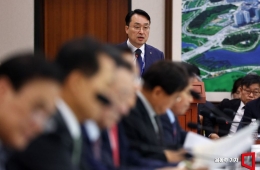
However, aside from their criticism, the opposition party is also expected to work with the ruling party on the legislative process related to the tariff agreement. Lim Ija, Chair of the National Assembly's Planning and Finance Committee and a member of the People Power Party, appeared on CBS and said, "The People Power Party believes that, since the trade agreement imposes a significant financial burden on the public, it must go through the National Assembly's ratification process. However, as committee chair, I think it is necessary for the leadership, including the floor leaders of both parties, to come together and discuss the differences in interpretation between the ruling and opposition parties."
© The Asia Business Daily. All rights reserved. Unauthorized AI training and use prohibited.