[Reporter’s Notebook] The Invisible Land Minister

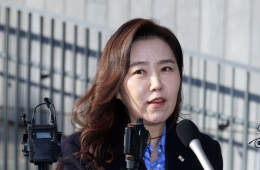
On January 27, President Lee Jaemyung directly outlined his policy stance at a Cabinet meeting, stating, "We must correct the abnormal distortion of resource allocation that is excessively concentrated in real estate." After posting several real estate-related messages on X (formerly Twitter) throughout the day, he also emphasized the legitimacy of these policies in an official setting. Kim Yoonduk, the Minister of Land, Infrastructure and Transport, was also present at the meeting. Given that real estate is a core issue that could determine the fate of the administration, there is nothing problematic about the president taking the lead. However, the absence of follow-up messages from the responsible minister inevitably diminishes his presence by comparison.
Real estate policy is intricately intertwined with interests related to demand, supply, taxation, and redevelopment projects. It is the role of the responsible minister to coordinate and implement these policies. When the president sets the direction, it is up to the minister to present concrete policy logic and implementation plans. Recently, however, the situation has been different. While the presidential office rolls out policies from A to Z, Minister Kim's comments have been limited to statements such as "We will make efforts" and "We are in discussions." The president has taken on the role of explaining the 'why' behind the policies and persuading the market. A real estate expert who was active in the ruling party's policy team commented, "In the early days of the administration, it appeared that the Ministry of Land, Infrastructure and Transport was left to handle things, but after assessing the policy landscape and the ministry's capabilities, the president seems to have decided to step in directly."
The results of the "2025 Government Work Evaluation" announced by the Office for Government Policy Coordination also stand out. The Ministry of Land, Infrastructure and Transport was recognized as an excellent agency in regulatory rationalization and government innovation, but it was excluded from the key policy area that evaluates performance on national agenda items. Stabilizing the real estate market and achieving balanced national development are core tasks for this administration, yet the responsible ministry was not acknowledged for its achievements in these areas.
At the time of Minister Kim's appointment, Kang Hoonshik, Chief Presidential Secretary, stated, "We expect him to approach real estate issues from the perspective of ordinary citizens, not as a scholar or bureaucrat." From the outset, the appointment was based more on political acumen than on expertise. The problem is that political sensitivity alone is not enough to persuade the market in the face of rapidly rising housing prices in Seoul. There have also been repeated disagreements between the Ministry of Land, Infrastructure and Transport and the Seoul Metropolitan Government regarding housing supply. The timing of additional supply measures has been out of sync, and there are ongoing differences over the scale of supply at key sites such as the Yongsan Maintenance Depot. While these issues are largely due to differing political dynamics, market instability has grown in the meantime.
Hot Picks Today
 "Two Spend 500,000 Won in a Flash, Yet Wait Two Hours?" ... 'Dreamland' Shunned by Kids and Foreign Tourists
- The Era of Getting 200 Million Won After 30 Years Is Over... A Japanese Bank's "Perpetual Department Head" Who Just Clocked In Cries Out
- Spain Hit by Its Worst Tragedy... Lee Kangin, Moreno and Real Madrid Join Soccer World in Mourning
- They Said, “Make It Your Home for Life” - Then Suddenly Kicked 200 Passengers Off... What Happened to the Around-the-World Cruise?
- "130 Rice Bowls Sold Out in a Day"... 'Unfiltered Face' Adds 8 Million Won to Night Market Sales: China's Bungeunwoo
Minister Kim has announced follow-up measures on housing supply for the end of this month. However, few people expect these measures to stabilize the market. Six months into his tenure, the label "invisible minister" may not be entirely Kim's fault. The president's style, the political landscape, and various other factors may play a role. Still, when the real estate market is unstable and the voice of the responsible minister is not heard, that absence is unmistakable. How is the market interpreting this silence?
© The Asia Business Daily. All rights reserved. Unauthorized AI training and use prohibited.