Ruling Party Foreign Affairs Committee Urges People Power Party to Stop Insisting on Ratification and Cooperate on Special Act for U.S. Investment
Regarding U.S. President Donald Trump's surprise pressure to raise tariffs, members of the Democratic Party on the National Assembly's Foreign Affairs and Unification Committee called on the People Power Party to "cooperate in the swift passage of the Special Act on Investment in the United States."

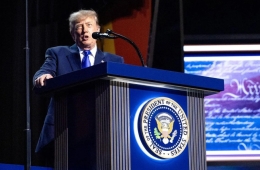
U.S. President Donald Trump is applauding after delivering a special keynote speech at the '2025 Asia-Pacific Economic Cooperation CEO Summit (APEC CEO SUMMIT)' held on the 29th at the Gyeongbuk Gyeongju Arts Center. Photo by Kang Jin-hyung
View original imageOn the afternoon of the 27th, Foreign Affairs Committee members, including Kim Youngbae, the Democratic Party's secretary on the committee, issued a statement saying, "The People Power Party must immediately stop insisting on the self-destructive ratification that holds the national interest hostage," urging their cooperation.
They explained, "The 'Memorandum of Understanding on Strategic Investment between South Korea and the United States,' signed on November 14 last year, included a provision to retroactively apply tariff reductions as of the first day of the month in which the relevant bill is submitted to the National Assembly. Accordingly, the Democratic Party introduced the Special Act on Investment in the United States on November 26, and the United States also retroactively reduced tariffs on Korean-made automobiles to 15% with the publication in the Federal Register on December 4."
They added, "Since the MOU set the 'introduction' of the bill as the reference point, the Democratic Party promptly submitted the relevant legislation. The review of the bill was also naturally scheduled to proceed after the deliberation period, following planned agendas such as the budget review and confirmation hearings."
Previously, the National Assembly allocated a budget of 1.1 trillion won for investment in the 'Korea-U.S. Strategic Investment Corporation,' which will be established according to the Korea-U.S. tariff negotiations, in the 2026 budget.
They further noted, "The MOU clearly states that, as an administrative agreement between the United States and South Korea, it does not create any legally binding rights or obligations. Similarly, Japan, which reached a tariff agreement with the United States last year, did not go through parliamentary ratification, and the United States also did not follow any such ratification process. President Trump's use of the word 'enact' instead of 'ratify' in his recent social media post reflects this same reasoning."
Hot Picks Today
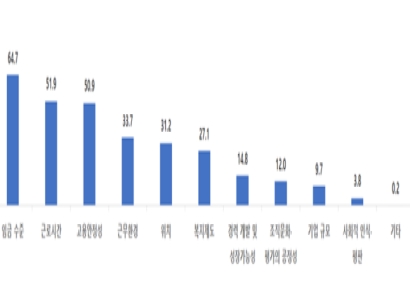 "Please Pay Me at Least 3 Million Won a Month": More Than Half of Young People Today Prioritize "Working Conditions" Over Company Size
- Selling Like Crazy Every Year... 30-Year-Old Hetbahn Takes on a New Challenge: Tastes Better Than "Mom's Home Cooking" [On-Site Report]
- "Americans Would Be Amazed If They Came": Wide-Eyed at a Sight They've Never Seen Before... Foreigners Also Fall for K-Baseball [K-Holic]
- President Lee Narrows Candidates for Next Justice Minister to Former Prosecutors Yang Bunam and Park Gyuntaek
- Beachgoer Finds 'Plastic' That Turns Out to Be Perfume Ingredient Worth More Than Twice as Much as Gold
They emphasized, "For South Korea alone to ratify and thereby elevate the agreement to a highly binding treaty, when the United States does not, would be like tying our own feet in a race. The Lee Jaemyung administration and the Democratic Party, no matter how urgent the situation, will respond calmly and without haste, always making every effort to safeguard the national interest."
© The Asia Business Daily. All rights reserved. Unauthorized AI training and use prohibited.