Charisma Falters Amid Economic Woes... Takaichi's Approval Rating Plunges by 10 Points
Approval Ratings Soar Above 70% Since Inauguration... First Sharp Decline
Japanese Media: "Early Election Amid Inflation Anxiety"
Since taking office, Japanese Prime Minister Sanae Takaichi's cabinet approval rating, which had been soaring, has plummeted. The decline in support is attributed to fatigue over the dissolution of the House of Representatives and the upcoming general election, as well as growing economic anxiety caused by high inflation.
The Mainichi Shimbun reported on January 26 that a nationwide poll conducted on January 24-25 showed the Takaichi cabinet's approval rating had dropped by 10 percentage points to 57%, compared to the previous survey (67%). The percentage of respondents who said they did not support the cabinet increased by 7 percentage points to 29% over the same period.

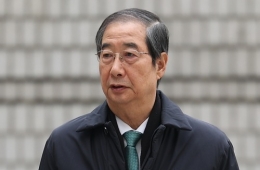
Japanese Prime Minister Sanae Takaichi is attentively listening to a speech at the 2025 Asia-Pacific Economic Cooperation (APEC) Summit. Photo by Yonhap News.
View original imageOther major media outlets reported similar declines in approval ratings during the same period. In a poll conducted by the Nihon Keizai Shimbun (Nikkei) and TV Tokyo from January 23-25, the Takaichi cabinet's approval rating stood at 67%, down 8 percentage points from the December 2025 survey. Meanwhile, a poll by the Yomiuri Shimbun and Nippon TV News Network (NNN) showed the approval rating had fallen by 4 percentage points to 69% compared to the previous survey.
The recent drop is considered unusual, as the Takaichi cabinet had consistently maintained approval ratings in the 70% range since its launch in October 2025. The decision to dissolve the House of Representatives just one year and three months after its formation and to hold an early general election on February 8 appears to have caused voter fatigue. In the Mainichi poll, only 27% of respondents viewed the dissolution of the House of Representatives positively, while 41% did not view it positively.
This is analyzed as being a response to economic instability, such as high inflation. In the Yomiuri poll, when asked, "Is there a particular policy you consider most important in the House of Representatives election?" 89% of respondents cited "measures for the economy and rising prices," making it the most common answer.
Meanwhile, concerns have been raised that the early general election could disrupt the passage of the "2026 fiscal year budget." The Yomiuri Shimbun pointed out, "It is customary for the budget bill to be submitted at the start of the regular Diet session, but given the dissolution of the House of Representatives, the submission will likely be delayed until mid-February, and passage in the Diet may be pushed back to April." The newspaper also noted that other bills under discussion, such as the bill to reduce the number of House members, are now at risk of being scrapped.
Both the ruling and opposition parties are pledging policies to ease high inflation as part of their general election platforms in an effort to win public support. The opposition Centrist Reform Alliance has called for the permanent abolition of the consumption tax on food, while the Takaichi cabinet's Liberal Democratic Party has announced it will consider a temporary two-year suspension of the consumption tax on food. Given that the Liberal Democratic Party has previously been cautious about cutting the consumption tax to secure tax revenue, this is seen as a bold move. It is interpreted as an effort to support Prime Minister Takaichi's policy of fiscal expansion.
Hot Picks Today
 "Two Spend 500,000 Won in a Flash, Yet Wait Two Hours?" ... 'Dreamland' Shunned by Kids and Foreign Tourists
- The Era of Getting 200 Million Won After 30 Years Is Over... A Japanese Bank's "Perpetual Department Head" Who Just Clocked In Cries Out
- Spain Hit by Its Worst Tragedy... Lee Kangin, Moreno and Real Madrid Join Soccer World in Mourning
- They Said, “Make It Your Home for Life” - Then Suddenly Kicked 200 Passengers Off... What Happened to the Around-the-World Cruise?
- "130 Rice Bowls Sold Out in a Day"... 'Unfiltered Face' Adds 8 Million Won to Night Market Sales: China's Bungeunwoo
However, public opinion on this issue is divided. In the Nikkei poll, 59% of respondents said the tax rate should be maintained to secure revenue, while only 31% supported lowering the tax rate even if it meant issuing deficit-financing government bonds.
© The Asia Business Daily. All rights reserved. Unauthorized AI training and use prohibited.