[Exclusive] 'Right Beside You'... 16,000 High-Risk Students, Countless "Cries for Help" [Invisible Children] ③
Counseling Sessions Surge 1.6 Times in Four Years
No Regular Collection of Crisis Management Committee Statistics
Half of Regional Schools Suffer Counseling Gaps
It has been confirmed that as many as 16,000 students identified as "at-risk for suicide" were found in elementary, middle, and high schools last year. However, the placement rate of professional counseling teachers who can listen to these students remains stagnant. Critics point out that the public education system is failing to keep pace with the demand, thereby missing the critical intervention window.

According to data submitted by the office of Democratic Party lawmaker Go Min-jung to the Ministry of Education on January 24, the nationwide placement rate of professional counseling personnel (counseling teachers and counselors) at elementary, middle, and high schools was only 61.0% last year, up just 0.1 percentage point from the previous year. While signs of emotional distress among students are skyrocketing, there is a severe shortage of school counseling staff.
The "rich-get-richer, poor-get-poorer" phenomenon, or regional gap, is also severe. The placement rate in Seoul was relatively high at 74.3%, while Jeonbuk (42.6%), Jeonnam (51.3%), Gyeongbuk (52.7%), Chungnam (53.1%), and Gangwon (55.0%) were only at roughly half that level.

The total number of students at risk of suicide, for whom secondary intervention by professional institutions is essential, was calculated at 16,080. When adding those classified as "students of concern" (68,921), approximately 85,000 students are coming to school with clear warning signs for mental health issues.
Notably, while the suicide risk group represents 1–2% of the general school population by grade level, among students at special schools, the rate reaches 6.7%. This figure is more than six times the overall average of 1.0%, highlighting that mental health care for students with disabilities is being neglected in a critical blind spot.
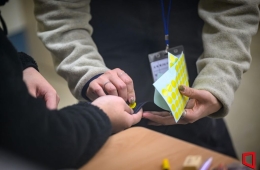
The warning signs exhibited by children go beyond simple test scores and are manifesting as specific behaviors. The number of counseling visits at Wee Class (school counseling rooms) in elementary, middle, and high schools nationwide recorded 3,682,600 cases in 2024. This is a nearly 1.6-fold increase in four years compared to 2.31 million cases in 2020, during the period of COVID-19 spread. This means that, on average, more than 10,000 counseling sessions are taking place in schools each day.

Across the country, there have been continuous cases in which schools have urgently convened a Crisis Management Committee after students attempted self-harm or suicide. Between January and August of 2024, the number of Crisis Management Committee meetings related to students attempting self-harm or suicide was 939 in Gyeonggi, 427 in Seoul, 393 in Jeonnam, 363 in Jeonbuk, and 350 in Gyeongbuk, among others. The Crisis Management Committee is a body that gathers the principal, counseling teachers, and health teachers to discuss response measures when such incidents occur. This shows that just as many students have already sent clear "cries for help" through specific actions within the school. It is estimated that a significant number of these students ended up leaving school and became out-of-school youth.
However, educational authorities were not even able to properly grasp the gravity of this urgent situation. The Ministry of Education explained that the data on the convening status of the Crisis Management Committee is not regularly collected or managed. As a result, the most crucial indicator showing how frequently—and for what reasons—students are making extreme choices is missing from the foundation of policy-making materials.
Related Articles
 [Interview] "Adolescent Mental Health Must Be the Nation's Top Priority" [Invisible Children] ⑤
- [Exclusive] Proportion of Teen Users in Mind Investment Project Drops... Double Barriers of Documentation and Parental Consent [Invisible Children] ④
- 170,000 Out-of-School Youth... Mental Health Issues Four Times Higher Than Students [Invisible Children] ②
- "Vanished from Society After Leaving School"... Harsh Stigma Beyond the School Gates [Invisible Children] ①
Namki Park, Professor Emeritus at Gwangju National University of Education, said, "In reality, the demand for counseling has increased to an incomparable degree compared to the past, but the government seems to be focused only on reducing everything because the student population is decreasing. If we make better use of statistics from the Crisis Management Committee or the Education Administration Information System, we will be able to detect at-risk youth earlier, which is why rigorous data management is also necessary."
© The Asia Business Daily. All rights reserved. Unauthorized AI training and use prohibited.