Jeong Junho Proposes Support for Vehicle License Plate Issuance in Population-Declining Regions
Main Sponsor of the Amendment to the Automobile Management Act
Ensuring Administrative Services in Regions with Declining Populations
A bill has been submitted to the National Assembly to provide a legal basis for supporting the stable operation of vehicle license plate issuance agency work in regions where population decline has led to reduced demand for vehicle registration.
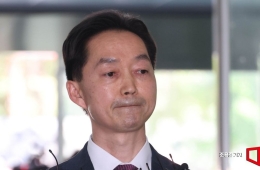
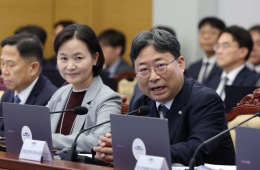
On January 20, Jeong Junho, a member of the National Assembly from the Democratic Party of Korea representing Buk-gu Gap in Gwangju, announced that he had sponsored a partial amendment to the Automobile Management Act aimed at supporting vehicle license plate issuance agencies in areas experiencing population decline.

Under the current system, vehicle license plate issuance agency work is operated by designated businesses that rely on commission income. However, as vehicle registration has become possible nationwide and demand in population-declining regions such as Gwangju and South Jeolla Province has dropped, it has become increasingly difficult for agencies to sustain their business solely with issuance commissions.
As a result, some regions have seen agencies struggle with management difficulties, and there are growing concerns that, in the long term, residents may be inconvenienced by having to travel to neighboring cities to obtain license plates.
The proposed amendment stipulates that, according to ordinances set by city and provincial governors, local governments may subsidize a portion of the funds required for license plate production and issuance operations for agencies whose main offices are located in areas with declining populations.
Assemblyman Jeong stated, "Vehicle license plate issuance is a basic administrative service directly linked to residents' daily lives. If administrative services are reduced simply because the population has declined, the burden will fall entirely on local residents." He went on to emphasize, "This amendment is a practical measure to prevent administrative gaps in areas facing population decline and to ensure that residents in regions such as Gwangju and South Jeolla Province can access vehicle-related administrative services without inconvenience."
Hot Picks Today
 "Why Work a White-Collar Job? This Chinese Occupation Now Earns Over 5 Million Won a Month"
- "Rise in Korean Tourists, Soaring Prices: Admission Fees at Famous Japanese Attractions Double"
- "Only 3 Passengers on a 180-Seat Flight"... The Shocking State of the 'Honeymoon Hotspot'
- Pandas Pingping and Fushuang Promised by Xi Jinping Arrive in the U.S.... Over Half a Century of China's "Panda Diplomacy"
- "The Interpreter Officer in the Photo is Lee Jae-yong's Eldest Son"... Second Lieutenant Lee Jiho Makes Surprise Appearance at ROK-U.S. Navy Meeting
He further added, "If the bill passes, local governments will be able to independently determine the scope and extent of support based on local circumstances, which will help reduce administrative service disparities between regions. I will continue to pursue legislation aimed at addressing population decline and regional imbalances in the future."
© The Asia Business Daily. All rights reserved. Unauthorized AI training and use prohibited.