[Asia Report] Korea-Malaysia FTA Signed: From Shared Challenges to an Ideal Partnership
Geopolitical Similarities Amid Great Power Rivalry
High Complementarity in Technology and Critical Minerals
Strengthening Strategic Solidarity Against Uncertainty

When discussing economic cooperation between Korea and Southeast Asia, Vietnam and Indonesia are usually the first countries that come to mind. Naturally, Malaysia is the next country to be mentioned. On October 27, the two countries finally achieved their long-awaited Free Trade Agreement (FTA), elevating economic cooperation to a new level.
However, the sentiment on the ground does not match these high expectations. While everyone acknowledges Malaysia's potential, there remains a sense of psychological distance, as it is still perceived as a "distant country." There is little memory of long-standing exchanges between Malaysia, with its Islamic cultural foundation, and Korea, and it is true that there is more that the two countries do not know about each other than what they do.
Nevertheless, the recent trend of change is clear. Malaysia is now looking at Korea with greater confidence and a more defined strategy. The visit of Prime Minister Anwar Ibrahim to Korea in November 2024 marks a symbolic starting point. Through this summit, the bilateral relationship was elevated from simple friendly cooperation to an official "strategic partnership."
This means that practical areas of cooperation have expanded significantly, including defense, critical minerals and supply chains, energy, climate change response, digital and green economies, as well as education and human exchange. Malaysia’s intention to establish itself as a partner for Korea in designing the future together has become clear.
Malaysia’s approach to Korea has historical roots. The "Look East Policy" led by former Prime Minister Mahathir Mohamad in the 1980s focused on the industrialization experiences of both Japan and Korea, serving as a major inspiration for ASEAN countries in charting their own paths forward.
At that time, Korea was remembered as a "success story of a poor country achieving a dramatic turnaround through challenge and innovation," and this positive perception remains valid in Malaysian society to this day. The emotional foundation for bilateral cooperation has thus been built up over a long period. This orientation was revived in the late 2010s with the Malaysian government’s "Look East Policy 2.0."
There are also many similarities in the geopolitical context. Just as Korea has maintained a balance among major powers as a central axis in Northeast Asia, Malaysia has historically played the role of mediator as a key hub in Southeast Asia. Furthermore, as the level of U.S.-China conflict has risen recently, supply chain and maritime security competition around the Strait of Malacca has become a focal point of global attention. In other words, the two countries are uniquely positioned to understand each other’s circumstances.
The more the great powers focus their attention, the greater Malaysia’s strategic value becomes. This situation presents an important opportunity for Korea as well, since Malaysia is the key link that must be engaged to accelerate cooperation with ASEAN as a whole.
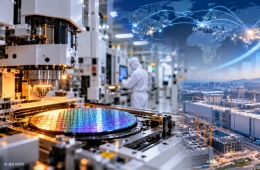
The industrial foundations of both countries also show clear commonalities. Malaysia is an important production hub in the global semiconductor back-end process sector and has maintained a strong automotive manufacturing base for a long time. Korea possesses world-class advanced manufacturing capabilities. As the two countries’ industries become more interconnected, their strengths are amplified and their weaknesses are complemented. In particular, in energy transition sectors such as hydrogen, the technological prowess of Korean companies and Malaysia’s abundant resources and geographical advantages demonstrate a high degree of complementarity.
Malaysia’s strategic value, which is essential for Korea, is becoming even more evident in the era of natural resources and electric vehicle batteries. Critical minerals such as nickel, rare earth elements, and tin, along with a stable energy base, form the foundation for future industries. Malaysia’s rapid response to hydrogen and renewable energy transition, when combined with the technological strength of Korean companies, is expected to generate significant synergy. Now that the electric vehicle battery supply chain has become a battleground in the U.S.-China rivalry, Malaysia, with both resources and back-end processing capabilities, represents a new opportunity and a strategic partner for Korea with whom it can grow together.
It is also noteworthy that Malaysia has recently expanded its interest in the defense sector, opening a new chapter for cooperation. This means that Malaysia is a partner with whom Korea can share its global competitiveness in defense and grow together.
Meanwhile, the outlook for East Asian affairs is expected to remain highly uncertain for the time being. The new administrations in the United States and Japan have strengthened alliance-first policies, and technological and industrial supply chains are at the forefront of U.S.-China competition. The South China Sea and the Korean Peninsula are once again entering a phase of heightened tension, and the issues are becoming increasingly complex. In such an environment, middle powers must cooperate even more actively to protect their own strategic space.
Gareth Evans, former Australian Foreign Minister, defined the essence of middle power diplomacy as follows: "The motivation for middle power diplomacy lies in the belief that collective action is always better when facing international challenges that no single country can solve alone." From this perspective, Malaysia has been a driving force for ASEAN centrality, and serves as the most practical bridge for Korean diplomacy to expand throughout ASEAN. At the same time, Malaysia is a partner rich in supply chains for future industries such as rare earth refining, semiconductor equipment, and hydrogen and renewable energy.
Hot Picks Today
 "Two Spend 500,000 Won in a Flash, Yet Wait Two Hours?" ... 'Dreamland' Shunned by Kids and Foreign Tourists
- The Era of Getting 200 Million Won After 30 Years Is Over... A Japanese Bank's "Perpetual Department Head" Who Just Clocked In Cries Out
- Spain Hit by Its Worst Tragedy... Lee Kangin, Moreno and Real Madrid Join Soccer World in Mourning
- They Said, “Make It Your Home for Life” - Then Suddenly Kicked 200 Passengers Off... What Happened to the Around-the-World Cruise?
- "130 Rice Bowls Sold Out in a Day"... 'Unfiltered Face' Adds 8 Million Won to Night Market Sales: China's Bungeunwoo
It is difficult to guarantee that 2026 will be better than this year. However, uncertainty only increases the strategic value of middle power solidarity. Korea and Malaysia are remarkably well-aligned in three areas: geopolitical location, industrial base, and diplomatic experience. They can cover each other’s vulnerabilities and multiply each other’s strengths, making them a rare "ideal combination."
Jung Hojae, Secretary General of the Asia Vision Forum
© The Asia Business Daily. All rights reserved. Unauthorized AI training and use prohibited.