KOICA and First-Phase NGOs Hold Strategic Partnership Project Results Forum
KOICA, Good Neighbors, World Vision, and Global Sharing Movement
Host Forum on "Five-Year Evaluation and Direction of Strategic Partnership Projects"
Sharing Achievements as the First Phase of Strategic Partnership Projects (2021-2025) Concludes
Discussing Future Directions for Strengthening Sustainable Public-Private Partnerships and Community-Led Development Strategies

Scene from the event "Five-Year Evaluation and Direction of Strategic Partnership Projects." Global Sharing Movement
View original imageKOICA (Korea International Cooperation Agency), Good Neighbors, World Vision, and Global Sharing Movement held a forum under the theme of "Five-Year Evaluation and Direction of Strategic Partnership Projects."
The forum, held on December 5 at the Youth Culture Space JU Nikola Hall in Mapo-gu, Seoul, was organized to share the achievements of the first phase of KOICA's Strategic Partnership Projects, which were carried out from 2021 to 2025, and to explore the next steps for development in collaboration with local communities and stakeholders. The "Strategic Partnership Project" was introduced to address structural limitations that could not be solved by short-term, single-project approaches. It is the first long-term, policy-integrated cooperation model in Korea that directly links government development strategies with the expertise of civil society. Through this initiative, a new standard for public-private cooperation has been established, and the direction of sustainable development cooperation policy has been clarified.
At the event, Park Jiyoung, Manager of KOICA's Civil Society Cooperation Project Team, explained the purpose of promoting the Strategic Partnership Program and highlighted the major achievements and policy significance of the past five years. KOICA emphasized the importance of sharing evidence-based results to demonstrate the strategic contribution of public-private cooperation in the evolving Official Development Assistance (ODA) environment. Following this, the first-phase participating organizations-Good Neighbors, World Vision, and Global Sharing Movement-shared key achievements and case studies from the past five years, conducted in collaboration with their respective performance management institutions (RISTI, Seoul National University, and Chungbuk National University).

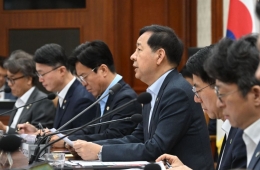
A discussion is underway on the sustainability and policy direction of public-private partnership projects. Global Sharing Movement
View original imagePark Haesung, Head of the Regional Development Team at Good Neighbors, presented the achievements of the integrated rural development project conducted in the Kyrgyz Republic over the past five years in partnership with Chungbuk National University, focusing on the "community-led project implementation" approach. Good Neighbors carried out projects centered on Osh and Batken provinces in southern Kyrgyzstan, including ▲improving basic living infrastructure through community participation, ▲establishing and operating multipurpose women's centers, ▲supporting the production and distribution of agricultural and livestock products, and ▲researching government rural development policies. Local residents participated in all stages of these projects, directly leading the initiatives, which resulted in significant changes such as improving the socio-economic environment and capabilities of vulnerable groups, increasing income based on agriculture and livestock, and strengthening the government's capacity to implement rural development.
Ji Hyeyeon, Manager of the Development Cooperation Project Team 1 at World Vision, presented the tangible achievements and policy contributions of the maternal and child health project carried out over the past five years in the Eastern Visayas region of the Philippines. The project adopted various approaches, including home-visit-based counseling (ttCF), strengthening local health governance, and collaborating with local government units (LGUs), which led to notable improvements in maternal and child health indicators, enhanced accessibility to maternal and child health services, and strengthened the implementation capacity of the local health system. As a result, a total of 18 policy improvements were achieved. Notable examples include ▲incorporating maternal and child health budgets into regular local government budgets, ▲securing funding for health facilities through health insurance reimbursements, and ▲integrating community health worker (CHW) training materials into the national health program handbook.
Cho Hyunju, Secretary General of Global Sharing Movement, presented the main achievements and significance of the "Producer-Centered Value Addition Project for Inclusive Livestock Industry Development" implemented in Mongolia over the past five years. Secretary General Cho explained that the project focused on improving the entire livestock industry value chain, including artificial insemination-based breed improvement, the introduction of smart feeding technologies, strengthening dairy processing infrastructure, livestock leader training and organization, and policy improvements. These efforts led to increased raw milk productivity, the establishment of a self-sufficient feed system, strengthened dairy processing and distribution capabilities, the development of professional livestock industry personnel, and enhanced policy linkages. She noted that these achievements are meaningful in establishing a sustainable system in which producers lead production, processing, and distribution.
Following these presentations, a panel discussion was moderated by Professor Son Hyuksang of Kyung Hee University, with participation from KOICA, Save the Children, the Korea NGO Council for Overseas Development Cooperation (KCOC), and academic experts. The discussion focused on "the sustainability and policy direction of public-private partnership projects," covering topics such as the policy implications of public-private partnership projects, the establishment of sustainable performance systems, and the expected outcomes and roles of implementing organizations.
Professor Son Hyuksang stated, "This Strategic Partnership Project is noteworthy for having produced numerous qualitative outcomes, such as changes in community perceptions and increased social capital, which are not captured by the PDM (Project Performance Management System). Civil society must continue efforts to ensure that these unique qualitative achievements are recognized within the project framework in partnership with the government."
Kim Sun, Director of the International Business Division at Good Neighbors, commented, "The Strategic Public-Private Partnership Project is evaluated as a mid- to long-term project model that brings about fundamental changes in communities and countries, going beyond the limitations of short-term projects. We hope that the results of this project, which aims for structural innovation through large-scale investment, will provide important direction for international development cooperation projects."
Lee Sunghyun, Team Leader of the Development Cooperation Project Team at World Vision, said, "This project is an example of how civil society's field accessibility and interventions focused on vulnerable groups can be expanded into sustainable institutional change. We hope this will serve as a milestone for further advancing partnerships between the government and civil society."

Kim Hyekyung, Chairperson of Global Sharing Movement, stated, "Through these three projects conducted in five-year cycles, we can establish a sustainable international cooperation model. There is a need for forums for discussion and cooperation with organizations such as KCOC to further broaden the understanding between civil society and the government." She also emphasized, "Expanding the role of NGOs in Korea's ODA will be an important opportunity to strengthen international cooperation capabilities."α
© The Asia Business Daily. All rights reserved. Unauthorized AI training and use prohibited.