[Namsan Stroll] The Era of K-Culture: "National Strategic Industrialization" of Content
Time to Introduce Policies Reflecting Industry Characteristics
Securing Funding and Expanding Tax Credits for Small Production Companies
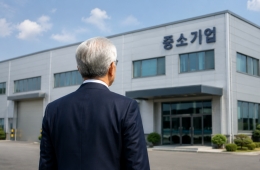
![[Namsan Stroll] The Era of K-Culture: "National Strategic Industrialization" of Content](http://www.asiae.co.kr/news/img_view.htm?img=2025090210150815427_1756775708.jpg)
The 103rd national agenda item of the new government, inaugurated this year, is to promote the "national strategic industrialization" of content for the K-Culture era. The blueprint aims to make the content industry a core national growth engine, ushering in a K-Culture era valued at 300 trillion won. Accordingly, the government plans to significantly expand related budgets, including subsidies, policy-based financing, and tax support.
Becoming a national strategic industry in South Korea is more than just rhetoric. Under the National Advanced Strategic Industry Act, industries designated as such receive robust policy support, including policy-based financing, specialized clusters, and talent development. The criteria for designation include the impact on national economic security, macroeconomic effects such as exports and employment, and the ripple effects on related industries. Currently, semiconductors, displays, secondary batteries, biotechnology, robotics, and the defense industry are designated-all of which are still technology sectors.
To make the content industry a genuine national growth engine, comprehensive and specialized support is essential. Although K-content is said to be thriving, those in the field often voice their difficulties, most of which are related to funding. This is due to the inherent instability described as "high risk, high return." New ideas and creative planning naturally come with tremendous uncertainty. Typically, only one or two out of ten projects succeed, offsetting the failures of the rest. From an investment and financing perspective, these characteristics are highly disadvantageous. Even in the operation of policy-based financing intended to address these issues, many point out that the lack of understanding of the unique mechanisms of the content industry limits the actual effectiveness. In addition to policies common to all industries, such as startup incubation and technology development, the content sector needs a support structure optimized for its unique characteristics.
Tax support is a similar case. There is a general R&D tax credit available for new service development. However, small production companies often find it difficult to meet the requirements of establishing a separate creative research institute and allocating dedicated personnel. Tax credits do not apply to outsourced staff, who make up a significant portion of the workforce. Except for a few cases, it is also difficult for content planning processes to be recognized as "research and development." This is why the expansion of production cost tax credits is needed not only for video content and webtoons to be newly introduced next year, but also for other fields such as games and music.
Internationally, there are moves to actively foster the content industry at the national level, using South Korea as a model. Japan is rebooting its Cool Japan strategy and emphasizing the "core industrialization" of content. The "Entertainment and Creative Industry Strategy" announced in June is a prime example. Japan views content and intellectual property as leading industries driving national competitiveness, exports, tourism, and regional economic revitalization, and is investing large-scale budgets accordingly. Taiwan and Thailand are also ramping up content development, establishing dedicated agencies modeled after the Korea Creative Content Agency. Recently, the Thai production "Giaam" ranked in the top 10 of Netflix's global viewership, making these efforts more visible.
K-content meets all the criteria for a national advanced strategic industry. It is directly linked to our culture and economic security. Since 2005, the content industry’s revenue has grown by 2.75 times, and exports have soared tenfold. It has long surpassed secondary batteries and home appliances in export value, which are commonly thought of as Korea’s main export products. Analysis shows that every 100 million dollar increase in content exports leads to a 500 million dollar increase in total induced production. Over 70% of employees are under the age of 39, making it a youth employment industry, and it plays the most critical role in shaping the national image. The recent surge in exports of ramen and cosmetics, and findings that K-content consumption leads to curiosity and tourism about Korea, clearly demonstrate the content industry’s spillover effects on other sectors.
To ensure that the achievements of K-content are sustainable, South Korea must not fall behind in the global soft power race. This is why there is a call for the full-scale national strategic industrialization of the "Next K." Now is the time for policy imagination that aligns with the current era and the unique characteristics of the industry.
Hot Picks Today
!["Stock Surges from 255,000 Won to Over 2.2 Million"... Up 773% Yet Set to Climb Higher [This Week's Hot Stock]](https://cwcontent.asiae.co.kr/asiaresize/93/2026042810243143173_1777339471.jpg) "Stock Surges from 255,000 Won to Over 2.2 Million"... Up 773% Yet Set to Climb Higher [This Week's Hot Stock]
"Stock Surges from 255,000 Won to Over 2.2 Million"... Up 773% Yet Set to Climb Higher [This Week's Hot Stock]
- "SK hynix, Target Price Raised to 4.2 Million Won... Second-Quarter Earnings Surprise Expected" [Click e-Stock]
- Half of Smartphones Next Year Will Feature AI: "The Era of AI Smartphones"
- "My Home Is in the 'Shuttle Zone' Near SK hynix, Please Cancel the Contract"... Surge in Cancellations Amid Soaring Home Prices [Real Estate AtoZ]
- "True Education" Becomes Reality... Juvenile Offenders Steal 4 Million Won in Pokémon Cards, Respond with Just "E"
Song Jin, Director of the Content Industry Policy Research Center at the Korea Creative Content Agency
© The Asia Business Daily(www.asiae.co.kr). All rights reserved.






![[Financial Stability Report] Bank of Korea Warns of 'Investing with Borrowed Funds, Leveraged ETFs'... "Losses Could Grow During Market Corrections"](https://cwcontent.asiae.co.kr/asiaresize/307/2026062411381121774_1782268691.jpg)