Mandatory Use of Electronic Payment System for Subcontracting
Fair Trade Commission Establishes Triple-Layer Protection for Subcontract Payment Security

The Fair Trade Commission will make it mandatory to use an electronic payment system for both public subcontracting and private construction subcontracting.
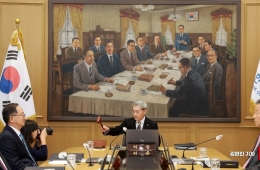
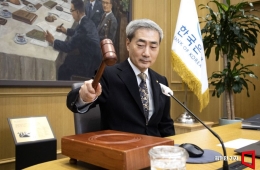
On the 23rd, the Fair Trade Commission announced the "Comprehensive Measures to Strengthen the Security of Subcontract Payment," which includes these provisions. The new system will ensure that payments to subcontractors are made on time by establishing a triple-layer protection mechanism: payment guarantee institutions, project owners, and the electronic payment system, in case the primary contractor fails to pay.
First, the payment guarantee system, which has been disadvantageous to subcontractors, will be significantly improved. The payment guarantee system ensures that if the primary contractor defaults or goes bankrupt, a guarantee institution such as the Construction Guarantee Cooperative pays on their behalf. Currently, exemptions from the payment guarantee obligation are broadly permitted; going forward, this exemption will be limited to "small-scale projects of 10 million won (approximately 7,500 USD) or less."
Additionally, the Subcontracting Act will be revised to explicitly require primary contractors to provide a payment guarantee certificate to subcontractors. This measure aims to prevent cases where subcontractors are unaware of their payment guarantee subscription and therefore unable to claim the guarantee.
The Fair Trade Commission will conduct written surveys targeting 5,000 construction companies each year to closely monitor whether the payment guarantee obligation is being fulfilled, and will impose strict sanctions if violations are found.
Subcontractors will also be granted the right to request information from the project owner (the developer who awarded the contract to the primary contractor) when claiming direct payment. The direct payment system, introduced into the Subcontracting Act in 1985, allows the project owner to pay the subcontractor directly if the primary contractor fails to do so.
The problem has been that subcontractors have difficulty obtaining detailed information about the timing, amount, and order of payments, as well as the status of any seizures between the project owner and the primary contractor, making the system less effective. To address this, subcontractors will be able to request the necessary information for direct payment claims from the primary contractor, who must provide it in writing unless there is a special reason not to.
Furthermore, the use of the electronic payment system will be made mandatory for both public subcontracting transactions (construction, manufacturing, services, etc.) and private construction subcontracting transactions. Since only each participant's share can be withdrawn, this will fundamentally prevent the primary contractor from misappropriating funds at any stage.
Currently, the Fair Trade Commission only recommends the use of the system, but plans to make it mandatory in stages through consultations with operating agencies such as the Ministry of Land, Infrastructure and Transport.
Hot Picks Today
 Despite "Insufficient Balance" Notices, They Board Anyway... Reports of Foreign Fare Evasion Mounting
- A "Rich Family's Daughter" Is "Effortlessly Polished" Today, "Glamorous" Tomorrow... Department Store-Core Has 20- and 30-Somethings Going Wild [Why&Next]
- "Even Underwear Has to Be Cut Up with Scissors"... China Hit by Rise of "Trash Hunters" in an "If You're Slow, You're Out" Scramble
- "Chinese Tourists Won't Go Anymore"... Arrivals Halved, but Koreans Say "Now's Our Chance" and Open Their Wallets in Japan
- "Photos of Kim Jong Un Released by North Korea Are a Deception"... Debate Over Death Rumors Continues
Joo Byungki, Chairperson of the Fair Trade Commission, emphasized, "In the current downturn in the construction market, receiving fair compensation for work performed is a matter of survival for small and medium-sized subcontractors. We will strengthen payment security with robust measures by establishing and reinforcing a triple-layer protection mechanism."
© The Asia Business Daily. All rights reserved. Unauthorized AI training and use prohibited.