High-Net-Worth Individuals Reduce Stock Holdings Amid Increased Volatility This Month
Portfolio Trends of High-Net-Worth Individuals with Over 3 Billion Won
Both Domestic and Overseas Stock Allocations Decrease This Month
Attributed to Increased Market Volatility in Recent Weeks
While the stock market, which had shown an unstoppable upward trend until last month, has slowed down this month due to increased volatility, high-net-worth individuals have reduced their stock allocations this month. Despite this, they have continued to be net buyers of semiconductor stocks such as SK Hynix and Samsung Electronics. In particular, they have turned to net buying of Samsung Electronics this month.

According to an analysis by The Asia Business Daily on November 21 of the product portfolios of high-net-worth individuals with assets of 3 billion won or more at NH Investment & Securities, their holdings of domestic stocks (excluding major shareholder stakes) decreased by 5.3% from 8.4735 trillion won at the end of last month to 8.0228 trillion won this month. The proportion of domestic stocks in their portfolios dropped from 42.3% at the end of last month to 41.4%. Overseas stock holdings also declined, falling by 11.0% from 2.4102 trillion won at the end of last month to 2.1439 trillion won. The proportion of overseas stocks decreased from 12.0% to 11.1%.
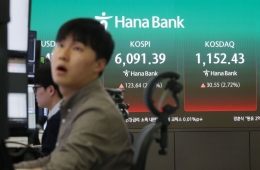
This reduction in stock allocations appears to have been influenced by market conditions. The KOSPI, which had surged by nearly 20% last month, has fallen by 2.5% this month, showing a correction. In the United States, the S&P 500 has dropped by 2.9% and the Nasdaq by 4.89% so far this month.
While the proportion of stocks decreased, the allocation to bonds increased. The proportion of bonds, including certificates of deposit (CDs) and commercial paper (CP), rose from 7.5% at the end of last month to 7.9% this month. The proportion of overseas bonds also increased from 7.8% to 8.1% over the same period.
Both money market wrap (MMW) accounts and settlement balances, which are considered standby funds for the stock market, increased in proportion. This is interpreted as preparation for a future market rebound. The proportion of MMW accounts rose from 7.3% at the end of last month to 7.7%, while settlement balances increased from 1.6% to 2.1%.
Even as they reduced their overall stock allocations, high-net-worth individuals have expanded their buying of semiconductor stocks, turning to net buying of Samsung Electronics this month. Looking at the top net purchases this month, they bought a net 40.41 billion won of SK Hynix, making it the most purchased stock, followed by a net 25.87 billion won of Samsung Electronics. Other notable net purchases included ABL Bio (18.19 billion won), NAVER (8.8 billion won), Korea Financial Group (5.33 billion won), and Kakao (4.81 billion won).
Last month, high-net-worth individuals were net sellers of Samsung Electronics, offloading 4.57 billion won. For SK Hynix, they have maintained net buying for both last month and this month. Last month, they were also the largest net buyers of SK Hynix, purchasing a net 91.59 billion won.
Hot Picks Today
!["It's Easier to Just Heat It Up in the Microwave"... Once a Multi-Billion Market, Now Buried in Debt [Why&Next]](https://cwcontent.asiae.co.kr/asiaresize/93/2025122911104372210_1766974243.jpg) "It's Easier to Just Heat It Up in the Microwav...
"It's Easier to Just Heat It Up in the Microwav...
- If You Order Now, Delivery Takes 4-5 Years... "We Get the First Slot at That Fac...
- Trump: "Will Fire Powell If He Doesn't Resign from Fed Board After Chair Term"
- "Grilling Pork Belly Is Scary Now"... War Fallout Sparks Shaky Hands at Markets ...
- "Why Are Air Tickets Unavailable?" 15 Million Travelers Expected... Crowded Skie...

Despite the recent weakness in semiconductor stocks this month due to concerns about an artificial intelligence (AI) bubble, the outlook remains positive. In fact, the securities industry has recently been raising its target prices for SK Hynix. KB Securities raised its target from 730,000 won to 870,000 won, Daishin Securities from 700,000 won to 800,000 won, and Kiwoom Securities from 650,000 won to 730,000 won. Kim Dongwon, a researcher at KB Securities, stated, "SK Hynix is considered the biggest beneficiary of the memory boom, which has arrived 30 years after the spread of the internet in 1995." He added, "HBM4, due to a redesign issue at a competitor, is expected to maintain a 60-65% market share and a monopolistic supply position in the HBM market even when new players enter next year. As a result, next year's operating profit is projected to reach a record high of 8.1 trillion won, up 89% from the previous year, and net profit is expected to rise 73% to 7 trillion won."
© The Asia Business Daily(www.asiae.co.kr). All rights reserved.