The Homebuying Equation Gets Complicated... Review Pre-sale Records and Financial Plans [Practical Finance]
Stricter Pre-sale Requirements: What to Watch Out For
Since the October 15 real estate measures, the previously quiet supply of apartment pre-sale units will begin in earnest starting this month. Due to the designation of certain areas in Seoul and Gyeonggi Province as highly regulated zones, pre-sale requirements have become even stricter. With speculative demand having subsided compared to the past, the chances of homebuyers actually securing a unit are expected to increase.
However, as first-priority eligibility has been tightened and loan capacity has been significantly reduced, applicants must carefully review their previous pre-sale application records and thoroughly plan their finances before proceeding. In non-regulated areas of the Seoul metropolitan area, financing is relatively more accessible, and some complexes that have started accepting applications are seeing heightened competition, indicating growing market interest.
According to data compiled by the market research firm Zigbang on the 12th, the number of apartment units to be supplied nationwide this month is expected to reach 36,642, a 24% increase compared to the same period last year. About three-quarters of these units are concentrated in the Seoul metropolitan area. Of the 29 complexes being offered or scheduled for pre-sale in the metropolitan area this month, 7 complexes (8,784 units) are in regulated zones, while 22 complexes (18,247 units) are in non-regulated zones. This shows that activity is more robust in areas with fewer restrictions.

No household member may have won in the past 5 years to qualify for first priority
Under the government's housing market stabilization measures announced last month, all of Seoul and 12 areas in Gyeonggi Province (Gwacheon, Gwangmyeong, Suwon Yeongtong, Jangan, and Paldal Districts, Seongnam Bundang, Sujeong, and Jungwon Districts, Anyang Dongan District, Yongin Suji District, Uiwang, and Hanam) have been designated as regulated areas (adjustment target areas and speculative overheating districts). The existing three Gangnam districts (Gangnam, Seocho, Songpa) and Yongsan District remain unchanged, but other areas now face stricter pre-sale rules. To qualify for first-priority pre-sale, applicants must have been members for at least two years and be the head of household. For married couples, only one spouse who is the head of household may apply. Anyone whose household member has won a pre-sale in the past five years is ineligible. Priority is also given to those who have lived in the area for more than two years.
The proportion of the point-based system applied to private apartments has also increased. For units up to 60 square meters, 40% are allocated by points; for 60-85 square meters, 70%; and for over 85 square meters, 80%. In non-regulated areas, the point-based system applies to 40% of units up to 85 square meters, while units over 85 square meters are allocated solely by lottery. Of the units allocated by lottery, 75% go to those without a home, and 25% to those with one home. After winning a pre-sale, there is a three-year resale restriction (one year in non-metropolitan areas). There is a ten-year restriction for repeat winners, and a one-year restriction for those who were found ineligible after winning.
Financing is also tight. In the previous September 7 supply measures, the loan-to-value (LTV) ratio for regulated areas was reduced from 70% to 40%, and this has been applied immediately. If you already own a home, the LTV is 0%, making it impossible to get a mortgage loan. For first-time homebuyers, up to 70% LTV is allowed. The mortgage loan cap of 600 million won does not apply to interim payment loans, but it does apply when converting to a balance loan at the time of move-in. The mortgage loan cap is based on market value, not the pre-sale price. Since the final balance loan for pre-sale apartments generally references the prices of nearby complexes, applicants should estimate the market price in advance. For units priced at 1.5 billion won or less, the maximum loan is 600 million won; for units over 1.5 billion won, the cap is 400 million won; and for units over 2.5 billion won, the cap is 200 million won.
![The Homebuying Equation Gets Complicated... Review Pre-sale Records and Financial Plans [Practical Finance]](http://www.asiae.co.kr/news/img_view.htm?img=2025111115214313233_1762842103.jpg)
Non-regulated areas with easier financing draw more interest
In non-regulated areas, the basic acquisition tax rate (1-3%) applies, and the loan-to-value (LTV) ratio can be up to 70%. Compared to regulated areas, the burden of raising funds is lower. Any household member can apply for pre-sale, and the first-priority eligibility requires only 12 months of membership.
Interest in pre-sale remains steady, especially in non-regulated areas with established or improving transportation networks. Gimpo is a prime example, with improvements such as the Gimpo Gold Line and the planned extension of Subway Line 5. Large-scale complexes in Gimpo, such as Bukbyeon Umi Lin Park Reeve and Hangang Sujain Obsent, both of which were offered last year, achieved 100% contract rates early on.
In Gimpo, the average competition rate for first-priority applications at Pungmu Hoban Summit last month was 7.3 to 1, while Pungmu Station Prugio The Mark recorded 17.4 to 1. According to the market research firm RealToday, by the end of this year, about 5,000 units in four complexes in non-regulated areas of Gyeonggi Province and about 4,900 units in three complexes in Incheon are scheduled for pre-sale. Kwon Il, head of research at Real Estate Info, explained, "Since the structural shortage of supply in Seoul cannot be resolved in the short term, demand will continue to shift to the greater Seoul area, especially where transportation is improving."
As pre-sale prices have risen, interest in price-capped complexes remains high. According to Housing and Urban Guarantee Corporation data, as of the end of September this year, the average pre-sale price per 3.3 square meters for private apartments nationwide was 19.48 million won, a 3.77% increase from the same period last year. In Seoul, the average was 45.47 million won, up 2.96%, and in the metropolitan area, the average was 28.76 million won, up 3.18%. Some complexes subject to price caps, such as Siheung Geomo Elgar Roseviang in Gyeonggi, Suwon Dangsu District (West Suwon Epit Centralmark), and Incheon Geomdan New Town (Geomdan Lake Park Station Paragon Metropark), are scheduled for pre-sale within the year.
Hot Picks Today
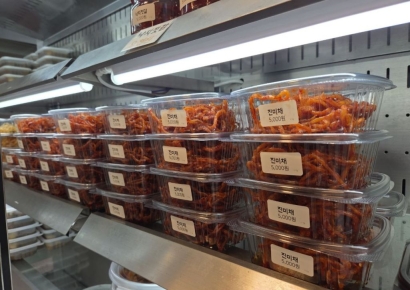 "Auntie, When Will Dried Shredded Squid Return as a Side Dish?"...Once Vanished from Restaurants, Now Making a Comeback
- Monthly Salary Soars 3.7 Times from 8.25 Million Won to 30.59 Million Won... 86 Fair Trade Commission Retirees Join Law Firms Over 10 Years
- "You've Earned Your Wealth—Now It's Time to Use It Well"...Seniors Turning to Financial Centers Before Illness Hits [Finance Embracing Seniors] ①
- "Honey, Let's Wait a Bit Longer"... Parental Leave Rates Fall at Samsung and SK hynix on High Bonus Expectations
- Gucci Starts Selling 'Made in China' Shoes Amid Sluggish Sales... What’s Happening with Luxury Sneakers Priced at 1.2–1.3 Million Won?
Kim Eunsun, head of the Big Data Lab at Zigbang, said, "Preference for new apartments remains strong, but as regulated areas expand and financial regulations tighten, the market will gradually shift toward buyers with greater financial capacity. Buyers who face a heavy financial burden are likely to move to areas with relatively relaxed conditions or to alternative options with adjusted prices or sizes, leading the market to find a new equilibrium between supply and demand."
© The Asia Business Daily. All rights reserved. Unauthorized AI training and use prohibited.