When Will Tariff Reductions Take Effect? ... "May Take Longer Than Japan"
Tariff Reduction for Automobiles Likely to Take Effect on November 1...
Semiconductor Outlook Remains Unclear
Legislative Procedures, Including Special Act Submission, Still Pending
Clear Divergence Between Korea and U.S. on Semiconductor Tariffs
"Comparable to Taiwan" vs "Not Included in This Agreement"
With the 2025 Asia-Pacific Economic Cooperation (APEC) Summit currently underway in Gyeongju, South Korea and the dramatic conclusion of follow-up negotiations on a trade agreement between South Korea and the United States, attention is now focused on the actual implementation timeline. In South Korea, the agreement requires ratification by the National Assembly, while in the United States, it must be signed by presidential executive order. As a result, some observers point out that there is still a long way to go before specific tariff applications come into effect. Howard Lutnick, U.S. Secretary of Commerce, also stated that semiconductor tariffs were "not included in the Korea-U.S. agreement," highlighting a difference from the South Korean government's position that tariffs would be aligned with those applied to Taiwan.
According to government and industry sources on October 30, several steps remain before direct tariff reductions can be implemented, even after the conclusion of the Korea-U.S. tariff negotiations. After final agreement between the two heads of state, the agreement takes effect with the signing of a U.S. presidential executive order and publication in the Federal Register. In South Korea, the final tariff reduction will only be applied after the submission and passage of a "Special Act on the Operation of Korea-U.S. Investment Funds" (tentative name) in the National Assembly.

Compared to Japan, which recently finalized its own tariff negotiations, it appears unlikely that South Korea will see immediate tariff reductions following the U.S. executive order. On September 4, when the Japanese government signed a memorandum of understanding (MOU) on investment with the United States, President Donald Trump issued an executive order the same day. Twelve days later, on September 16, it was published in the Federal Register, and the tariff reduction took effect immediately. Japan underwent a relatively simple process, with implementation based solely on the executive order and publication.
In contrast, South Korea's process includes legislative procedures in the National Assembly, such as enacting a special law to establish a Korea-U.S. investment fund, which could delay the effective date compared to Japan. The key factor will be how swiftly the bill is prepared and submitted to the National Assembly.
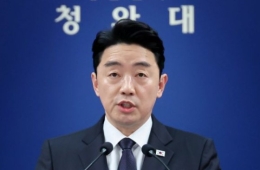
The government has decided to retroactively apply tariff reductions from the first day of the month in which the bill is submitted, and is aiming to complete preparations and submit the bill by mid-November. As a result, the tariff reduction could take effect as early as November 1 or December 1. Kim Yongbeom, Senior Presidential Secretary for Policy, stated, "We have decided to retroactively reduce tariffs from the first day of the month in which the special law is submitted to the National Assembly," adding, "We will prepare as quickly as possible and complete the submission by mid-November."
The timing of tariff application is expected to have a significant impact on the tariff burden for Hyundai Motor and Kia. According to Hana Securities, if tariffs are reduced from 25% to 15%, Hyundai Motor and Kia's annual tariff burden will decrease from 10.6 trillion won to 6.3 trillion won, a reduction of approximately 4.3 trillion won. Based on last year's export volume, this translates to a savings of about 3.33 million won per vehicle. However, even a one-month delay in implementation could result in losses of more than 300 billion won per month, making the government's prompt follow-up procedures crucial. An industry official commented, "We are preparing on the assumption of a November implementation, but the actual schedule depends on how quickly the government completes the necessary procedures. We cannot afford to let our guard down until the very end."

The semiconductor industry has also expressed relief at the news of the Korea-U.S. tariff agreement. However, with the U.S. decision on semiconductor tariff rates still postponed and no specific rates confirmed, some say that uncertainty across the industry remains unresolved. As the explanations from both sides diverge regarding semiconductor tariffs, uncertainty surrounding the issue appears to be increasing.
Industry insiders believe that the likelihood of high tariffs is low, as no country other than Taiwan or South Korea possesses comparable manufacturing competitiveness. One industry official stated, "This agreement is expected to broaden opportunities for cooperation with the United States, and it will be a positive signal for the domestic semiconductor industry." However, there is also disappointment that detailed conditions, including the tariff rates, have not been disclosed. Since President Trump announced after taking office that he would consider imposing tariffs of up to 100% on semiconductors, no specific criteria have been presented for the past eight months, leaving uncertainty unresolved.
Some have pointed out that, compared to the European Union (EU), which has capped semiconductor tariff rates at 15%, the outcome of these negotiations is lacking. An industry official said, "Although it is said that the outcome is not worse than Taiwan's, nothing has been finalized for Taiwan either. We still need to monitor the specific details."
An Kiheon, Executive Director of the Korea Semiconductor Industry Association, stated, "From the perspective of the semiconductor industry, this agreement can realistically be considered 'the best possible outcome.' While final agreement is still pending, if the outcome is similar to Taiwan's, it would be a satisfactory result for our companies."
Meanwhile, the pharmaceutical, bio, and small and medium-sized export business sectors have seen sharply contrasting fortunes. For pharmaceuticals, the Most Favored Nation (MFN) principle will be applied, setting the tariff rate at 15%, the same as the EU and Japan. Generic drugs will be exempt from tariffs altogether.
The industry interprets this agreement as more than just the removal of tariff risks. The pressure to "relocate bases to the United States" has eased, making it possible to respond in the short term with only the contract manufacturing (CMO) and parallel production capacities already secured locally. Automotive parts, like automobiles, will also be subject to a 15% tariff, providing relief to small and medium-sized parts manufacturers.
Hot Picks Today
 If You Order Now, Delivery Takes 4-5 Years... "...
- "If You Had Followed Just a Year Ago, You'd Be Rich... National Pension Service ...
- "It's Easier to Just Heat It Up in the Microwave"... Once a Multi-Billion Market...
- To the Samsung Electronics Union: "Learn to Be Satisfied"... What Happened with ...
- "Why Are Air Tickets Unavailable?" 15 Million Travelers Expected... Crowded Skie...
On the other hand, small and medium-sized companies in the steel, aluminum, and related derivative product sectors are expected to face greater shock and confusion, as these items were excluded from the negotiations. These products are subject to a high tariff rate of 50%, and it is estimated that about 2,000 domestic small and medium-sized companies have suffered losses as a result.
© The Asia Business Daily(www.asiae.co.kr). All rights reserved.