Assemblyman Cha Jiho Proposes Special Act on Climate Crisis Adaptation: "Establishing a Consistent National Response System"
Key Points of Climate Crisis Policy Implementation, Monitoring, and Evaluation
Reflecting Climate Justice and Climate Resilience Perspectives
Referencing the IPCC Assessment Framework... Aligning with Global Governance
Cha Jiho, a member of the Democratic Party of Korea and a member of the National Assembly Special Committee on the Climate Crisis, announced on the 4th that he has sponsored the "Special Act on Climate Risk Assessment and Strengthening Climate Adaptation Capacity (Climate Crisis Adaptation Act)" to institutionalize responses to the climate crisis.
The Climate Crisis Adaptation Act is a newly established law that provides a foundation for transitioning to a society that adapts to the climate crisis by reducing vulnerabilities related to climate change. The core of the bill is to promote climate crisis policies that minimize and proactively prepare for losses and damages caused by climate change, and to regularly monitor and evaluate these efforts. It also stipulates that priority measures must be implemented for vulnerable groups, sectors, and regions from the perspective of achieving climate justice and enhancing climate resilience.

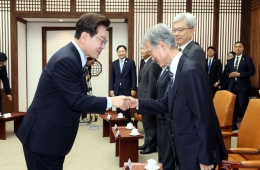
Cha Jiho, a member of the Democratic Party of Korea, is being interviewed by Asia Economy at the National Assembly Members' Office Building. 2025.8.13 Photo by Kim Hyunmin
View original imageThis bill is significant as it establishes a consistent national response system by connecting the entire process of mitigation, adaptation, scientific monitoring, and forecasting for climate change. It is designed to address the limitations of the existing "Framework Act on Carbon Neutrality and Green Growth for Coping with Climate Crisis (Carbon Neutrality Framework Act)" which remains at a declarative and comprehensive level, and to clarify the relationship with the systems defined by the "Act on Monitoring and Forecasting of Climate and Climate Change," ensuring that climate crisis adaptation policies operate systematically without overlap or gaps.
Specifically, the new bill includes: ▲ Strengthening public safety and resilience through investigation, prediction, and assessment of the impacts of climate change ▲ Defining and detailing core concepts and principles such as climate crisis vulnerability, risk, resilience, and vulnerable groups ▲ Managing climate crisis adaptation information systems and integrated platform information ▲ Establishing science-based policies through climate crisis impact and vulnerability surveys and climate risk assessments ▲ Expanding the social safety net through surveys and support projects for vulnerable groups. In particular, the definition of climate risk has been expanded to include not only ecosystems and biodiversity, but also the economic and social impacts and ripple effects on sectors such as marine, fisheries, and industry. Furthermore, the scope of climate crisis vulnerable groups has been broadened to include those engaged in agriculture and fisheries.
Assemblyman Cha stated, "Securing compatibility with international standards is essential in responding to climate change," adding, "This bill is a science-based law that aligns with international norms, referencing the assessment framework and adaptation policy structure of the Intergovernmental Panel on Climate Change (IPCC), and will serve as a cornerstone for Korea to play a responsible role in global climate governance."
Hot Picks Today
 "Two Spend 500,000 Won in a Flash, Yet Wait Two Hours?" ... 'Dreamland' Shunned by Kids and Foreign Tourists
- The Era of Getting 200 Million Won After 30 Years Is Over... A Japanese Bank's "Perpetual Department Head" Who Just Clocked In Cries Out
- Spain Hit by Its Worst Tragedy... Lee Kangin, Moreno and Real Madrid Join Soccer World in Mourning
- They Said, “Make It Your Home for Life” - Then Suddenly Kicked 200 Passengers Off... What Happened to the Around-the-World Cruise?
- "130 Rice Bowls Sold Out in a Day"... 'Unfiltered Face' Adds 8 Million Won to Night Market Sales: China's Bungeunwoo
Recently, the National Assembly has seen a series of climate change-related bills being proposed. The expansion of the Ministry of Climate and Energy, a key pledge of President Lee Jaemyung, is now in full swing. Wi Seongon, chairman of the Special Committee on the Climate Crisis from the Democratic Party, has sponsored a government organization bill that merges the energy sector of the Ministry of Trade, Industry and Energy with the Ministry of Environment to create the "Ministry of Climate, Environment and Energy." Additionally, Lee Soyoung, another Democratic Party lawmaker, sponsored a revision to the Carbon Neutrality Framework Act on August 20, which introduces the concepts of greenhouse gas reduction pathways and a "carbon budget."
© The Asia Business Daily. All rights reserved. Unauthorized AI training and use prohibited.