Despite Tariff Effects, June Current Account Surplus Hits All-Time High... "Favorable Trend Expected in Second Half" (Comprehensive)
June Current Account Surplus at $14.27 Billion... 26 Consecutive Months in the Black
Semiconductors Avoid Tariff Impact, Lead Export Growth After Just One Month
"Some Preemptive Demand, but Robust Demand Expected in Second Half"
Automobiles and Steel Affected by Tariffs... "Full Impact to Emerge in Second Half"
In June of this year, South Korea recorded a current account surplus of $14.27 billion, setting a new all-time high. This was due to improved export performance led by semiconductors, despite a decline in exports of automobiles and steel caused by tariff effects. Dividend income also increased, allowing the current account to remain in surplus for 26 consecutive months. With robust demand for semiconductors, the current account surplus is expected to continue in the second half of the year. However, if the mutual tariffs imposed by the United States take full effect starting this month, the surplus could decrease.
Semiconductor Exports Avoid Tariff Impact... Third-Highest Goods Account Surplus on Record

According to the "June 2025 Balance of Payments (Preliminary)" released by the Bank of Korea on the 7th, South Korea's current account surplus in June was $14.27 billion. This marked the 26th consecutive month of surplus since May 2023. The surplus widened compared to the previous month ($10.14 billion) and the same month last year ($13.1 billion). On a monthly basis, this was the largest surplus ever, surpassing the previous record set in June of last year.
The large current account surplus was driven by improvement in the goods account. The goods account, which makes up the largest portion of the current account, recorded a surplus of $13.16 billion, the third-largest on record. The surplus widened compared to both the previous month ($10.66 billion) and the same month last year ($12.13 billion). While last month's surplus was a "recession-type surplus" with both exports and imports declining, this month both exports and imports increased.
Exports totaled $60.37 billion, up 2.3% from the same month last year. IT items such as semiconductors and computer peripherals continued to perform well, and non-IT items such as pharmaceuticals also increased, leading to a turnaround in export growth after just one month. In June, semiconductor exports based on customs clearance were $15.16 billion, up 11.3% year-on-year. Pharmaceutical exports also rose by 51.8%. In contrast, exports of steel products and passenger cars fell by 2.8% and 0.3%, respectively.
Imports totaled $47.21 billion, up 0.7% from the same month last year. Imports of capital goods and consumer goods increased, while the decline in raw materials imports narrowed, resulting in a turnaround in import growth after three months. In June, imports of raw materials based on customs clearance were $22.42 billion, down 6.4%. However, capital goods imports were $19.81 billion, up 14.8% due to increases in semiconductor manufacturing equipment and semiconductors. Imports of semiconductor manufacturing equipment (up 38.8%), semiconductors (up 22.7%), and transportation equipment (up 8.2%) all increased. Consumer goods imports also rose to $8.49 billion, up 7.6%.
The primary income account, led by dividend income, recorded a surplus of $4.16 billion. This was a significant increase from the previous month ($2.15 billion). The surplus widened due to increased dividend receipts and a base effect from reduced dividend payments compared to the previous month.
The service account, which includes the travel account, recorded a deficit of $2.53 billion, a larger deficit than the previous month ($2.28 billion). The travel account deficit widened to $1.01 billion as the number of inbound travelers decreased with the end of the May holiday effect.
Meanwhile, the cumulative current account surplus for the first half of the year was $49.37 billion. In its May economic outlook, the Bank of Korea projected a current account surplus of $82 billion for the year, with $37.8 billion in the first half and $44.1 billion in the second half. The current results far exceeded the forecast, ranking as the third-highest first-half surplus on record.
Tariff Impact to Intensify in Second Half... "Semiconductor Market Remains Strong"

The Korea-U.S. trade negotiations have concluded, and with mutual tariffs being imposed starting this month, the impact of U.S. tariffs is expected to become more pronounced in the second half of the year. President Donald Trump's push to impose item-specific tariffs on semiconductors and pharmaceuticals is also a negative factor. However, the Bank of Korea expects the current account to remain favorable in the second half, citing the agreement to grant "most-favored-nation" status to these items through the Korea-U.S. trade negotiations and continued strong demand for semiconductors.
Shin Seungcheol, Director General of Economic Statistics at the Bank of Korea, commented on the July current account outlook, stating, "Although the trade balance based on customs clearance is expected to decrease compared to June, the July figure will still be the largest surplus on record for that month." He added, "While U.S. tariffs will negatively affect exports in the second half, semiconductor exports are expected to remain strong, and dividend income is also increasing, so the current account is likely to remain favorable in July and throughout the second half."
In particular, despite President Trump's warning of tariffs of up to 100% on semiconductor items, the semiconductor market is expected to remain strong. Shin stated, "Although tariffs are scheduled, the Korea-U.S. trade agreement ensures most-favored-nation status, so there is no reason to expect South Korea to be at a disadvantage or lose competitiveness compared to other countries." He added, "In the July economic assessment, we also projected that the semiconductor boom would last longer than in the past, given steady demand for AI semiconductors."
Hot Picks Today
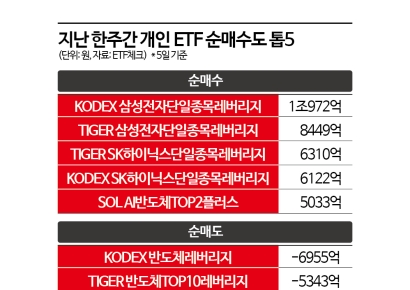 "Let's Double with Samsung and SK hynix": Retail Investors Dump Semiconductor ETFs for Samsung and SK hynix Leverage Products
- "Why Is There No Substitute Holiday for Memorial Day?"... Here's Why
- [Column] Court Dismisses HD Hyundai Heavy Industries' Injunction Over 'Security Penalty' in KDDX Bidding War
- Waking Up to 33 Trillion Won in His Account... Bank Staff Say "Unbelievable"
- "The Only One in the World... Worth 1.5 Billion Won" The Recipient of Jensen Huang's Gifted Graphics Card Is
Regarding automobile exports, Shin said, "Despite the imposition of tariffs, exports to Europe are increasing again, which is positive." He explained, "While tariffs will impact the industry, including reduced exports to the U.S., companies are increasing local production and diversifying export markets, so we need to monitor the situation in the second half."
© The Asia Business Daily(www.asiae.co.kr). All rights reserved.
!["Don't Get Excited, Crushes Are Exhausting Too: Even Unrequited Love Faces a Recession [World is Z Gold]"](https://cwcontent.asiae.co.kr/asiaresize/307/2026060508335888548_1780616038.png)