Taxi Driver Qualification Revocation for Juvenile Sex Offense Conviction Ruled Constitutional by Constitutional Court
Unanimous Decision by Justices in Seven Days
"The Public Interest in Ensuring Public Safety Is Extremely Important"
The Constitutional Court has ruled that the current law, which revokes the qualifications of taxi drivers who are convicted under the Act on the Protection of Children and Juveniles from Sexual Abuse (Juvenile Sex Offender Act), does not violate the Constitution.

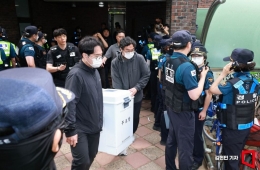
Constitutional Court Rules on Constitutional Complaint Regarding Disqualification of Taxi Drivers with Juvenile Sex Offender Records under the Juvenile Sex Offender Act. Yonhap News
View original imageOn May 29, the Constitutional Court unanimously decided that Article 87, Paragraph 1, Subparagraph 3 of the Passenger Transport Service Act?which stipulates the revocation of taxi driver qualifications during the probation period for those sentenced to suspended imprisonment or higher for molesting children or juveniles through deception or authority?is constitutional.
The Court stated, "It is of great public interest to exclude individuals who have been sentenced to suspended imprisonment or higher for molesting children or juveniles through deception or authority from taxi driving duties, in order to protect the public from crime, alleviate public anxiety about using passenger transport services, and ensure public safety in road traffic." The Court further noted, "The provision under review meets the requirement of balancing legal interests."
The Court added, "Because taxis have various destinations and arrival times and operate even late at night, the probability that passengers will be exposed to danger is significantly higher compared to other forms of public transportation such as buses," and emphasized, "There is a need for relatively strict regulation regarding taxi driver qualifications."

In this constitutional complaint case, the petitioner, a private taxi driver identified as Mr. A, was convicted in February last year of violating the Juvenile Sex Offender Act for molesting a child or juvenile and was sentenced to 1 year and 6 months in prison, suspended for 3 years. The sentence became final. In May last year, the Mayor of Busan revoked Mr. A's taxi driver qualification. Mr. A filed an administrative lawsuit, but it was dismissed. He then filed a constitutional complaint, claiming the provision was unconstitutional.
Hot Picks Today
![18 Years On, Hourly Wages Still Stuck at 20,000 Won... "Who Would Work Here?" Plenty of Orders, But No Workers Left [K-Shipbuilding, The Disappearing Skilled Workers]①](https://cwcontent.asiae.co.kr/asiaresize/93/2026060915212793252_1780986087.jpg) 18 Years On, Hourly Wages Still Stuck at 20,000 Won... "Who Would Work Here?" Plenty of Orders, But No Workers Left [K-Shipbuilding, The Disappearing Skilled Workers]①
18 Years On, Hourly Wages Still Stuck at 20,000 Won... "Who Would Work Here?" Plenty of Orders, But No Workers Left [K-Shipbuilding, The Disappearing Skilled Workers]①
- After-Work Side Job Planners Flock in for '130,000 Won a Month' Allowance, but Side Effects Grow [Financial Microscope]
- "Sell Before Taxes Rise"...Half of Gangnam Apartment Sales Involve Properties Held for Over 10 Years
- "Is She Really a Mother of a 45-Year-Old? The Secret to Youthful Looks of a 70-Year-Old Woman with 2 Million Followers"
- "Where Did the Tire Go?" Loud Noise from Car Shocks Drivers... Driver's Response Even More Baffling
However, the Constitutional Court stated, "If the court chose a suspended sentence of imprisonment or incarceration after considering all circumstances, it means the possibility of social condemnation is by no means insignificant," and added, "Given that the driver can regain qualification after the probation period ends, the disadvantage imposed on the taxi driver is limited."
© The Asia Business Daily(www.asiae.co.kr). All rights reserved.


![Festered and Finally Burst... The Bare Face of 'Election Judgment' [Data Pick]](https://cwcontent.asiae.co.kr/asiaresize/307/2026061009353894036_1781051738.png)