US Steel Regulations on Chinese Imports... Impact Extends to Korea
If U.S. Market Closes to Chinese Products, Indirect Exports May Increase
Concerns Rise Over Stronger Anti-Dumping and Safeguard Measures by Third Countries

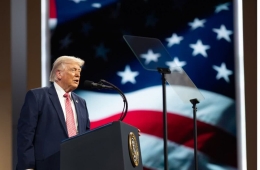
The United States has decided to eliminate country-specific tariff exemptions and exceptions on steel and aluminum starting from the 12th of this month, applying a uniform 25% tariff to all countries. In particular, by signing an executive order to impose an additional 10 percentage points, resulting in a 20% tariff on Chinese products, it revealed its intention to effectively block the influx of low-priced Chinese steel. As a result, the possibility of Chinese products being re-exported via third countries has increased, and not only the U.S. but also third countries are expected to strengthen anti-dumping and safeguard regulations, which will have direct and indirect impacts on South Korea.
According to industry sources on the 4th, the U.S. steel tariff increase is widely analyzed as a measure targeting China. Currently, Chinese steel consumed within the U.S. amounts to 510,000 tons, accounting for only 1.8% of total steel imports, and a high tariff of 35% is already imposed on Chinese steel. Although Chinese steel itself may not seem to be directly affected, the U.S. believes that semi-finished Chinese steel products are entering in finished form via Mexico, Vietnam, and other countries.
There are also suspicions that Canada and Mexico are meeting their domestic steel demand with cheap Chinese steel and then exporting domestically produced steel products to the U.S. at high prices. In fact, Canada (ranked 1st), Mexico (4th), and Vietnam (6th), which are major steel importers to the U.S., are all among the top exporters of Chinese steel. Therefore, if the U.S. imposes high tariffs on countries with large steel imports, it is highly likely that Chinese steel exports will be hit in a chain reaction.

Ultimately, China is likely to increase re-exports via third countries instead of direct exports to the U.S. market, which has become difficult. The problem is that South Korea is also highly likely to be investigated along with China during this process. In fact, in last year's anti-dumping investigations conducted in T?rkiye (tin-plated steel sheets, cold-rolled steel sheets, plated steel sheets, color steel sheets), Malaysia (tin-plated steel sheets), and Vietnam (zinc-plated steel sheets), South Korea was included as a target country alongside China. As Chinese steel flows into Vietnam, Malaysia, T?rkiye, and others, import regulations in these countries may be further strengthened.
The EU is also discussing a new tariff system to replace the steel safeguard scheduled to expire in June 2026, and there is a high possibility of quota reductions and strengthened import regulations in the future, which could negatively affect South Korea's steel exports to the EU.
Ultimately, diplomatic response is key. An industry official said, "The change in U.S. tariff policy could be a signal that restructures the global steel market beyond a simple protectionist measure. Before the spread of re-exports of low-priced Chinese steel products expands, the South Korean government and companies must carefully prepare diplomatic strategies to respond to steel export regulations in line with these changes."
Hot Picks Today
 "Japanese Consumers Fall for K-Beauty Like Kore...
- "Sulfur Supply Shock More Alarming Than Oil... Impact Spreads to Semiconductors ...
- Early Rally: KOSPI Eyes 6,200 Mark in Morning Trade
- The Wealthier They Are, the Less They Believe in the "Invincibility of Real Esta...
- Israeli Soldier Smiling, Woman Trembling... Italian Magazine Photo Shocks the Wo...
Meanwhile, the Ministry of Trade, Industry and Energy announced that on the 27th of last month (local time), Minister An Deok-geun met with U.S. Secretary of Commerce Gina Raimondo in the Commerce Department meeting room in Washington D.C. and requested tariff exemption measures from the U.S. side. The ministry reported that during the consultation, the two ministers discussed bilateral shipbuilding cooperation and agreed to establish a working-level consultation channel regarding tariff measures. However, Secretary Raimondo expressed hope for South Korea's cooperation but reportedly did not specify details about the U.S. tariff plans for South Korea.
© The Asia Business Daily(www.asiae.co.kr). All rights reserved.