[This Week's Books] 'Sseuregiui Segyesa' and More
![[This Week's Books] 'Sseuregiui Segyesa' and More](http://www.asiae.co.kr/news/img_view.htm?img=2024092709545941356_1727398500.jpg)
The Global History of Waste
The history of waste began alongside the history of humanity. As technology advanced and material wealth increased, waste grew exponentially. Waste is directly linked to climate change. Plastics emit greenhouse gases throughout their lifecycle?from production and consumption to collection and disposal. The amount of plastic waste humanity produces daily weighs as much as about 100 Eiffel Towers. This book examines the seriousness of the waste problem and considers what measures should be taken for human survival. (Written by Roman K?ster / Translated by Kim Ji-hyun / Heureum Publishing)
![[This Week's Books] 'Sseuregiui Segyesa' and More](http://www.asiae.co.kr/news/img_view.htm?img=2024092709551141357_1727398511.jpg)
The Dollar Wars
This book explores the efforts the United States has made over the past 50 years to establish and maintain the dollar’s dominant status as the world’s reserve currency. It vividly highlights the struggles, decisions, successes, and failures of U.S. Treasury Secretaries, known as the "Guardians of the Dollar." The author interviewed over 100 individuals, including current and former U.S. Treasury Secretaries, Federal Reserve (Fed) officials, White House staff, International Monetary Fund (IMF), and World Bank personnel. Through this, the book predicts whether the U.S. can continue to uphold dollar hegemony and how the global economic order might change. (Written by Saleha Mosin / Translated by Seo Jeong-ah / Wisdom House)
Hot Picks Today
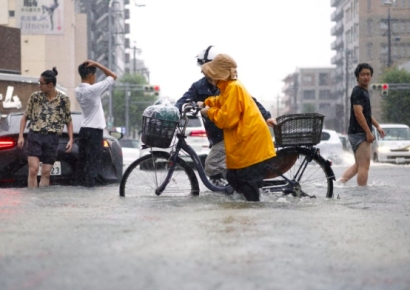 "I'm Scared, Please Don't Go to Japan Right Now"... Tourists on High Alert as Deaths Occur and Trains Halt
- "Some Hit the Jackpot, Others Become Jeonse Refugees"... Existing Ministries Fume Over Sejong Special Supply Revival: "Reverse Discrimination Without Retroactive Application" [Government in]
- President Lee Meets Koreans in Paris: "My Term Is Clearly Limited by the Constitution" (Comprehensive)
- "Works at a Major Corporation and Wins the Lottery Too"...Is the 1.2 Billion Won Prize Claim by 30s Employee Real?
- "Over 300 People Gathering to Read in Nightclubs? Why the World Is Embracing Social Reading, Even If It's Just for Show"
![[This Week's Books] 'Sseuregiui Segyesa' and More](http://www.asiae.co.kr/news/img_view.htm?img=2024092709552241358_1727398523.jpg)
The Liberalism You Don't Know
The author summarizes and engagingly retells the Bourgeois Trilogy, originally published in 2006, 2010, and 2016, in a way accessible to the general public. In the earlier Bourgeois Trilogy, the author argued that the reason the world became prosperous was not material factors but new perspectives that positively viewed ideas, emotions, the middle class, and egalitarian liberalism. The author also claimed that liberalism and innovationism have fostered not only prosperity but also the growth of humanity into better individuals. (Written by Didler Nansen McCloskey & Art Carden / Translated by Im Kyung-eun / Hankyung BP)
© The Asia Business Daily. All rights reserved. Unauthorized AI training and use prohibited.