"No Wedding Gift with Adulterer Banknote"...The 10,000 Yen Figure Criticized in Korea Faces Humiliation in Japan Too
Japan Issues New Banknotes... 10,000 Yen Portrait is Shibusawa
Reexamining the Role of Japanese Colonial Exploitation That Brought Humiliation to the Korean Peninsula, Scandal Resurfaces
"In an Era Demanding Women's Rights, Including This on Banknotes"
On the 3rd, the Bank of Japan (BOJ), Japan's central bank, issued three new banknotes for the first time in 20 years, and the womanizing history of Eiichi Shibusawa, the figure featured on the 10,000 yen note, is being reexamined. Some have even expressed the opinion that this banknote should not be used as a wedding gift money. On the 10th, Japan's Ameba Times reported, "Shibusawa is known as the 'father of modern Japanese economy,' but he caused controversy for having an affair despite being married."
![The new 10,000 yen banknote in Japan features a portrait of Eiichi Shibusawa, known as the father of modern economics. <br>[Image source=Yonhap News]](http://www.asiae.co.kr/news/img_view.htm?img=2024071108432747300_1720655007.jpg)
The new 10,000 yen banknote in Japan features a portrait of Eiichi Shibusawa, known as the father of modern economics.
[Image source=Yonhap News]
Shibusawa is known to have made his wife and mistress live together under one roof, and he is also said to have made advances toward female servants working in his household. As a result, there are belated criticisms that featuring Shibusawa on the banknote is inappropriate in today's era.
Japanese netizens have reacted with comments such as, "In an era demanding the improvement of women's rights and status, it's surprising that Shibusawa is featured on the banknote," and "Because Shibusawa reminds people of (a husband's) infidelity, it is considered proper etiquette to use old banknotes for wedding gifts." On the other hand, some opinions include, "It was common at the time," and "Money is just money." The figures featured on the new banknotes, including Shibusawa, were decided during Shinzo Abe's administration in 2019.
Shibusawa was also a key figure in Japan's exploitation of the Korean Peninsula during the Japanese colonial period. He served as an economic official during Japan's Meiji era and was involved in establishing over 500 companies, including those in railroads, gas, electric lighting, and textiles. Later, during the Japanese colonial period, he served as president of Keijo Electric (the predecessor of Korea Electric Power Corporation), leading economic exploitation. He was involved in constructing railways such as the Gyeongin Line and Gyeongbu Line, through which agricultural, forestry, fishery, and mineral resources from Korea were extracted and exported to Japan.
During the Korean Empire period, Shibusawa, as the head of the First National Bank, arbitrarily issued 1 yen, 5 yen, and 10 yen banknotes exchangeable for Japanese currency, featuring himself as the main figure on the notes, bringing disgrace to the Korean Peninsula.
Hot Picks Today
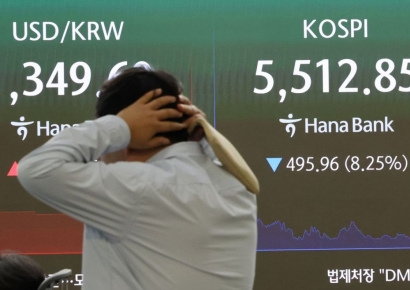 "Samsung Electronics at 70,000 won, SK hynix at 200,000 won"... Why the gloomy outlook despite 'record-breaking earnings'?
- "I Was Just Going Barefoot at Home"... "Absolutely Not": Why Doctors Warn Against It
- "There's a Drink Like This?"... Chinese Beverage With "Korean" in Its Name Rakes in 85 Million Won in Monthly Sales
- "To Make His Girlfriend Think It Was His": Why He Demolished Someone Else's 2-Billion-Won Apartment
- "No Need to Hire a Model"... The 25-Year-Old Woman Who Entered Social Media with a Face That Cost Just 1,500 Won [AI Content: The Bright and Dark Sides] 1
Additionally, the new 1,000 yen note features Shibasaburo Kitasato, known as the "father of modern medicine" in Japan, and the 5,000 yen note bears the portrait of Umeko Tsuda, who devoted herself to women's higher education. Earlier, Prime Minister Fumio Kishida stated, "These banknotes feature figures representing Japan's capitalism, women's empowerment, and scientific and technological revolution, making them banknotes suitable for the times," and added, "I hope they will be respected by the public."
© The Asia Business Daily. All rights reserved. Unauthorized AI training and use prohibited.