Bank of Korea Governor Lee Chang-yong: "High Household Debt Due to Self-Employed Debt and Real Estate Investment"

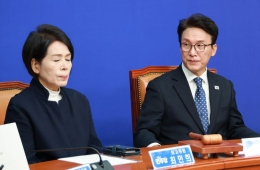
Lee Chang-yong, Governor of the Bank of Korea, is speaking at the plenary meeting of the Planning and Finance Committee held at the National Assembly on the 9th. Photo by Hyunmin Kim kimhyun81@
View original imageLee Chang-yong, Governor of the Bank of Korea, stated that the main factors contributing to the high household debt ratio are not only the debts of self-employed individuals but also the real estate debts of individuals seeking to invest in real estate, forming two pillars.
Governor Lee made these remarks on the 9th during a briefing at the Planning and Finance Committee of the 22nd National Assembly held in Yeouido, Seoul.
On the same day, Im Kwang-hyun, a member of the Democratic Party of Korea, said, "The debt of households and non-profit organizations in our country amounts to 2,318 trillion won, and loans to the self-employed total 1,056 trillion won, with self-employed loans accounting for about 46% of household debt, nearly half. From this perspective, household debt in our country can be seen as a problem of self-employed debt, and self-employed loans seem to be the main factor behind the high household debt ratio relative to Gross Domestic Product (GDP)."
In response, Governor Lee added, "I think that on the other side, individuals holding real estate for investment purposes also form one pillar, so the debts for the operation of self-employed businesses and the debts for real estate investment together constitute the two pillars of household debt."
Following this, Member Im said, "While it is desirable to reduce the household debt ratio relative to GDP to about 80%, if we attempt to forcibly reduce the household debt ratio relative to GDP without considering the large scale of self-employed debt in our economy, there could be side effects such as bankruptcies or economic recessions among the self-employed. Considering the uniqueness of our country, where self-employed debt occupies a large sector, it is necessary to devise tailored policies suitable for this situation," emphasizing the point.
Hot Picks Today
 "Two Spend 500,000 Won in a Flash, Yet Wait Two Hours?" ... 'Dreamland' Shunned by Kids and Foreign Tourists
- The Era of Getting 200 Million Won After 30 Years Is Over... A Japanese Bank's "Perpetual Department Head" Who Just Clocked In Cries Out
- Spain Hit by Its Worst Tragedy... Lee Kangin, Moreno and Real Madrid Join Soccer World in Mourning
- They Said, “Make It Your Home for Life” - Then Suddenly Kicked 200 Passengers Off... What Happened to the Around-the-World Cruise?
- "130 Rice Bowls Sold Out in a Day"... 'Unfiltered Face' Adds 8 Million Won to Night Market Sales: China's Bungeunwoo
Governor Lee responded, "We also believe that if household debt is rapidly reduced, the risk to financial stability would be too great, so a gradual reduction is preferable. Compared to other countries, the proportion of self-employed individuals is too large in our country, so structural improvements are needed to provide employment opportunities other than self-employment to prevent people from becoming self-employed," he said.
© The Asia Business Daily. All rights reserved. Unauthorized AI training and use prohibited.