'Animal and Plant Sanctuary' Changnyeong Designated as UNESCO Biosphere Reserve
"Dense Forest, Ecosystem, Agriculture and Delicate Balance"
County Governor Seong Nakin "Recognized as Pollution-Free Clean Nature"
Changnyeong-gun, Gyeongnam Province, has laid the foundation to promote various ecotourism projects. On the 5th (local time), the entire area (530.51㎢) was designated as a biosphere reserve at the 36th UNESCO International Coordinating Council of the 'Man and the Biosphere Programme' held in Agadir, Morocco.

A biosphere reserve is an area selected by UNESCO to conserve biodiversity values while promoting community development. Once designated, it is systematically managed by subdividing into core areas, buffer zones, and transition areas according to the country's relevant laws. Uncontrolled development is also suppressed.
As of now, there are 759 biosphere reserves in 136 countries (7.442 million ㎢). South Korea has ten sites including Changnyeong-gun, Seoraksan (1982), Jeju Island (2002), Sinan Dadohae (2009), Gwangneung Forest (2010), Gochang-gun, Jeonbuk (2013), and Suncheon-si, Jeonnam (2018).
UNESCO described Changnyeong-gun as "a sanctuary for various flora and fauna where the dense forests of Hwawangsan, the vast Upo Wetland, farmlands, freshwater ecosystems, and sustainable agriculture maintain a delicate balance." It added, "In particular, Upo Wetland has been the site of a successful biodiversity conservation effort since 2008 with the restoration project of the endangered Oriental Stork."

The Upo Wetland, a protected wetland area, and Hwawangsan County Park have been designated as core areas. The watersheds of Topyeongcheon, Gyesongcheon, and Changnyeongcheon, which connect the two core areas, are buffer zones, and the remaining areas are managed as transition zones.
Core areas are zones with high biodiversity conservation value. Only uses that minimally impact the ecosystem, such as monitoring, research, and education, are allowed with minimal interference. Buffer zones permit environmentally appropriate activities such as environmental education, recreation, ecotourism, and basic and applied research. Transition zones are areas where resources are developed sustainably and can be used for agriculture, residential, and other purposes.
Changnyeong-gun will integrally conserve the ecosystem according to the recommendations of the International Advisory Committee. Additionally, it will increase the added value of eco-friendly products and promote ecotourism projects to induce income generation for residents.
Hot Picks Today
![Claims That "Daiso Is Being Shut Down to Save AliExpress and Temu" Spread Widely... A Fact-Check [Why&Next]](https://cwcontent.asiae.co.kr/asiaresize/93/2023121315590987574_1702450749.jpg) Claims That "Daiso Is Being Shut Down to Save AliExpress and Temu" Spread Widely... A Fact-Check [Why&Next]
Claims That "Daiso Is Being Shut Down to Save AliExpress and Temu" Spread Widely... A Fact-Check [Why&Next]
- "Three-Star Rooms at 980,000 Won a Night, Five-Star at 2 Million"... Busan Fireworks Festival Seats Cost 100,000 Won, but Hotel Views Bring Another Price-Gouging Row
- "I Thought It Was a Fish": 40-Second Miracle... Fisherman Saves Drowning Puppy With CPR
- "All He Did Was Reheat and Eat Fried Rice Made the Day Before"... Man in His 20s Nearly Needed a Liver Transplant
- "Looks Like They're Having an Affair": What If You Opened a KakaoTalk Chat, Filmed It, and Shared the Video With Coworkers?

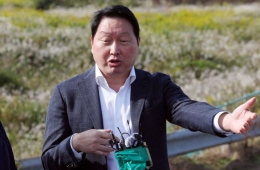
Seong Nak-in, the mayor of Changnyeong-gun, said, "This is the result of international recognition of our pollution-free clean natural area," and urged, "Please use many excellent eco-friendly products produced in the UNESCO-certified clean area." He also promised, "We will lead the revitalization of the local economy by promoting ecotourism projects befitting a UNESCO-designated city."
© The Asia Business Daily. All rights reserved. Unauthorized AI training and use prohibited.