2022 National Gender Equality Index 65.7 Points... Decline in 'Manager Gender Ratio' and More
Increased by 0.2 Points Compared to 2021
'Decision-Making' Score Declined... Lowest Among Fields
Infertility Treatment Leave Expanded from 3 to 6 Days Proposed
The Ministry of Gender Equality and Family improved the indicators to reflect the changing social landscape and calculated the National Gender Equality Index. The 2022 Gender Equality Index scored 65.7 points, a slight increase from the previous year, but some declines were observed in the 'Decision-making' sector, such as the gender ratio of managers.
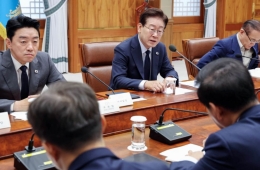
On the 7th, the Ministry announced that it held the 17th Gender Equality Committee meeting, where it reviewed and reported in writing the 2022 National Gender Equality Index measurement results, the 4th National Action Plan for UN Security Council Resolution 1325, and the 2024 implementation plan for the 3rd Basic Plan for Gender Equality Policy.
Gender Equality Index Revised... 'Decision-making' Sector Scores Lowest

First, the Ministry calculated the 2022 Gender Equality Index by deleting indicators that no longer matched social changes and including indicators that reflect recent social conditions. Specifically, 11 indicators such as the sex ratio of births from the third child onward, family relationship satisfaction, and health checkup rates were removed, while 9 indicators including the ratio of ministers, senior positions in courts, prosecution, and police, and the rate of career-interrupted women were added. Accordingly, the index system changed from the previous 3 domains, 8 sectors, and 25 indicators to 3 major goals, 7 domains, and 23 indicators.
Applying the revised indicators, the 2022 National Gender Equality Index scored 65.7 points, up 0.2 points from 65.5 points the previous year. When measured by the previous method, the 2022 score was 76.0 points, an increase of 0.6 points over the same period.
Comparing detailed contents, the 'Decision-making' sector scored particularly low. Using the pre-revision index, it was the only sector among the eight to decline compared to 2021. The 'gender ratio of managers' and 'gender ratio of appointed government committee members' decreased by 3.3 and 4.4 points respectively based on pre-revision calculations. 'Managers' generally refer to senior workers who supervise subordinates and spend more than 80% of their working hours on management and coordination. In the post-revision measurements, only the decision-making sector showed a decline from the previous year, with the 'minister ratio' dropping by 18.5 points and the 'manager ratio' by 3.3 points.
Using the revised method to assess regional gender equality levels in four grades, the top regions included Seoul, Gwangju, Daejeon, Sejong, and Jeju. The upper-middle regions were Busan, Daegu, Gyeonggi, and Chungnam; the lower-middle regions were Incheon, Ulsan, Gangwon, and Jeonbuk; and the lower regions were Chungbuk, Jeonnam, Gyeongbuk, and Gyeongnam.
Infertility Treatment Leave Expanded from 3 to 6 Days
The 2024 implementation plan of the 3rd Basic Plan for Gender Equality Policy (2023?2027) was also reviewed at the Gender Equality Committee meeting.
According to the implementation plan, the government will promote related legal amendments, including expanding the current 3-day infertility treatment leave to 6 days to create a fair and gender-equal work environment. Additionally, the number of 'family-friendly certified companies' will increase from 5,911 last year to 6,300 this year.
The plan also includes building a care safety net. The government will expand the 'Neulbom School,' which supports care nationwide, and increase the number of households receiving childcare service support to 110,000. To strengthen the safety net against violence victims, the '1366 Integrated Support Team' centered on the emergency call center 1366 will be expanded, and a 'One-Stop Solution Center' for crime victims will be established.
Establishment of the 4th National Action Plan for UN Security Council Resolution 1325
![[Image source=Yonhap News]](http://www.asiae.co.kr/news/img_view.htm?img=2024060514510397132_1717566662.jpg)
Furthermore, the Ministry reported to the Gender Equality Committee the establishment of the 4th National Action Plan for UN Security Council Resolution 1325. This resolution, unanimously adopted by the UN Security Council in 2000, concerns 'Women, Peace, and Security,' focusing on eradicating sexual violence against women in conflict zones and increasing women's participation in conflict resolution processes. As of July last year, 107 countries worldwide have established and are implementing national action plans for this resolution.
Domestically, after the National Assembly passed the 'Resolution Urging the Establishment of a National Action Plan for UN Security Council Resolution 1325' in 2012, the 1st National Action Plan was established in 2014. Subsequently, the 2nd plan was implemented in 2018, the 3rd in 2021, and the 4th plan is being established this year.
The newly established 4th plan consists of 11 goals, 21 detailed tasks, and 25 implementation tasks across five areas: prevention, participation, protection, relief and recovery, and implementation monitoring. In the prevention area, gender equality education for workers will be conducted to prevent violence against women in conflict zones, and international cooperation related to women, peace, and security will be strengthened. Notably, environmental and safety policies have been newly included to respond to emerging international issues such as the climate crisis and cyber security.
In the participation area, support will be provided for women's involvement in policy decisions and activities in defense, diplomacy, peace, unification, and security sectors, and efforts will be made to spread related agendas within local communities. The protection area includes measures to prevent military sexual violence and strengthen support for victims, as well as support for foreign women victims of sex trafficking and other violence victims.
The relief and recovery area aims to support the recovery of conflict-related victims. It will strengthen the restoration of honor and livelihood support for victims of the Japanese military 'comfort women' and promote international development cooperation through discovering relief and recovery projects in conflict zones. The implementation monitoring area will conduct annual self-assessments and joint inspections with related ministries to enhance the thoroughness of the National Action Plan's implementation and increase accountability of implementing agencies. The government plans to monitor implementation status annually through a public-private joint implementation monitoring meeting led by the Ministry of Gender Equality and Family.
Hot Picks Today
 "Who Wants to Be a Public Servant These Days?" Japan on High Alert as Technical Positions See Zero Applicants
- "Another 3 Million Won Target"... Why Securities Firms Are Re-Evaluating Samsung Electro-Mechanics [Click e-Stock]
- "Everyone Who Hasn't Boarded Yet Will Gather"...SK hynix's Long-Awaited Nasdaq Listing on the 10th
- Thought It Was a Salary, But It's $5,860 Rent... Even a $190,000 Salary Can't Keep Up in This City
- "Can't Even Pay the Freezer Electricity Bill"... Ice Cream Company Sees 99% Plunge in Brand Value
Shin Young-sook, Vice Minister of the Ministry of Gender Equality and Family, stated, "Based on the diagnosis results of the National Gender Equality Index, we will actively reflect policies such as improving gender representation in public and private sectors and work-life balance when establishing and promoting gender equality policy implementation plans to continue efforts to create a society free from discrimination for all."
© The Asia Business Daily. All rights reserved. Unauthorized AI training and use prohibited.