[Inside Chodong] "Seohak Gaemi": The Safety Net in the Era of High Exchange Rates

The won-dollar exchange rate is soaring well above the 1,300-won level. Last month, it even hit 1,400 won intraday for the first time in 17 months. Since August last year, the exchange rate has remained in the 1,300-won range on a monthly average for 10 consecutive months. This prolonged period of high exchange rates is the first since the 2008 global financial crisis.
Until now, a high exchange rate in South Korea was almost synonymous with economic or foreign exchange crises. The won-dollar exchange rate has only approached 1,400 won during the 1997 International Monetary Fund (IMF) foreign exchange crisis, the 2008 global financial crisis, and the 2022 Legoland-triggered liquidity crunch. However, the current economy is quite stable, having recorded a surprise growth in the first quarter and sustained a current account surplus due to strong exports.
Experts point to the role of "Seohak Gaemi" (Korean investors investing in overseas stocks) as a key reason why the economy and foreign exchange market remain stable without anxiety despite the high exchange rate. Seohak Gaemi was once considered a factor that unsettled the foreign exchange market. When investing in overseas stocks, they convert won into dollars, which can reduce domestic dollar reserves and destabilize the foreign exchange market.
However, recently, the evaluation has been quite the opposite. The dividends and capital gains from the substantial overseas stocks held by Seohak Gaemi are converted back into dollars, increasing Korea's foreign exchange reserves and acting as a safety net.
Lee Chang-yong, Governor of the Bank of Korea, also stated in a paper released last month titled "Bank of Korea's Policy Response to High Inflation after the Pandemic" that although the won-dollar exchange rate has risen recently, the response has been more flexible compared to the past. He cited structural changes in the domestic foreign exchange market as a factor that helped defend the exchange rate.
Since the global financial crisis, the composition of products and participants leading capital flows in Korea's foreign exchange market has changed significantly. The product composition shifted from borrowing to securities investment, and the participants changed from non-residents to residents. In particular, with a significant increase in residents' overseas investments, including securities investment, Korea has become a net creditor country, improving domestic financial institutions' ability to absorb exchange rate shocks.
Once a chronic net debtor country, Korea became a net creditor country starting in 2014 due to increased overseas investments, and the scale has steadily grown. In the first quarter of this year, Korea's net foreign assets reached a record high of $384.6 billion.
The Seohak Gaemi craze is still ongoing. As of the end of the first quarter this year, the foreign currency securities custody balance of domestic investors at the Korea Securities Depository was $114.39 billion (approximately 157 trillion won), the highest ever. In the second quarter, individual overseas investments continue to increase.
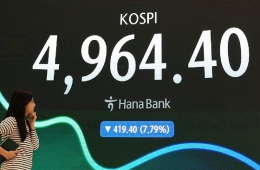
However, while the increase in Seohak Gaemi has positive aspects for the foreign exchange market, it unfortunately may have negative effects on the domestic stock market. Many individual investors are selling domestic stocks to buy overseas stocks. Money tends to follow returns, and considering that the KOSPI and KOSDAQ indices lag far behind the Nasdaq and S&P indices in growth, this is understandable.
Hot Picks Today
 "Two Spend 500,000 Won in a Flash, Yet Wait Two Hours?" ... 'Dreamland' Shunned by Kids and Foreign Tourists
- The Era of Getting 200 Million Won After 30 Years Is Over... A Japanese Bank's "Perpetual Department Head" Who Just Clocked In Cries Out
- Spain Hit by Its Worst Tragedy... Lee Kangin, Moreno and Real Madrid Join Soccer World in Mourning
- They Said, “Make It Your Home for Life” - Then Suddenly Kicked 200 Passengers Off... What Happened to the Around-the-World Cruise?
- "130 Rice Bowls Sold Out in a Day"... 'Unfiltered Face' Adds 8 Million Won to Night Market Sales: China's Bungeunwoo
As money flows out overseas, the domestic stock market weakens, disappointed domestic investors withdraw funds again, and there is concern that this vicious cycle will repeat. Although the government is trying to revive the domestic stock market through value-up policies, unless groundbreaking measures such as amendments to the Commercial Act including directors' fiduciary duties, abolition of financial investment income tax, separate taxation on dividend income, or mandatory share buybacks and cancellations are introduced, the Seohak Gaemi craze is likely to continue for some time.
© The Asia Business Daily. All rights reserved. Unauthorized AI training and use prohibited.