[Complete Battery Guide](37) Electric Cars Now Compete on Charging Speed... But What Is C-Rate?
 Electric Cars Now Compete on Charging Speed... But What Is C-Rate?](http://www.asiae.co.kr/news/img_view.htm?img=2024051714061975395_1715922379.png)
Chinese battery cell company CATL announced during the Beijing Auto Show last April that it had developed an electric vehicle battery, the 'Shenxing Plus,' which allows a driving range of 370 miles (about 600 km) after just 10 minutes of charging. This equates to a charging speed of 1 kilometer per second.
CATL emphasized that the 'Shenxing Plus' is the world's first lithium iron phosphate (LFP) battery to support 4C ultra-fast charging and that it can deliver up to 620 miles (about 1,000 km) of driving on a single charge. Although this figure is based on China's rather lenient certification standards (CLTC · China Light-Duty Vehicle Test Cycle) compared to those in Europe or the United States, international media outlets have evaluated this as a significant technological advancement.

Korean battery cell companies are also racing to secure advanced charging technologies. They believe that charging time is a critical factor in accelerating the widespread adoption of electric vehicles. While consumer demand for greater range has largely been addressed by increasing energy density—and prices have also dropped significantly recently—the next challenge is to reduce charging times for electric vehicles.
 Electric Cars Now Compete on Charging Speed... But What Is C-Rate?](http://www.asiae.co.kr/news/img_view.htm?img=2024051707284174649_1715898522.jpg)
Battery companies hope that if they can reduce electric vehicle charging times to levels comparable to refueling internal combustion engine vehicles, much of the frustration consumers feel regarding charging time will be alleviated. Typically, refueling a conventional vehicle takes around 5 minutes.
Comparable to Refueling Times... "300 km Drive on a 5-Minute Charge"
Korean battery companies have set a short-term goal of reducing electric vehicle charging times to within 9 to 10 minutes.
Samsung SDI plans to develop a battery by 2026 that can provide a driving range of 600 km on a 9-minute charge. In this case, a 5-minute charge would enable a driving range of 300 km. As over 99% of drivers drive less than 300 km per day on average, this charging speed is expected to make electric vehicles significantly more convenient for most users.
SK On is preparing for the mass production of its SF Plus (+) battery. This battery has shortened the time required to charge from 10% to 80% from the previous 18 minutes to 15 minutes. SK On also aims to introduce batteries capable of enabling a driving range of 600 km on a 10-minute charge and 300 km on a 5-minute charge by 2030. The company has revealed that it possesses patented technology that could reduce ultra-fast charging time to just 7 minutes.

LG Energy Solution plans to introduce batteries for mainstream electric vehicles capable of charging up to 80% in 20 to 30 minutes, and batteries for the premium market with charging times shortened to 10 to 20 minutes.
While each company is implementing different technologies to accelerate charging speeds, they all share one thing in common: the use of silicon anode materials. In lithium-ion batteries, charging occurs when lithium ions move from the cathode to the anode. Silicon anode material theoretically holds 10 times the energy capacity of conventional anode materials. Using silicon anodes increases lithium-ion storage capacity, enabling much faster charging.
However, silicon anodes tend to swell significantly during charging and discharging cycles, making it difficult to add large amounts to the anode. Overcoming this challenge is a key research area. Currently, about 5% silicon anode material is mixed with graphite, but ongoing research and development (R&D) efforts are aiming to increase this proportion. LG Energy Solution was the first in Korea to mass-produce silicon anode materials in 2019, applying them to the Porsche Taycan electric vehicle (EV). (For more on silicon anode materials, see Episode 11 of Mastering Batteries.)
Other approaches include shortening the movement path of lithium ions during charging and reducing material resistance to increase their movement speed. SK On explains that it arranged high-capacity silicon and low-resistance graphite in a unique dual-layer structure to reduce lithium-ion movement distance and increase their speed. Samsung SDI states it has applied materials that can shorten lithium-ion movement paths within electrodes and evenly distribute the binder for faster charging capability.

Samsung SDI introduced its 9-minute ultra-fast charging and 20-year long-life battery technology at the EVS37 event held last April. Photo by Kang Hee-jong
View original imageReducing charging times without compromising energy density is also critical. It is generally known that ultra-fast charging reduces energy density. Achieving a balance between energy density and high-speed charging, while shortening charging times, is a core technology challenge.
Even if a battery supports ultra-fast charging, the actual charging time may vary depending on the type of electric vehicle and available charging infrastructure. Hyundai electric vehicles, for example, are equipped with an 800V charging system and can be charged at 350kW. In residential areas such as apartment complexes, slow chargers are installed, while fast chargers are deployed at highway rest areas.
How Is Charging Time Determined?
The battery's capacity is one factor affecting electric vehicle charging time. Just as a larger fuel tank takes longer to fill in an internal combustion engine vehicle, a higher-capacity battery requires more time to charge.
While smartphone battery capacity is typically represented in milliampere-hours (mAh), for electric vehicles it is indicated in kilowatt-hours (kWh). Both are units of battery capacity, but their usage contexts differ slightly.
Ampere (A) is the basic unit for measuring current. 1A is the amount of electric charge (1 coulomb, with 1C = 6.25 x 10^18 electrons) flowing per second. An ampere-hour (Ah) is the amount of electric charge that passes in one hour when the current is 1A. The ampere is named after the French physicist André-Marie Ampère.
Voltage (V) represents electric potential energy. Electricity is often compared to water flowing from a waterfall; voltage is analogous to the waterfall's height, while current is like the width of the waterfall.
Watt (W) is the basic unit of power. 1W is the amount of energy produced or consumed in one second, and 1Wh is the amount of electricity produced or consumed in one hour. Power is proportional to both current and voltage, meaning that the wider and higher the waterfall, the more water falls.
Electrical energy (Wh) is calculated by multiplying current (Ah) by voltage (V). In electricity equations, Power (P) = Voltage (V) x Current (I). For example, a smartphone battery with a capacity of 5,000mAh and a voltage of 3.85V would have an energy of 19.25Wh.
1Wh = The amount of power produced or consumed in one hour.
Power (P) = Voltage (V) x Current (I)
Charging time can be estimated by dividing the battery's capacity by the charger's power output, depending on how much power the charger supplies.
For example, consider charging a smartphone battery with a capacity of 5,000mAh and 3.85V using a 45W fast charger. Dividing 19.25Wh by 45W gives a calculated charging time of about 0.42 hours (approximately 25 minutes).
However, this is a simplified calculation, and the actual time required may be longer. The relationship between supplied power and charging time is not perfectly linear; as charging approaches completion, the rate slows. This is because device manufacturers deliberately slow charging to ensure safety, especially when charging above 80% capacity until fully charged.
This principle applies to electric vehicles as well. For example, charging an electric vehicle with a 70 kilowatt-hour (kWh) battery using a 7kW slow charger would take about 10 hours. With a 100kW fast charger, it would take about 0.7 hours (42 minutes). Again, this is a simplified calculation; the actual charging time can vary depending on the type of battery and each manufacturer's design.

Recently, electric vehicle makers have introduced technologies that increase battery system voltages to as high as 800V to boost charging speeds. Most electric vehicle battery systems—including those from Tesla—are configured at 400V, and the charging systems are designed accordingly. In contrast, some automakers such as Hyundai Motor Company and Porsche have unveiled battery systems elevated to 800V, and charging systems with outputs as high as 350kW.
Hot Picks Today
 "Quit Job to Start Life in Canada, Now Forced to Return Home"… Language School Closure Leaves Korean Students Stranded
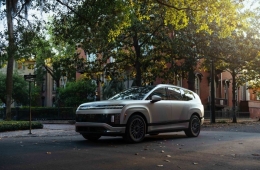
- [Exclusive] "Oh, Oh! Why Is the Seatback Like This?" Hyundai Ioniq 9 Recalled in Korea: 15,000 Units Due to Power Seat Entrapment Risk
- "Your Baby Is Cute" Led to "Then You Raise Him"... Teen Mom Hands Over 1-Month-Old and Disappears
- Samsung C&T Invests $70 Million in U.S. SMR, Secures Priority for Commercial Reactor EPC
- "After Spending 170,000 Won on Hanwoo, This Is What I Got": Why Webtoon Artist Kim Gyusam Decided to Give Cash Instead
The latest Ioniq 5 features a battery capacity of 84kWh, and a simple calculation shows that it would take about 0.24 hours (roughly 14 minutes) to charge using a 350kW ultra-fast charger. However, actual charging times tend to be a bit longer. According to the car’s catalog, using a 350kW fast charger, the battery can be charged from 10% to 80% in under 18 minutes.
What Is the C-Rate?
The term 'C-rate' frequently appears when discussing battery charging speeds. C-rate stands for 'current rate,' a measure of how fast a battery is charged or discharged. The unit 'C' is short for 'capacity.'
 Electric Cars Now Compete on Charging Speed... But What Is C-Rate?](http://www.asiae.co.kr/news/img_view.htm?img=2024051709043174862_1715904271.jpg)
The C-rate is calculated by dividing the charging or discharging current (A) by the battery's capacity (Ah), with a standard value of 1C. For instance, a battery with a capacity of 1,000mAh and a C-rate of 1C would be charged at 1,000mA for one hour.
 Electric Cars Now Compete on Charging Speed... But What Is C-Rate?](http://www.asiae.co.kr/news/img_view.htm?img=2024051707450774672_1715899507.jpg)
The C-rate allows you to estimate a battery's charging time. If a battery is rated for 2C charging, it indicates that it can be fully charged in 0.5 hours (30 minutes). Earlier, CATL announced that the Shenxing Plus battery supports a C-rate of 4C, meaning it can be fully charged in 0.25 hours (15 minutes). A 10C battery can be fully charged in 0.1 hours (6 minutes).
© The Asia Business Daily. All rights reserved. Unauthorized AI training and use prohibited.