Mandatory Holiday Closures for Large Supermarkets Abolished... Complete Repeal of the Dantong Act
Prime Minister's Office Public Discussion on Livelihood
Maintaining the Optional Discount System
Decided Not to Apply the Fixed Book Price System to Web Content

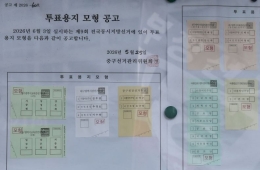
On the 22nd, when the government announced the abolition plan of mandatory closure for large supermarkets, a notice about mandatory closure was posted at a large supermarket in Seoul. At the "Public Discussion on Livelihood with the People," the government announced plans to amend the Distribution Industry Act to abolish the mandatory holiday closure regulation applied to large supermarkets and to allow online delivery during restricted business hours. Photo by Jinhyung Kang aymsdream@
View original imageThe government has decided to abolish the mandatory holiday closure regulation applied to large supermarkets. It will also completely repeal the "Device Distribution Act" (DanTong Act), which sets a cap on subsidies for mobile phone devices.
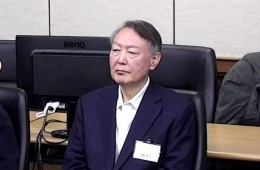
On the 22nd, the Office for Government Policy Coordination held a "Public Livelihood Discussion" at the Hongneung Content Talent Campus in Dongdaemun-gu, Seoul, to discuss these regulatory reform measures. The discussion was originally scheduled to be presided over by President Yoon Seok-yeol, but about 30 minutes before it began, President Yoon did not attend, so it was led by Bang Ki-seon, head of the Office for Government Policy Coordination.
First, to allow citizens to shop comfortably on weekends, the government decided to remove the mandatory closure principle for large supermarkets from the Distribution Industry Development Act. Under current law, large supermarkets are prohibited from operating from midnight to 10 a.m. and must close twice a month, with closures on public holidays as the principle.
This large supermarket operation regulation was introduced to protect small local businesses, but many opinions suggested that it only increased inconvenience for citizens by restricting their basic rights, necessitating a fundamental review.
Additionally, to encourage a reduction in household communication expenses, the DanTong Act will also be repealed. The DanTong Act was enacted in 2014 to maximize consumer welfare by moving away from wasteful subsidy competition. However, it has been widely criticized for suppressing active subsidy competition among mobile carriers, making it difficult for citizens to purchase devices at low prices.
Going forward, the government plans to allow mobile carriers to engage in voluntary subsidy competition so that citizens can buy affordable devices. However, the selective contract discount system, which provides communication fee reduction benefits to consumers who do not receive subsidies, will be maintained.
Furthermore, the government has decided not to apply the fixed book price system to web content. Web content is a new form of electronic publication with characteristics different from general books, and there has been continuous criticism that the uniform application of the fixed book price system should not be imposed.
Hot Picks Today
![Samsung Electronics and SK hynix Outpace IT Bubble Gains... Key Points of Caution [Weekend Money]](https://cwcontent.asiae.co.kr/asiaresize/93/2026052710341477944_1779845653.png) Samsung Electronics and SK hynix Outpace IT Bubble Gains... Key Points of Caution [Weekend Money]
Samsung Electronics and SK hynix Outpace IT Bubble Gains... Key Points of Caution [Weekend Money]
- Nvidia Loses $2 Trillion in Market Cap in a Day... Semiconductor Stocks Plunge on New York Stock Exchange
- Supreme Court Rules "Corns and Calluses Are Skin Diseases Not Covered by Insurance"... Final Defeat for Policyholder After 379 Procedures
- Big Tech Pours Massive Investments into AI... But Actual Profits Go to These Industries [Weekend Money]
- "You Can't Buy It Even With Money": Hundreds of Thousands Swarm Seongsu-dong as 'Pokemon' Takes Over Retail [Now Buying Habits]
In addition, the government plans to introduce flexibility in the current 15% limit on book price discounts for small bookstores. The government stated, "We plan to promote a flexible discount rate policy to revitalize small bookstores and increase benefits for consumers," and added, "We will prepare detailed implementation plans through close communication with the publishing and bookstore sectors."
© The Asia Business Daily(www.asiae.co.kr). All rights reserved.
!["Don't Get Excited, Crushes Are Exhausting Too: Even Unrequited Love Faces a Recession [World is Z Gold]"](https://cwcontent.asiae.co.kr/asiaresize/307/2026060508335888548_1780616038.png)